
Mottled Spinetail
Telacanthura ussheri
Order: Apodiformes / Family: Apodidae
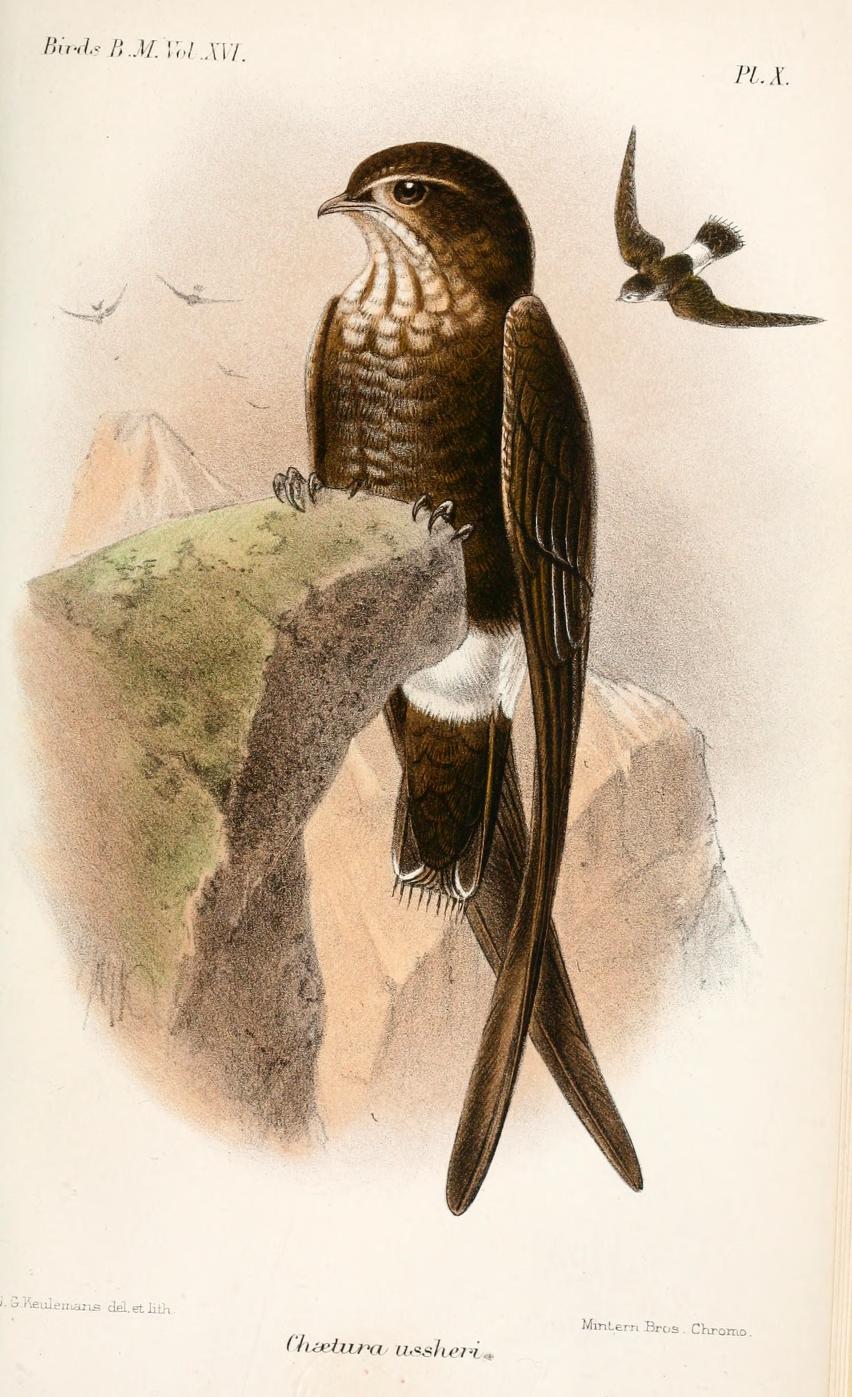
Wikimedia Commons
About the Mottled Spinetail
The Mottled Spinetail, scientifically known as Telacanthura ussheri, is a bird that captivates ornithologists and birdwatchers alike with its swift, erratic flight and distinctive plumage patterns. Found primarily in the tropical regions of Africa, this bird thrives in a variety of environments ranging from lowland forests to savanna woodlands. The Mottled Spinetail plays an integral role in its ecosystem by controlling insect populations, as it is an insectivore that feeds on a variety of flying insects. This bird is often seen skimming over the canopy, catching its prey in mid-air with remarkable agility. The Mottled Spinetail's presence is significant in the regions it inhabits, as it contributes to the balance of the local food web. Its ability to adapt to different habitats makes it a resilient species, yet it faces threats from habitat destruction and climate change. Seasonal behaviors of the Mottled Spinetail include shifts in feeding patterns, as insect availability can vary throughout the year. During the breeding season, which coincides with the rainy season in many parts of its range, these birds are more likely to be observed in areas with abundant food resources. As a member of the Apodidae family, the Mottled Spinetail shares characteristics with other swifts, including its streamlined body, long wings, and short tail. However, its mottled appearance sets it apart. This bird's ecological role extends beyond mere insect control, as it serves as a bioindicator of environmental health, alerting researchers to changes in habitat conditions. Understanding the Mottled Spinetail's habits and habitat preferences can provide valuable insights into the health of tropical ecosystems across Africa.
The Mottled Spinetail belongs to the family Apodidae, within the order Apodiformes. These birds typically live average 4 years with a maximum recorded of 7 years..
How to Identify a Mottled Spinetail
The Mottled Spinetail can be identified by its medium-sized, compact body and distinctive plumage. Adults have mottled brown feathers, which provide excellent camouflage against tree bark and forest floors. The bird's wings are long and pointed, typical of swifts, enabling rapid and agile flight. The tail is relatively short and forked, with stiff, bristle-like feathers that aid in maneuverability. Juveniles resemble adults but may have a slightly duller appearance until they molt into their adult plumage. Males and females look alike, making sex differentiation in the field challenging. Unlike some other swift species, the Mottled Spinetail does not have a pronounced sexual dimorphism. In flight, the Mottled Spinetail can be confused with the Little Swift or the White-rumped Swift, but its mottled plumage and shorter tail help distinguish it. Observers should note the bird's flight silhouette, characterized by its rapid wingbeats and swift, direct flight path. When perched, which is a rare sight, the Mottled Spinetail typically clings vertically to tree trunks or cliffs, using its strong feet and specialized tail feathers for support.
Having trouble telling birds apart? Upload a photo to our bird identification tool for an instant species match.
Mottled Spinetail Habitat and Range
Preferred Habitat
The Mottled Spinetail inhabits a range of environments across Africa, including tropical and subtropical forests, savannas, and open woodlands. It is found at elevations from sea level to around 1,500 meters, depending on the availability of food and nesting sites. Though predominantly a resident of rural and wild areas, it occasionally ventures into urban spaces where suitable foraging opportunities exist. Seasonal shifts in habitat usage occur, with the Mottled Spinetail moving to areas with higher insect abundance during certain times of the year, particularly during the rainy season when insects are more prolific. Despite its adaptability, the bird prefers habitats with ample open space for aerial foraging and proximity to water bodies, which often harbor high insect densities.
Geographic Range
The Mottled Spinetail's range encompasses a broad swath of sub-Saharan Africa, with populations found in countries such as Nigeria, Ghana, Cameroon, and the Democratic Republic of the Congo. The bird's range extends from West Africa eastward to Kenya and southward to Angola and Zambia. While it is primarily a resident species, some local movements occur in response to seasonal changes in food availability. The Mottled Spinetail is not considered migratory, but it may relocate within its range to exploit temporary food resources. Its population density is highest in regions with extensive forest cover and plentiful water sources, where insect prey is abundant. In these areas, the Mottled Spinetail can be observed in greater numbers, often forming loose flocks with other swift species.
Want to know which birds visit your area? Browse our backyard birds by location guides for region-specific species lists.
What Does the Mottled Spinetail Eat?
The diet of the Mottled Spinetail consists primarily of flying insects, which it captures mid-air with precision and agility. Common prey includes beetles, flies, and winged ants, although the exact composition of its diet can vary seasonally based on insect availability. During the wet season, when insect populations peak, the Mottled Spinetail takes advantage of the abundance to feed more frequently. Foraging occurs throughout the day, with peak activity often observed in the early morning and late afternoon when insects are most active. This bird employs a strategy of fast, erratic flight patterns to pursue and capture prey, using its keen eyesight to detect and track insects in flight. Prey size generally ranges from small to medium-sized insects, which the Mottled Spinetail consumes on the wing without landing.
Mottled Spinetail Behavior and Social Structure
The Mottled Spinetail is a social bird, often observed in flocks, particularly outside the breeding season. These flocks can include other swift species, as the birds share similar foraging strategies and habitats. The Mottled Spinetail exhibits territorial behavior during the breeding season, defending nesting sites aggressively against intruders. Courtship displays include aerial chases and synchronized maneuvers, showcasing the bird's flight prowess. These displays serve to strengthen pair bonds and establish breeding territories. In response to predators, such as birds of prey, the Mottled Spinetail employs rapid, evasive flight tactics to avoid capture. Its daily activity patterns are characterized by early morning and late afternoon foraging sessions, with periods of rest during the hottest parts of the day. At night, the Mottled Spinetail roosts in sheltered locations, often within tree hollows or cliff crevices.
Mottled Spinetail Nesting and Reproduction
Mottled Spinetails nest in colonies, typically choosing sites that offer protection from predators and harsh weather. Preferred nesting locations include tree hollows, rock crevices, and man-made structures such as bridges. Nests are constructed using a variety of materials, including feathers, plant fibers, and spider webs, which are bound together with saliva. The clutch size ranges from two to three eggs, which both parents incubate over a period of roughly 18 to 20 days. After hatching, the chicks remain in the nest for approximately 25 to 30 days before fledging. Both parents are involved in feeding and caring for the young, ensuring a steady supply of insects is delivered to the nest. The Mottled Spinetail typically raises one brood per year, though in favorable conditions, a second brood may be attempted.
Mottled Spinetail Sounds and Vocalizations
The Mottled Spinetail produces a series of high-pitched, rapid twittering calls, which serve as both communication between individuals and a means to establish territory. These calls are often heard during flight, especially when the bird is part of a flock. Alarm calls are sharper and more insistent, designed to alert other birds to the presence of a predator. While the Mottled Spinetail does not sing in the traditional sense, its vocalizations play a crucial role in social interactions and mate attraction. During the dawn chorus, the bird's calls contribute to the cacophony of sound typical of tropical forests, blending with the calls of other swift species.
Interesting Facts About the Mottled Spinetail
- 1The Mottled Spinetail can reach speeds of up to 100 km/h when chasing prey, making it one of the faster swifts.
- 2Unlike many birds, the Mottled Spinetail does not perch on branches but instead clings to vertical surfaces like cliffs and tree trunks.
- 3A colony of Mottled Spinetails can consist of dozens of nests, creating a bustling community during the breeding season.
- 4The bird's stiff tail feathers act as a brace when clinging to vertical surfaces, providing stability and support.
- 5Mottled Spinetails are known to travel considerable distances in search of food, sometimes covering up to 50 kilometers in a day.
Mottled Spinetail Conservation Status
The Mottled Spinetail is currently classified as Least Concern by the IUCN, with a population trend that appears stable. However, like many tropical species, it faces threats from habitat destruction, particularly due to deforestation and land conversion for agriculture. Conservation efforts focus on protecting critical habitats and promoting sustainable land use practices. Historically, the Mottled Spinetail's population has been relatively stable, but continuous monitoring is necessary to ensure its long-term survival. Efforts to raise awareness about the importance of forest preservation can aid in mitigating some of the threats this species faces.
Other Apodidae Species


Birds Similar to the Mottled Spinetail
These species are often confused with the Mottled Spinetail due to similar appearance or overlapping range.

