
Moustached Turca
Pteroptochos megapodius
Order: Passeriformes / Family: Rhinocryptidae
Wikimedia Commons
About the Moustached Turca
The Moustached Turca, Pteroptochos megapodius, is a distinctive species endemic to the central regions of Chile, specifically within the semiarid shrublands and rocky slopes of the Andes. Its robust build and terrestrial habits make it a prominent member of the Rhinocryptidae family, commonly known as the tapaculos. This bird plays a significant role in the local ecosystem as both a predator of invertebrates and a seed disperser, contributing to the health of its native habitats. The Moustached Turca is particularly adapted to the rugged terrains of the Mediterranean-like environment of central Chile, where it forages actively on the ground, using its strong legs to navigate the rocky landscapes. During the breeding season, which typically spans from September to December, the Moustached Turca engages in vocal displays that are crucial for mate attraction and territory defense. The bird's song, a series of melodious whistles, can be heard across its habitats, serving as both a communication tool and a territorial marker. Beyond its ecological contributions, the Moustached Turca holds cultural significance for local communities, often appearing in folklore and as a symbol of the unique biodiversity of the Chilean Andes. Its presence in these regions supports a wider understanding of the ecological dynamics and conservation needs in these biodiverse landscapes. The species' ability to thrive in its specific habitat is a testament to its evolutionary adaptations, making it a fascinating subject for ornithologists and bird watchers alike. Despite its specialized habitat requirements, the Moustached Turca remains an important indicator of environmental health in its range, reflecting the broader impacts of climate change and human activity on Andean ecosystems.
The Moustached Turca belongs to the family Rhinocryptidae, within the order Passeriformes. These birds typically live average 7 years, max recorded 10 years.
How to Identify a Moustached Turca
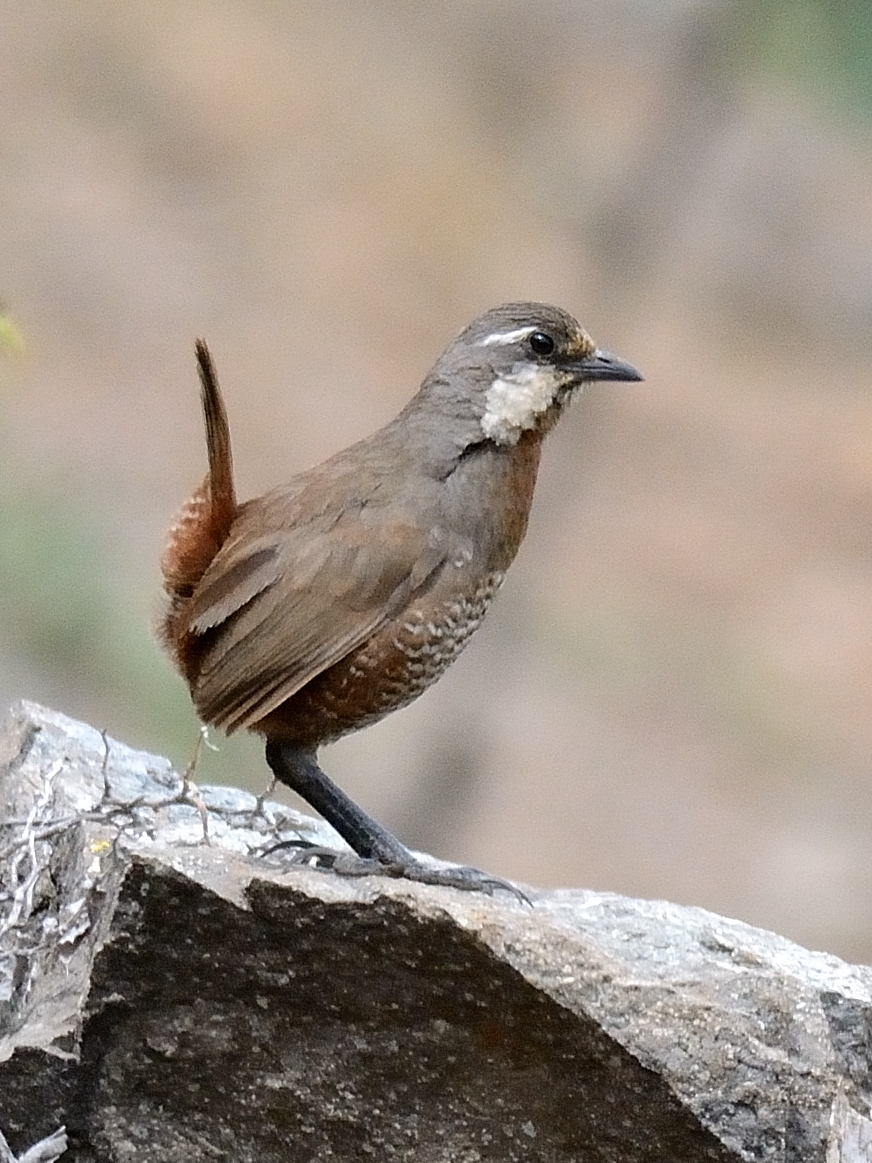
Identifying the Moustached Turca involves noting its distinct facial markings, which include a prominent white 'moustache' stripe against a brownish-gray plumage. The adult Moustached Turca exhibits a robust body, measuring approximately 22-25 cm in length, with a stout bill and strong legs suited for terrestrial life. Both sexes appear similar, though males may be slightly larger. Juveniles resemble adults but often display duller plumage and less distinct facial markings, which sharpens with maturity. Confusion may arise with similar tapaculo species; however, the Moustached Turca's unique facial pattern and larger size help differentiate it. Its flight is rarely observed, as this bird prefers to remain grounded, but when necessary, it displays a short, direct flight with rapid wingbeats. Perching posture is generally upright, with the bird often seen perched on rocks or low branches during vocal displays.
Having trouble telling birds apart? Upload a photo to our bird identification tool for an instant species match.
Moustached Turca Habitat and Range
Preferred Habitat
The Moustached Turca inhabits the semiarid and rocky regions of central Chile, thriving in areas characterized by sparse vegetation and scattered shrubbery. These habitats are typically found at elevations between 500 and 2,500 meters, where the bird efficiently navigates the challenging terrain. During the breeding season, the Moustached Turca may be found in slightly denser vegetation, seeking out areas that offer both shelter and ample foraging opportunities. Although primarily associated with rural and natural environments, it occasionally ventures into the outskirts of urban areas where suitable habitat patches exist. Seasonal habitat shifts are minimal, as the Moustached Turca remains largely sedentary, adapted to the stable climatic conditions of its native range.
Geographic Range
The Moustached Turca is endemic to central Chile, with its range extending from the Coquimbo Region in the north to the Biobío Region in the south. Throughout this range, it inhabits the Andean foothills and adjacent mountain regions, favoring areas with rocky substrates and sparse vegetation. Unlike many other bird species, the Moustached Turca does not undertake long-distance migrations, remaining within its established territories year-round. While its population is relatively stable across its range, certain areas within its distribution, such as the slopes of the Andes near Santiago, serve as population density hotspots, highlighting the importance of these regions for the species' conservation.
Want to know which birds visit your area? Browse our backyard birds by location guides for region-specific species lists.
What Does the Moustached Turca Eat?
The diet of the Moustached Turca primarily consists of insects and other small invertebrates, which it forages for by scratching through leaf litter and soil. This bird employs a methodical foraging technique, using its strong legs to turn over debris and uncover hidden prey. During the spring and summer months, its diet expands to include a variety of seeds and berries, reflecting the seasonal abundance of plant material. Prey size typically includes small beetles, spiders, and larvae, which provide essential nutrients during the breeding season. The Moustached Turca generally forages during dawn and dusk when insect activity is at its peak, although it may adjust its feeding schedule based on weather conditions and food availability.
Moustached Turca Behavior and Social Structure
The Moustached Turca exhibits a solitary lifestyle outside the breeding season, preferring to maintain a defined territory that it defends with vigorous vocalizations and displays. During the breeding season, monogamous pairs form, and courtship involves complex vocal exchanges and synchronized displays. The bird's response to potential predators includes loud alarm calls and retreating to dense cover. Daily activity patterns are crepuscular, with peak activities at dawn and dusk, aligning with optimal foraging conditions. Flocking behavior is uncommon except for brief interactions at rich feeding sites or water sources, where temporary aggregations may occur.
Moustached Turca Nesting and Reproduction
Nesting for the Moustached Turca involves constructing a well-hidden nest, often located in a burrow or crevice among rocks. The nest is lined with grasses and feathers, providing a secure environment for the clutch, which typically consists of 2 to 3 eggs. The incubation period lasts approximately 20 days, with both parents sharing responsibilities. Fledglings emerge after about three weeks, during which time they are fed and protected by both parents. The number of broods per year is usually one, though favorable conditions may occasionally allow for a second. Parental care extends beyond fledging, ensuring the young have a solid start.
Moustached Turca Sounds and Vocalizations
The primary song of the Moustached Turca is a series of melodious whistles with a rhythmic pattern, often compared to the sound of a flute. These vocalizations are used to establish territory and attract mates, particularly during the breeding season. Call notes include sharp, repetitive clicks that serve as communication between mates and as alarm signals. The Moustached Turca is more vocal during the dawn chorus, when its song carries over long distances, enhancing its presence in the rugged terrain.
Interesting Facts About the Moustached Turca
- 1The Moustached Turca's song is often likened to the flute, making it one of the more melodious tapaculos.
- 2Despite their stout appearance, Moustached Turcas are adept at navigating rocky terrains thanks to their strong legs.
- 3These birds are named for their distinctive 'moustache' - a feature that helps them stand out among other tapaculos.
- 4Moustached Turcas remain elusive and are more often heard than seen due to their preference for dense cover.
- 5Their diet shifts seasonally, allowing them to exploit a variety of food sources throughout the year.
- 6Moustached Turcas are non-migratory, reflecting their adaptation to the stable climate of central Chile.
- 7They form monogamous pairs during the breeding season, showcasing strong pair bonds through vocal duets.
Moustached Turca Conservation Status
Currently, the Moustached Turca holds a status of Least Concern according to the IUCN, with a stable population trend. Nevertheless, habitat destruction and fragmentation pose potential threats, particularly from agricultural expansion and urban development in its native range. Conservation efforts focus on preserving the unique habitats of central Chile, which are crucial for the survival of this and other endemic species. Historical population data suggest a stable presence, though ongoing monitoring is necessary to respond to potential environmental changes.
Other Rhinocryptidae Species


Birds Similar to the Moustached Turca
These species are often confused with the Moustached Turca due to similar appearance or overlapping range.

