
Nimba Flycatcher
Melaenornis annamarulae
Order: Passeriformes / Family: Muscicapidae

Wikimedia Commons
About the Nimba Flycatcher
The Nimba Flycatcher, scientifically known as Melaenornis annamarulae, inhabits the montane forests of West Africa, particularly within the Nimba Mountain range, which spans across Guinea, Liberia, and Côte d'Ivoire. This small passerine bird plays a crucial role in its ecosystem by controlling insect populations, thereby contributing to the ecological balance within these biodiverse regions. Characterized by its agile flight and adept insect-catching skills, the Nimba Flycatcher is a testament to the rich avian diversity found in these forests.
These flycatchers are typically found at elevations ranging from 600 to 1,600 meters, showing a preference for the lush, humid environments of the upper forest canopy. Their presence in these habitats underscores the importance of maintaining forest integrity as deforestation poses a significant threat to their survival. This species is a prime example of the biodiversity housed within the Guinean forest-savanna mosaic, an ecoregion of global conservation significance.
The Nimba Flycatcher exhibits seasonal behaviors that reflect its adaptation to its environment. During the breeding season, which generally aligns with the rainy season, these birds engage in elaborate courtship displays and vocalizations. Outside the breeding season, they are less vocal, focusing instead on foraging in mixed-species flocks. Their ecological role extends beyond insect control, as they serve as prey for larger avian predators, thereby fitting seamlessly into the complex food web of their habitat.
The Nimba Flycatcher belongs to the family Muscicapidae, within the order Passeriformes. These birds typically live average 5 years, with limited data on maximum lifespan..
How to Identify a Nimba Flycatcher
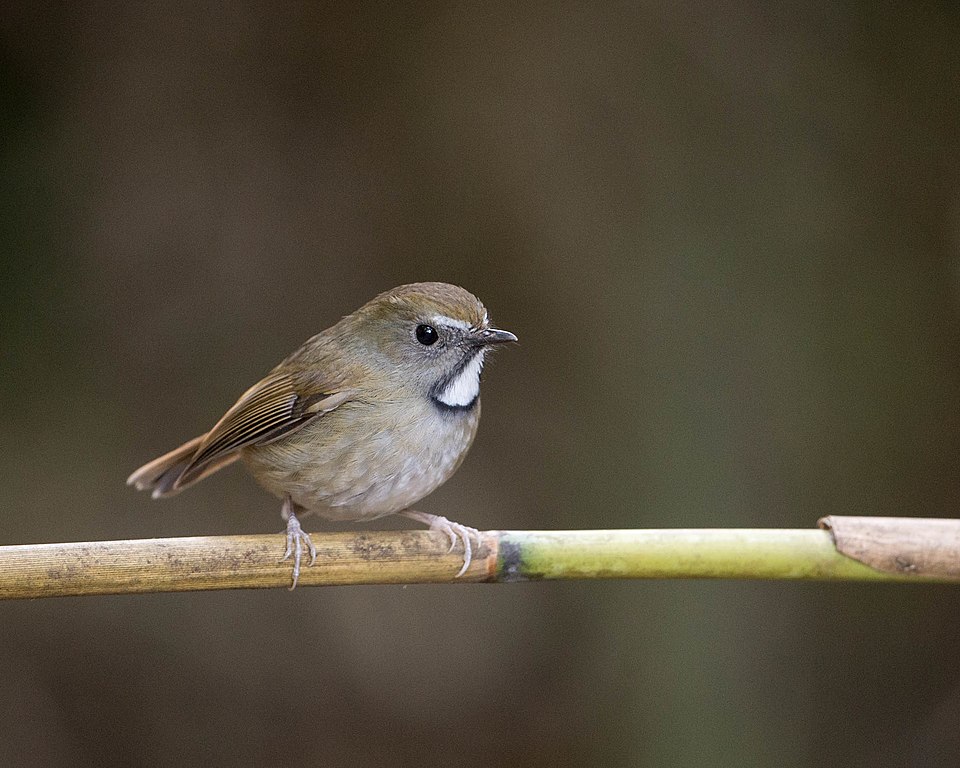
The Nimba Flycatcher can be identified by its predominantly black plumage, which sets it apart from many other birds in its habitat. Adult males and females share similar coloration, though males are often slightly more glossy. Their eyes are dark and their bills are relatively short and robust, adapted for catching insects. Juveniles, in contrast, tend to have duller plumage with subtle brownish tones mixed into their otherwise black feathers.
Compared to similar species, the Nimba Flycatcher is distinguished by its lack of prominent white or colored markings that are often found in other flycatchers. Its compact size and agile flight aid in its identification, especially when seen flitting through the forest canopy in search of prey. When perched, it maintains an upright posture, often bobbing its tail intermittently.
The silhouette of the Nimba Flycatcher in flight is characteristically streamlined, with relatively short wings and a medium-length tail. This profile, combined with its distinct plumage, makes it a distinctive species within its range, avoiding confusion with other sympatric birds.
Having trouble telling birds apart? Upload a photo to our bird identification tool for an instant species match.
Nimba Flycatcher Habitat and Range
Preferred Habitat
The Nimba Flycatcher is predominantly found in montane forests, thriving in the humid and dense upper canopy layers. These forests, located mainly in the Nimba Mountain range, offer a rich diversity of insect prey and ample nesting sites. The species prefers elevations between 600 and 1,600 meters, where the climate remains relatively stable and conducive to their survival.
During different seasons, the Nimba Flycatcher exhibits some habitat flexibility, though it rarely ventures far from forested areas. It shows a marked preference for areas with little human disturbance, avoiding urban environments and heavily deforested regions. Instead, it favors primary forests and well-preserved secondary growth, where it can find sufficient food and nesting resources.
Although primarily a forest bird, the Nimba Flycatcher may occasionally be observed at forest edges, particularly during periods of food scarcity, when it might explore adjacent wooded savannas.
Geographic Range
The Nimba Flycatcher is endemic to West Africa, with its range restricted to the Nimba Mountain range that spans Guinea, Liberia, and Côte d'Ivoire. This limited distribution makes it particularly vulnerable to habitat changes. The species does not undertake significant migratory journeys, instead residing year-round within its established range.
Breeding populations are concentrated in areas where forest cover is dense and continuous, notably in the montane regions of the Nimba Mountains. During non-breeding seasons, the flycatcher remains within these areas, although it might shift slightly to lower elevations in response to seasonal changes in prey availability.
Population density is generally highest in regions with minimal human disturbance and well-preserved forest ecosystems. Conservation efforts focus on these hotspots, as they represent critical habitats for the long-term survival of the species.
Want to know which birds visit your area? Browse our backyard birds by location guides for region-specific species lists.
What Does the Nimba Flycatcher Eat?
The diet of the Nimba Flycatcher primarily consists of insects and arthropods, which it captures in the forest canopy. Its foraging technique involves agile flight maneuvers, often launching from a perch to snatch prey mid-air, a behavior known as sallying. This method is highly effective for catching various flying insects, which form the bulk of its diet.
Seasonal changes can influence its diet, with a preference for different insect types aligning with their availability. During the wet season, when insects are abundant, the Nimba Flycatcher can be observed feeding more frequently and with greater efficiency. In contrast, the dry season might see a slight expansion in dietary variety as it adapts to reduced insect availability.
In addition to its primary diet, the flycatcher occasionally feeds on small berries and fruits, particularly when insect prey is scarce. This dietary flexibility aids its survival through fluctuating environmental conditions, ensuring a steady energy intake throughout the year.
Nimba Flycatcher Behavior and Social Structure
The Nimba Flycatcher exhibits solitary behavior for much of the year, although it may form loose associations with mixed-species flocks outside the breeding season. This social structure allows the bird to benefit from collective foraging efforts while maintaining a degree of territorial independence.
Territorial behavior becomes pronounced during the breeding season, with males vocalizing frequently to assert dominance and attract mates. Courtship displays involve aerial acrobatics and vocalizations, serving to strengthen pair bonds and deter rival males. Once paired, the birds exhibit cooperative behavior, with both sexes participating in nest building and feeding the young.
In response to predators, the Nimba Flycatcher employs evasive flight tactics, utilizing its agility to avoid capture. Alarm calls are rare but may be uttered when a predator is nearby, serving as a warning to nearby conspecifics. Daily activity patterns typically involve active foraging during the morning and late afternoon, with periods of rest during the hottest parts of the day.
Nimba Flycatcher Nesting and Reproduction
Nesting for the Nimba Flycatcher occurs primarily during the rainy season, aligning with peak insect abundance. The species constructs cup-shaped nests using materials such as twigs, leaves, and moss, which it meticulously weaves together. These nests are usually located in the upper canopy, well-concealed amongst foliage.
Typical clutch size ranges from two to four eggs, with an incubation period of approximately 14 days. Both parents share incubation duties, ensuring that the eggs remain protected and at the right temperature. After hatching, the nestlings are fed by both parents, who diligently provide a steady diet of insects.
Fledging occurs about 18 to 20 days post-hatching, with the young birds remaining under parental care for several weeks thereafter. During this time, the juveniles learn essential survival skills, such as foraging and predator avoidance. The Nimba Flycatcher typically raises one brood per year, although a second brood may be attempted if conditions are favorable.
Nimba Flycatcher Sounds and Vocalizations
The primary song of the Nimba Flycatcher is a series of melodious whistles, characterized by a rhythmic sequence and clear, bell-like tones. These vocalizations are most commonly heard during the breeding season, serving to establish territory and attract mates.
In addition to its song, the Nimba Flycatcher produces a variety of call notes, including soft chips and more urgent alarm calls when threatened. These calls are less melodious than the song but play a crucial role in communication, particularly in the dense forest environment where visual contact can be limited.
During the dawn chorus, the flycatcher's song contributes to the rich tapestry of sounds that fill the forest, creating an auditory spectacle that is both complex and harmonious. Compared to other forest songbirds, its song stands out for its clarity and melodic quality.
Interesting Facts About the Nimba Flycatcher
- 1The Nimba Flycatcher was first described as a new species in 1981, highlighting the rich avian diversity of the Nimba Mountains.
- 2Despite its small size, the Nimba Flycatcher can catch insects in flight with remarkable precision, a skill that aids in its survival.
- 3The Nimba Mountains, home to the Nimba Flycatcher, are recognized as a UNESCO World Heritage Site due to their unique biodiversity.
- 4The Nimba Flycatcher is one of only a few bird species endemic to the Nimba Mountain range, making it a conservation priority.
- 5Studies indicate that the Nimba Flycatcher's population is concentrated in primary forests, emphasizing the need for habitat preservation.
- 6The species' song is a key identifier, often heard during the dawn chorus, and is essential for territory establishment during breeding.
- 7The Nimba Flycatcher's reliance on forested habitats makes it particularly vulnerable to deforestation, highlighting the impact of human activities.
Nimba Flycatcher Conservation Status
The Nimba Flycatcher is currently classified as Near Threatened by the IUCN, with its population trend showing a decline. The primary threats to this species include habitat loss due to logging, mining, and agricultural expansion, which reduce the availability of suitable nesting and foraging sites. Conservation efforts focus on preserving the remaining forest habitats within its range, particularly in the Nimba Mountains, where it is most commonly found. Protected areas and forest management initiatives aim to curtail deforestation and promote sustainable land use practices. Historical population changes have been influenced by fluctuating levels of habitat disturbance and protection, highlighting the importance of continued conservation action to prevent further declines. International collaboration is essential to ensure the long-term survival of the Nimba Flycatcher and the ecosystems it inhabits.
Other Muscicapidae Species


Birds Similar to the Nimba Flycatcher
These species are often confused with the Nimba Flycatcher due to similar appearance or overlapping range.

