
Northern Rufous-capped Antshrike
Thamnophilus subfasciatus
Order: Passeriformes / Family: Thamnophilidae

Wikimedia Commons
About the Northern Rufous-capped Antshrike
The Northern Rufous-capped Antshrike (Thamnophilus subfasciatus) is a captivating bird belonging to the family Thamnophilidae, predominantly found in tropical forests of Central and South America. These antshrikes exhibit a striking appearance with their rufous crown, setting them apart from other birds in their habitat. Their presence is significant as they play a crucial role in the forest ecosystem, primarily as insect controllers. The Northern Rufous-capped Antshrike thrives in a range of tropical and subtropical forests, from the lowland rainforests of Colombia and Ecuador to the foothills of the Andes. They are often encountered at elevations ranging from sea level up to 1,200 meters, with some populations venturing slightly higher in certain regions. Seasonal behaviors of this species include increased vocal activity during the breeding season, which occurs in the early months of the year. During this period, males are particularly active, using their distinctive calls to establish territories and attract mates. The ecological role of the Northern Rufous-capped Antshrike is underscored by its diet, which primarily consists of insects and other small invertebrates. By controlling insect populations, they contribute to the balance of their ecosystem, providing an essential service that supports the health of the forest environment. While the Northern Rufous-capped Antshrike is not considered migratory, they may exhibit local movements in response to food availability and environmental conditions. Their adaptability to different forest types, including secondary and disturbed forests, highlights their resilience in the face of habitat alteration. However, continued deforestation poses a threat to their habitat, emphasizing the need for conservation efforts to ensure the long-term survival of this species. The Northern Rufous-capped Antshrike is a testament to the diversity and complexity of tropical forest ecosystems, serving as both a subject of scientific interest and an indicator of forest health.
The Northern Rufous-capped Antshrike belongs to the family Thamnophilidae, within the order Passeriformes. These birds typically live average 5-6 years, with a maximum recorded of 9 years..
How to Identify a Northern Rufous-capped Antshrike
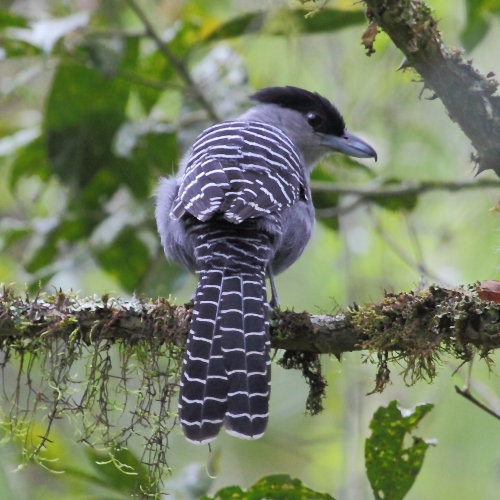
The Northern Rufous-capped Antshrike is easily recognized by its distinctive rufous crown, which contrasts sharply with its otherwise black-and-white plumage. Adult males and females exhibit similar coloration, although the females tend to have slightly less intense rufous on the crown. The body is predominantly black with white barring on the wings and tail, adding to the striking appearance of this bird. Juveniles resemble adults but may have a more muted coloration and less defined markings. Observers might confuse this species with other antshrikes, such as the Barred Antshrike, but the Northern Rufous-capped Antshrike's unique crown coloration provides a helpful distinguishing feature. In flight, this bird shows a relatively short, rounded silhouette, typical of antshrikes. When perched, they display an upright posture, often flicking their tails and wings, a behavior that aids in identifying them in the dense forest undergrowth.
Having trouble telling birds apart? Upload a photo to our bird identification tool for an instant species match.
Northern Rufous-capped Antshrike Habitat and Range
Preferred Habitat
The Northern Rufous-capped Antshrike inhabits a variety of forested environments, ranging from dense primary rainforests to secondary growth and edge habitats. They are most commonly found in lowland and submontane forests, with a preference for areas that provide dense understory vegetation. These birds thrive at elevations from sea level up to 1,200 meters, although some populations have been recorded at higher altitudes. Unlike many bird species that are limited to pristine habitats, the Northern Rufous-capped Antshrike can also be observed in disturbed areas, such as regenerating forests and plantations, showcasing their adaptability. While they are primarily associated with rural and forested areas, they are not typically found in urban settings. Seasonal habitat shifts are minimal as they tend to be resident birds, with movements largely influenced by food availability and breeding requirements.
Geographic Range
The range of the Northern Rufous-capped Antshrike extends across several countries in Central and South America, with significant populations in Colombia, Ecuador, and parts of Panama. In Colombia, they are found primarily in the western and central regions, often frequenting areas near the Andes. In Ecuador, their range includes both the western lowlands and the foothills of the Andes, where they are relatively common. These birds do not exhibit long-distance migration, but local movements are observed, particularly in response to seasonal changes in food resources. While the species is widely distributed within its range, population densities can vary, with certain areas, such as the Chocó region of Colombia, acting as hotspots due to suitable habitat conditions.
Want to know which birds visit your area? Browse our backyard birds by location guides for region-specific species lists.
What Does the Northern Rufous-capped Antshrike Eat?
The diet of the Northern Rufous-capped Antshrike consists mainly of insects and other small invertebrates, playing a critical role in controlling insect populations in their habitat. They are adept foragers, searching for prey in the dense understory by moving methodically through foliage. Their foraging technique involves a combination of gleaning insects from leaves and capturing prey in flight. They primarily consume ants, beetles, spiders, and caterpillars, with a preference for small to medium-sized prey. Seasonal diet changes are minimal, although the availability of certain prey types can fluctuate, influencing their foraging behavior. Feeding activity peaks during the cooler parts of the day, such as early morning and late afternoon, when insects are more active and easier to capture.
Northern Rufous-capped Antshrike Behavior and Social Structure
The Northern Rufous-capped Antshrike exhibits a range of intriguing behaviors, contributing to its reputation as a fascinating forest bird. They are typically observed in pairs or small family groups, displaying a degree of territoriality. Males are known for their vocalizations, which play a crucial role in territory establishment and mate attraction. Courtship displays involve males showcasing their plumage and vocal prowess to attract females. During the breeding season, territorial disputes can arise, with males defending their territories through song and physical displays. In terms of social structure, these birds are generally monogamous, maintaining long-term pair bonds. They exhibit a characteristic tail-flicking behavior when foraging or perching, which may serve as a form of communication within pairs or family groups. The Northern Rufous-capped Antshrike is primarily diurnal, with peak activity occurring during the early morning and late afternoon. While they are generally wary of predators, they employ a combination of vocal alarms and evasive maneuvers to avoid threats.
Northern Rufous-capped Antshrike Nesting and Reproduction
The nesting habits of the Northern Rufous-capped Antshrike reflect their adaptability and resourcefulness. They construct cup-shaped nests using a variety of materials, including twigs, leaves, and grasses, often lined with softer materials for insulation. These nests are typically situated in dense vegetation, such as shrubs or low trees, at heights ranging from 1 to 3 meters above the ground. Clutch size generally consists of two to three eggs, which are incubated primarily by the female. The incubation period lasts approximately 14-16 days, during which the male may assist by providing food. After hatching, the chicks remain in the nest for an additional 12-15 days before fledging. Both parents participate in feeding and caring for the young, ensuring their survival during the critical early stages of development. Generally, the Northern Rufous-capped Antshrike produces one to two broods per year, depending on environmental conditions and food availability.
Northern Rufous-capped Antshrike Sounds and Vocalizations
The Northern Rufous-capped Antshrike is noted for its distinctive vocalizations, which include a series of rapid, melodious whistles that vary in pitch and rhythm. The primary song, often delivered from a concealed perch, consists of a series of rising and falling notes that are both musical and penetrating. Call notes are generally short and sharp, serving as contact calls between mates or family members. Alarm calls are more urgent and harsh, designed to alert others to potential threats. During the dawn chorus, males are particularly vocal, using their songs to establish territory boundaries and attract females. The vocalizations of the Northern Rufous-capped Antshrike are often compared to those of other antbirds, but their unique tonal quality sets them apart.
Interesting Facts About the Northern Rufous-capped Antshrike
- 1The Northern Rufous-capped Antshrike was once considered a subspecies of the similar Barred Antshrike until taxonomic revisions in the late 20th century.
- 2Despite their striking appearance, Northern Rufous-capped Antshrikes are often heard before they are seen, thanks to their distinctive vocalizations.
- 3They play a crucial ecological role by controlling insect populations, which helps maintain the health of tropical forests.
- 4The tail-flicking behavior of the Northern Rufous-capped Antshrike may serve as a form of communication within pairs and family groups.
- 5Northern Rufous-capped Antshrikes are non-migratory but may move locally within their range in response to food availability.
- 6These antshrikes often forage in mixed-species flocks, benefiting from the increased vigilance against predators.
- 7The species' adaptability to disturbed habitats highlights the importance of secondary forests in biodiversity conservation.
Northern Rufous-capped Antshrike Conservation Status
The Northern Rufous-capped Antshrike is currently classified as a species of Least Concern by the IUCN, owing to its relatively wide distribution and stable population trends. However, habitat loss due to deforestation and land conversion poses a significant threat to their long-term viability. Efforts to conserve this species focus on preserving and restoring forest habitats, particularly in regions where deforestation rates are high. Protected areas and reserves play a crucial role in providing safe havens for this and other forest-dwelling species. Historical population changes have not been drastic, but continuous monitoring is essential to ensure that emerging threats do not lead to declines. Engaging local communities in conservation initiatives and promoting sustainable land-use practices are vital components of efforts to safeguard the future of the Northern Rufous-capped Antshrike.
Other Thamnophilidae Species



Birds Similar to the Northern Rufous-capped Antshrike
These species are often confused with the Northern Rufous-capped Antshrike due to similar appearance or overlapping range.

