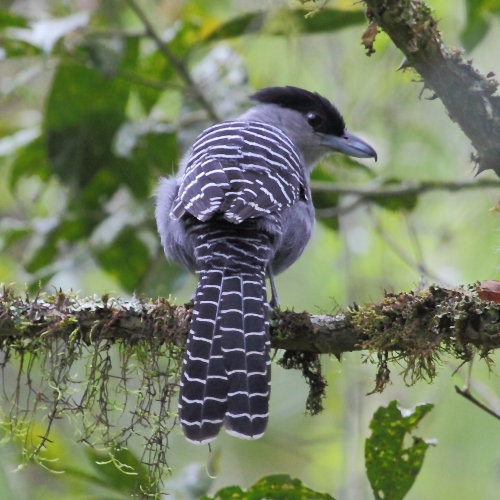
Northern White-fringed Antwren
Formicivora intermedia
Order: Passeriformes / Family: Thamnophilidae

Wikimedia Commons
About the Northern White-fringed Antwren
The Northern White-fringed Antwren, scientifically known as Formicivora intermedia, is a small passerine bird belonging to the family Thamnophilidae. This species is primarily found in the deciduous and semi-deciduous forests of northern South America, specifically in regions such as Venezuela and Colombia. These areas offer the dense undergrowth and tangled vines that the antwren prefers for its daily activities. The bird's presence is crucial in maintaining the ecological balance in these habitats, as it plays a vital role in controlling insect populations. The Northern White-fringed Antwren is not merely a resident bird; its behaviors adapt seasonally, showing slight shifts in location within its range to optimize breeding and foraging. During breeding season, these birds are more territorial and vocal, often heard singing their sharp, repetitive calls in the morning to establish dominance over territory. This seasonal adaptation ensures that they maximize their reproductive success and maintain their population levels. The ecological role of Formicivora intermedia extends beyond insect control. By participating in the spread of seeds through their droppings, albeit unintentionally, they contribute to the regeneration of their forest habitats. These birds also interact with a variety of other species within their ecosystem, including predators and other insectivores, which creates a dynamic and interdependent community. The presence of the Northern White-fringed Antwren indicates a healthy ecosystem, and ornithologists often study these birds to gauge the overall health of the forest environments they inhabit.
The Northern White-fringed Antwren belongs to the family Thamnophilidae, within the order Passeriformes. These birds typically live average 3-5 years, with a maximum recorded of 7 years..
How to Identify a Northern White-fringed Antwren
Identifying the Northern White-fringed Antwren requires attention to its unique field marks. Adult males exhibit a predominantly black plumage with striking white fringes on their wings, which give the species its common name. Females, in contrast, display a more subdued brown coloration with similar white wing markings, providing subtle but effective sexual dimorphism. Juveniles resemble the females but with a more mottled appearance as they transition to adult plumage. When observing these birds in the field, note their small size, which ranges from 10 to 12 centimeters in length. The bird's silhouette in flight is compact, with relatively short, rounded wings and a slightly rounded tail. On perches, they often adopt an upright posture, frequently flicking their tails as they search for insects. This behavior, combined with their distinctive plumage, can help distinguish them from similar species such as other antwrens and antbirds. While confusion may arise with other sympatric antwren species, the unique combination of size, wing pattern, and vocalizations of Formicivora intermedia aids in accurate identification.
Having trouble telling birds apart? Upload a photo to our bird identification tool for an instant species match.
Northern White-fringed Antwren Habitat and Range
Preferred Habitat
The Northern White-fringed Antwren thrives in a variety of forest types, including deciduous and semi-deciduous forests, as well as scrubby areas with dense undergrowth. These habitats are typically found at elevations ranging from sea level up to 1,500 meters, allowing the bird to adapt to a range of environmental conditions. The species shows some flexibility in habitat preference, occasionally venturing into more open areas adjacent to forests but rarely penetrating deeply into urban environments. Seasonal changes do not significantly alter their habitat preference, although slight movements within their range may occur as they seek optimal breeding conditions. The presence of thick vegetation is crucial for their foraging and nesting activities, providing both food resources and protection from predators.
Geographic Range
The range of the Northern White-fringed Antwren is primarily restricted to northern South America. It is predominantly found in Venezuela and Colombia, where it inhabits lowland and foothill forests. This bird does not exhibit long-distance migration, instead maintaining a relatively stable presence within its range year-round. However, local movements may occur in response to seasonal changes in food availability and breeding requirements. Population density appears to be higher in areas with extensive forest cover, particularly where human disturbance is minimal. Despite its limited geographic range, the Northern White-fringed Antwren is considered relatively common within suitable habitats, contributing to its stable conservation status.
Want to know which birds visit your area? Browse our backyard birds by location guides for region-specific species lists.
What Does the Northern White-fringed Antwren Eat?
The diet of the Northern White-fringed Antwren is primarily insectivorous, consisting of ants, beetles, spiders, and other arthropods commonly found in undergrowth. These birds employ a methodical foraging technique, gleaning prey from foliage and branches with quick, dexterous movements. During the wet season, when insect populations are abundant, their diet remains consistent, focusing on available insect prey. However, in drier periods, they may supplement their diet with small fruits and seeds. The antwren's small size dictates their prey selection, typically targeting insects less than 10 millimeters in length. Foraging occurs primarily in the early morning and late afternoon, coinciding with peak insect activity, allowing for efficient energy intake.
Northern White-fringed Antwren Behavior and Social Structure
The Northern White-fringed Antwren exhibits a complex array of behaviors, particularly during the breeding season. Males establish and defend territories through vocal displays and physical posturing, often engaging in vigorous duets with their mates. This vocal interaction strengthens pair bonds and deters rival males. Outside the breeding season, these birds may be observed in small, loose flocks, often accompanied by other insectivorous species. This flocking behavior provides increased foraging efficiency and predator vigilance. In response to predators, the antwren employs various strategies, including rapid flight to dense cover and alarm calls to alert conspecifics. Daily activity patterns show peaks of activity during cooler parts of the day, with periods of rest during midday heat.
Northern White-fringed Antwren Nesting and Reproduction
The Northern White-fringed Antwren constructs its nest as a small, cup-shaped structure, typically using grass, leaves, and fine twigs. These nests are strategically placed in dense vegetation, often within one to two meters off the ground, providing camouflage and protection from predators. Clutch sizes range from two to three eggs, with both parents sharing incubation duties over a period of approximately 14 days. Once the eggs hatch, both parents actively participate in feeding the chicks, which fledge after about 10 to 12 days. The species is known to produce one to two broods per year, depending on environmental conditions and food availability. Parental roles are well-defined, with males often taking a more active role in territory defense while females focus on provisioning the young.
Northern White-fringed Antwren Sounds and Vocalizations
The primary song of the Northern White-fringed Antwren is a series of sharp, repetitive notes that increase in speed and intensity. This song serves both as a territorial marker and a courtship display. In addition to their song, these birds produce a variety of call notes, including a soft 'chip-chip' used for communication between mates and a more strident call to alert others of potential danger. During the dawn chorus, their vocalizations are particularly prominent, contributing to the acoustic tapestry of their forest environment. The sound profile of the Northern White-fringed Antwren is distinctive, aiding birders in locating and identifying the species amidst dense foliage.
Interesting Facts About the Northern White-fringed Antwren
- 1The Northern White-fringed Antwren can capture prey in less than a second, showcasing impressive agility.
- 2Despite its small size, the Northern White-fringed Antwren defends its territory aggressively, often engaging in vocal confrontations.
- 3This antwren has a metabolic rate that allows it to remain active throughout the day, even in high temperatures.
- 4The Northern White-fringed Antwren's nesting success is closely tied to the density of forest undergrowth it inhabits.
- 5Both male and female Northern White-fringed Antwrens participate equally in raising their young, demonstrating strong parental cooperation.
- 6The species' distinctive song can be heard up to 100 meters away, making it a key identifier in dense habitats.
- 7Research shows that the Northern White-fringed Antwren plays a role in controlling pest populations, benefiting nearby plant life.
Northern White-fringed Antwren Conservation Status
The Northern White-fringed Antwren is currently listed as Least Concern by the IUCN, with population trends considered stable. However, habitat loss due to deforestation poses a potential threat to their long-term survival. Conservation efforts focus on preserving critical habitats and promoting sustainable land management practices. Historically, population levels have remained steady, although localized declines may occur in areas experiencing significant environmental changes. Continued monitoring and habitat protection are essential to ensure the ongoing viability of this species, allowing it to thrive in its native ecosystems.