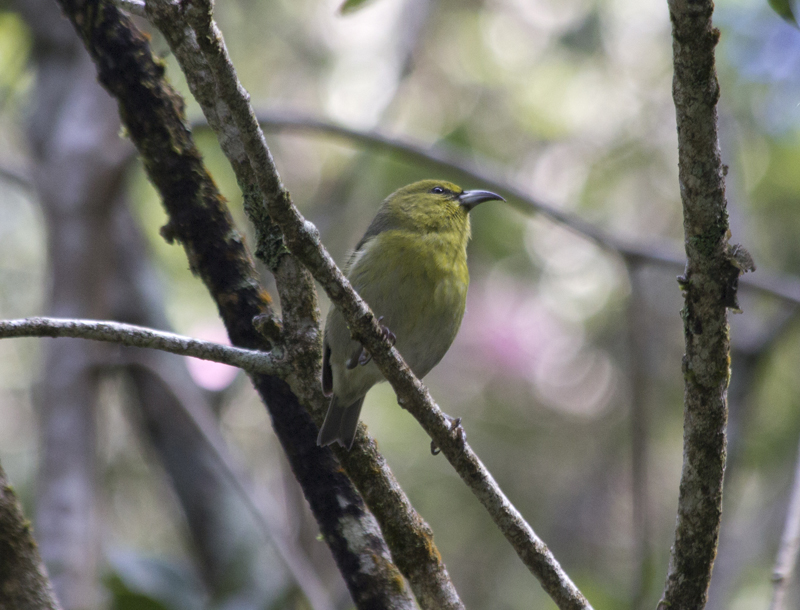
Oahu Akialoa
Akialoa ellisiana
Order: Passeriformes / Family: Fringillidae

Wikimedia Commons
About the Oahu Akialoa
The Oahu Akialoa, or Akialoa ellisiana, was once a striking inhabitant of the Hawaiian forests, playing a vital role in their unique ecosystem. This species, endemic to the island of Oahu, was particularly adapted to the dense, wet forests where it thrived. These birds were perfectly attuned to their environment, feeding on nectar and insects, and assisting in the pollination of native plants. Unfortunately, the Oahu Akialoa is now considered extinct, largely due to habitat loss, introduced diseases, and predation by non-native species such as rats and cats. The decline of the Oahu Akialoa reflects broader environmental changes on the island and emphasizes the ongoing conservation challenges in Hawaii. Their ecological significance was profound, as they helped maintain the health and diversity of Hawaiian forest ecosystems. Seasonal behaviors of the Oahu Akialoa were closely tied to the flowering and fruiting cycles of native plants, emphasizing their role as pollinators and seed dispersers. Prior to their extinction, these birds were likely more active during the wetter months when nectar sources were abundant. The loss of the Oahu Akialoa serves as a poignant reminder of the delicate balance within island ecosystems and the impact of human activities. The bird's absence has left an ecological gap that is difficult to fill, underscoring the importance of ongoing conservation efforts for other native Hawaiian species still battling similar threats.
The Oahu Akialoa belongs to the family Fringillidae, within the order Passeriformes. These birds typically live Unknown due to extinction..
How to Identify a Oahu Akialoa
The Oahu Akialoa was a medium-sized bird, distinguished by its vibrant olive-green plumage and an extraordinarily long, decurved bill that set it apart from other Hawaiian forest birds. Adult males and females shared similar coloration, making sex differentiation in the field challenging. However, males often exhibited slightly larger bills than females. Juveniles were similar in appearance to adults but with slightly duller plumage. The long bill of the Oahu Akialoa was particularly adapted for probing flowers and crevices to extract nectar and insects, differentiating it from other Hawaiian honeycreepers. In flight, the bird displayed a relatively straight and rapid wingbeat, with its elongated bill often pointing downward. When perching, the Oahu Akialoa maintained an upright posture, frequently using its bill to probe into tree bark and foliage. Despite these distinctive features, it could still be mistaken for other honeycreepers at a distance without a clear view of its bill.
Having trouble telling birds apart? Upload a photo to our bird identification tool for an instant species match.
Oahu Akialoa Habitat and Range
Preferred Habitat
The Oahu Akialoa was primarily found in dense, wet montane forests on the island of Oahu. These habitats were characterized by a rich diversity of native plants, which provided ample feeding opportunities. The birds thrived at elevations ranging from 600 to 1200 meters, where the microclimate remained cool and moist year-round. Unlike some other Hawaiian birds, the Oahu Akialoa did not exhibit significant seasonal habitat shifts, as they were deeply reliant on the specific ecological conditions of the montane forests. Urban expansion and deforestation severely impacted these habitats, contributing significantly to the bird's decline.
Geographic Range
Historically, the Oahu Akialoa was confined to the island of Oahu in Hawaii, making it an endemic species with a very restricted range. Reliable sightings were concentrated in the montane forests of the island's central and eastern regions. There is no evidence to suggest that the Oahu Akialoa engaged in seasonal migrations, as its ecological niche was closely tied to the specific plant and insect life of its native forests. The limited range and lack of migration made the species particularly vulnerable to changes in its environment, leading to its eventual extinction.
Want to know which birds visit your area? Browse our backyard birds by location guides for region-specific species lists.
What Does the Oahu Akialoa Eat?
The diet of the Oahu Akialoa was primarily composed of nectar and insects, which it skillfully extracted using its long, specialized bill. This feeding strategy made it an important pollinator for various native plant species. During certain seasons, fruits and seeds supplemented its diet, particularly when nectar sources were scarce. The Oahu Akialoa employed a probing foraging technique, often seen clinging to branches as it inserted its bill into flowers and bark crevices. The bird's feeding schedule was largely diurnal, with peak activity occurring during the early morning and late afternoon when insect activity and nectar availability were at their highest.
Oahu Akialoa Behavior and Social Structure
The Oahu Akialoa exhibited solitary behavior for much of the year, though pairs could be observed during the breeding season. Territoriality was a key characteristic, with individuals aggressively defending their feeding and nesting areas from intruders. Courtship displays were subtle, involving mutual preening and soft vocal exchanges between mates. The response to predators involved a combination of remaining motionless and employing rapid escape flights. Daily activity patterns were largely dictated by feeding demands, with periods of rest during the hottest parts of the day. The Oahu Akialoa's interactions with its environment highlighted its role as both a pollinator and seed disperser, integral to the health of its montane forest habitat.
Oahu Akialoa Nesting and Reproduction
The nesting habits of the Oahu Akialoa involved constructing cup-shaped nests made from twigs, leaves, and mosses, strategically placed within the dense foliage of native trees. These nests were often built several meters above the ground to provide protection from ground-based predators. Clutch size typically ranged from two to three eggs, which were incubated primarily by the female for about 14-16 days. Both parents participated in feeding the hatchlings, which fledged approximately 21-24 days after hatching. It is believed that the Oahu Akialoa reared one brood per year, with some pairs potentially attempting a second if conditions were favorable.
Oahu Akialoa Sounds and Vocalizations
The primary song of the Oahu Akialoa was a series of high-pitched, melodic whistles, often delivered from a concealed perch within dense foliage. These songs featured a rhythmic, repetitive pattern that carried well through the forest environment. Call notes consisted of sharp, single-note chips used for communication between mates and signaling alarm. During the dawn chorus, the Oahu Akialoa's song was a distinctive component, often heralding the start of daily activity. Its vocalizations, though subtle, played a crucial role in maintaining pair bonds and territorial integrity.
Interesting Facts About the Oahu Akialoa
- 1The Oahu Akialoa's bill, measuring up to 4.5 cm, was one of the longest among Hawaiian honeycreepers, perfectly adapted for nectar feeding.
- 2Despite its extinction, the Oahu Akialoa is a critical case study in island biogeography and conservation biology.
- 3The bird was last reliably documented in the wild in the late 1800s, making sightings a rare historical treasure.
- 4The Oahu Akialoa played a crucial role in pollinating the unique lobelioid flowers native to Hawaii.
- 5Unlike many other birds, both male and female Oahu Akialoa shared a similar plumage, emphasizing their ecological roles over sexual dimorphism.
- 6The Oahu Akialoa's habitat of choice, the wet montane forests of Oahu, is one of the most biodiverse ecosystems in Hawaii.
- 7The bird's extinction underscores the fragility of island ecosystems, particularly in response to invasive species and habitat alteration.
Oahu Akialoa Conservation Status
The Oahu Akialoa is classified as extinct by the IUCN. Its decline began in the late 19th century, primarily due to habitat destruction, introduced diseases like avian malaria, and predation by invasive species. Conservation efforts in Hawaii aim to address these threats for other native species, focusing on habitat restoration and predator control. Historically, the population of the Oahu Akialoa was stable before human-induced changes dramatically altered its environment, leading to its eventual extinction. The loss of the Oahu Akialoa highlights the urgent need for comprehensive conservation strategies in Hawaii.
Other Fringillidae Species


Birds Similar to the Oahu Akialoa
These species are often confused with the Oahu Akialoa due to similar appearance or overlapping range.