
Olive-backed Forest-robin
Stiphrornis pyrrholaemus
Order: Passeriformes / Family: Muscicapidae
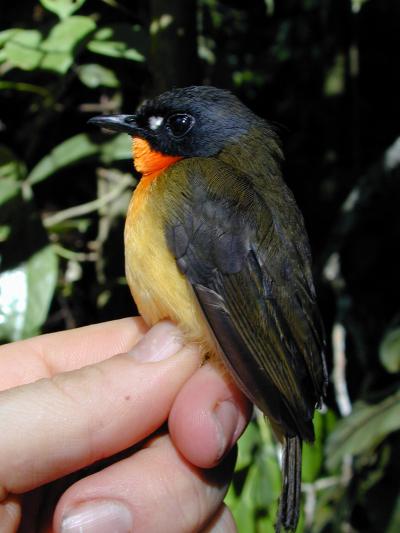
Wikimedia Commons
About the Olive-backed Forest-robin
The Olive-backed Forest-robin (Stiphrornis pyrrholaemus) is a remarkable songbird found predominantly within the dense, humid rainforests of Central Africa. This species dwells primarily in Gabon and the Republic of Congo, where its presence is a key indicator of forest health and biodiversity. Known for its olive-colored back and striking orange throat, this forest-robin plays a vital role in its ecosystem by helping control insect populations and acting as a prey species for various predators. The Olive-backed Forest-robin is typically found in lowland tropical forests, where it prefers the damp, shadowy understory. This bird is non-migratory, relying on its specific habitat year-round. Its ecological significance extends to seed dispersal, as it occasionally consumes small fruits, thereby aiding plant proliferation in its native habitat. The Olive-backed Forest-robin typically exhibits solitary behavior, although it may be observed in pairs during the breeding season. Its territorial nature means it defends its chosen patch of forest vigorously, contributing to the diverse tapestry of birdlife within its range. Seasonal behaviors include more frequent vocalizations during breeding periods, with males singing to establish dominance and attract mates. The Olive-backed Forest-robin's presence in these rainforests underscores the intricate web of life in Central Africa, highlighting the need for conservation efforts to preserve these biodiverse ecosystems.
The Olive-backed Forest-robin belongs to the family Muscicapidae, within the order Passeriformes. These birds typically live approximately 6-8 years, with the potential to live up to 10 years in optimal conditions..
How to Identify a Olive-backed Forest-robin
The Olive-backed Forest-robin is easily recognizable by its olive-green upperparts and bright orange throat and chest. Adult plumage is characterized by a subtle blend of olive, orange, and pale underparts, a combination that provides excellent camouflage amidst the forest understory. The bird's eyes are a deep brown, giving it a sharp, inquisitive look. Males and females are similar in appearance, although the female might exhibit slightly duller coloration. Juveniles, on the other hand, typically display more subdued tones, lacking the full vibrancy of adult plumage. Potential confusion may arise with similar forest-dwelling species, such as some of the flycatchers or other small passerines, but the Olive-backed Forest-robin's distinctive color pattern and behavior usually help distinguish it. Its flight silhouette is compact and swift, often seen darting through the lower canopy. When perched, this robin maintains an upright posture, frequently flicking its wings and tail as part of its lively demeanor.
Having trouble telling birds apart? Upload a photo to our bird identification tool for an instant species match.
Olive-backed Forest-robin Habitat and Range
Preferred Habitat
The Olive-backed Forest-robin is a denizen of lowland tropical rainforests, particularly favoring the dense undergrowth where leaf litter and tangled vines provide cover. This bird thrives in humid conditions and is most commonly found in primary forests, although it can also inhabit secondary growth areas if the vegetation is sufficiently dense. Typically, it inhabits elevations ranging from sea level to around 1,000 meters. Unlike some adaptable species, the Olive-backed Forest-robin rarely ventures into urban or suburban areas, preferring the seclusion offered by extensive forest tracts. Seasonal habitat shifts are minimal due to its non-migratory nature, yet the bird may adjust its territory slightly depending on food availability and breeding needs.
Geographic Range
The Olive-backed Forest-robin has a relatively limited range restricted to Central Africa. Its primary strongholds are in Gabon and the Republic of Congo, with potential occurrences in adjacent regions where suitable forest habitat exists. The species does not engage in long-distance migration, maintaining a year-round presence within its established range. Population density hotspots are typically found in areas of undisturbed rainforest, where the bird can access ample food and breeding sites. Conservationists focus on these core areas to ensure the species' continued survival amidst growing threats to its habitat.
Want to know which birds visit your area? Browse our backyard birds by location guides for region-specific species lists.
What Does the Olive-backed Forest-robin Eat?
Insectivorous by nature, the Olive-backed Forest-robin primarily consumes a variety of insects and arthropods, including beetles, ants, and spiders. Its diet occasionally broadens to include small fruits and seeds, particularly during periods when insect availability diminishes. The robin employs a foraging technique known as 'gleaning,' where it carefully picks prey from leaves and branches. It often forages alone, combing through the leaf litter and lower foliage with quick, deliberate movements. The bird's feeding schedule is largely diurnal, with peak activity occurring in the early morning and late afternoon when insects are most active.
Olive-backed Forest-robin Behavior and Social Structure
The Olive-backed Forest-robin exhibits a solitary and territorial nature, with individuals maintaining exclusive areas within the forest. During the breeding season, males become particularly vocal, using their song to assert dominance and attract females. Courtship displays involve a combination of vocalizations and physical posturing, where the male may present food items to the female. This robin species is not known for flocking, preferring the company of a single mate or, outside the breeding season, remaining solitary. When faced with predators, the Olive-backed Forest-robin employs evasive tactics, such as sudden flights into dense cover or remaining motionless to escape detection. Daily activity patterns are centered around foraging and territory maintenance, with periods of rest during the hottest parts of the day.
Olive-backed Forest-robin Nesting and Reproduction
The Olive-backed Forest-robin constructs cup-shaped nests using materials such as twigs, leaves, and moss. These nests are typically situated low to the ground, often concealed within the thick underbrush or among roots. This strategic placement helps protect the nest from predators and environmental hazards. A clutch usually consists of two to three eggs, with the female taking the primary role in incubation, which lasts approximately 14 days. Once hatched, both parents participate in feeding the nestlings, which fledge after about 12 to 14 days. The species typically raises one brood per year, though favorable conditions may allow for a second.
Olive-backed Forest-robin Sounds and Vocalizations
The Olive-backed Forest-robin's song is a melodious series of clear, whistling notes that rise and fall in pitch, often repeated several times. Its calls include a variety of short, sharp notes used to communicate with mates or signal alarm. During the dawn chorus, the robin's song becomes more frequent, contributing to the rich acoustic tapestry of the forest. Its vocalizations are distinct yet can be compared to the sweet, flute-like notes of some thrush species, serving as a delightful reminder of its presence.
Interesting Facts About the Olive-backed Forest-robin
- 1Despite its vibrant throat, the Olive-backed Forest-robin's olive back helps it blend seamlessly with the forest foliage.
- 2The Olive-backed Forest-robin spends most of its time in the understory, rarely venturing into the higher canopy layers.
- 3With a preference for solitude, the Olive-backed Forest-robin is most often seen alone or in pairs during the breeding season.
- 4The species' melodious song is a hallmark of its breeding behavior, with singing males establishing territories.
- 5In some areas, the Olive-backed Forest-robin can serve as an indicator species, reflecting the health of the forest ecosystem.
Olive-backed Forest-robin Conservation Status
Currently, the Olive-backed Forest-robin is not classified as threatened, but its population trend remains uncertain due to ongoing habitat loss. Deforestation and land conversion for agriculture pose significant threats to its habitat, potentially leading to declines. Conservation efforts focus on protecting large tracts of rainforest through initiatives like creating and maintaining protected areas. Monitoring population trends is crucial to ensure the species remains stable, as historical changes in population have often correlated with habitat degradation.
Other Muscicapidae Species
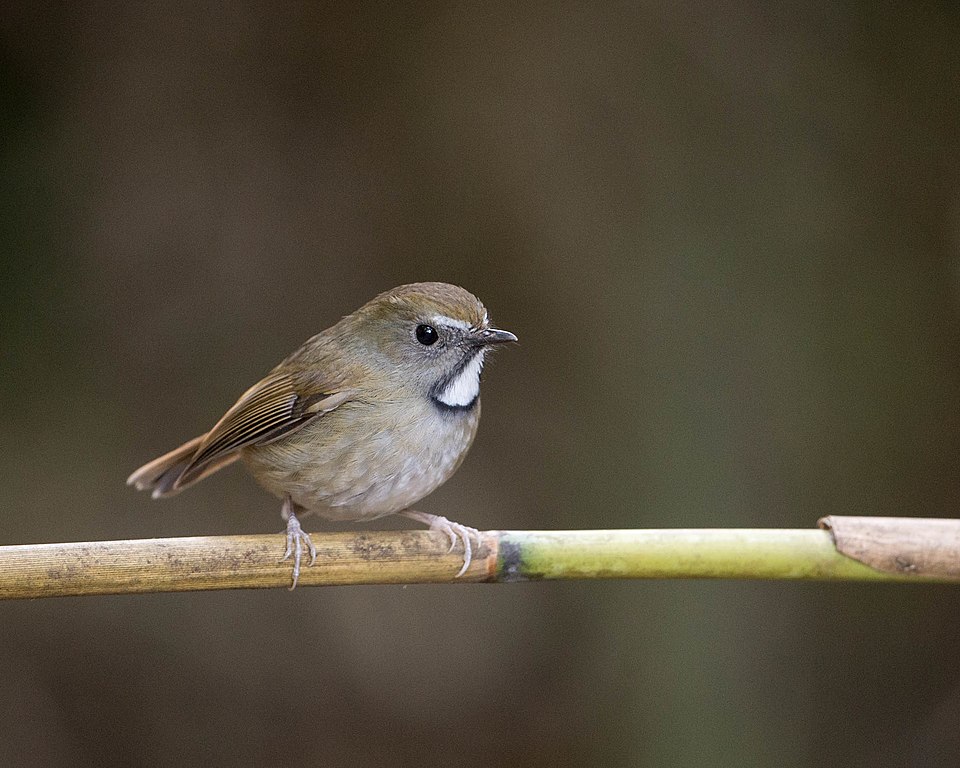


Birds Similar to the Olive-backed Forest-robin
These species are often confused with the Olive-backed Forest-robin due to similar appearance or overlapping range.

