Yellow-breasted Forest-robin
Stiphrornis xanthogaster
Order: Passeriformes / Family: Muscicapidae

Wikimedia Commons
About the Yellow-breasted Forest-robin
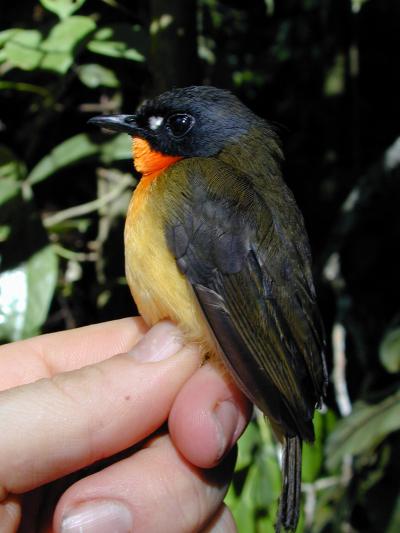
The Yellow-breasted Forest-robin, scientifically recognized as Stiphrornis xanthogaster, captivates bird enthusiasts with its vivid plumage and elusive nature. This species belongs to the Muscicapidae family, a group renowned for its diversity and adaptability. Inhabiting the dense tropical rainforests of Central Africa, particularly in countries like Gabon, Cameroon, and the Democratic Republic of the Congo, this bird plays a significant role in its ecosystem. The forest-robin's presence indicates healthy, undisturbed forest habitats, making it a focal species for conservationists monitoring forest integrity.
Ecologically, the Yellow-breasted Forest-robin aids in insect population control, feeding primarily on a diet of various insects and small invertebrates. This feeding behavior helps maintain the ecological balance, preventing overpopulation of insect species that could potentially harm vegetation. The bird's foraging habits also contribute to seed dispersal, thus promoting forest regeneration.
Seasonal behaviors of the Yellow-breasted Forest-robin, such as breeding and molting, coincide with climatic changes in its habitat. During the wet season, the abundance of food resources supports breeding activities, while the dry season often sees a decrease in visible activity as the bird focuses on survival and maintenance. Understanding these patterns is crucial for conservation strategies, particularly in regions where forest coverage is threatened by logging and agricultural expansion.
The Yellow-breasted Forest-robin belongs to the family Muscicapidae, within the order Passeriformes. These birds typically live typically 5-8 years, with some individuals reaching up to 10 years..
How to Identify a Yellow-breasted Forest-robin
The adult Yellow-breasted Forest-robin is distinct with its bright yellow breast and underparts, which contrast sharply with its olive-green back and wings. This vibrant coloration is a key field mark, making it easier to spot amidst the dense foliage of its forest habitat. Males and females do not differ significantly in plumage, but juveniles display a duller version of the adult's colors, with a more muted yellow and a greener tinge overall.
When observing the Yellow-breasted Forest-robin, take note of its relatively small stature, measuring around 12 cm in length. Its compact size and agile movements allow it to navigate through dense vegetation efficiently. In flight, it exhibits a quick, darting movement, but it is more often seen hopping and perching low in the underbrush.
This species can be confused with other forest-dwelling birds, such as the White-bellied Robin-Chat, but the latter's white underparts and different vocalizations can help differentiate them. The Yellow-breasted Forest-robin's posture is typically upright when perched, and it often flicks its wings and tail, a behavior that can aid in identification.
Having trouble telling birds apart? Upload a photo to our bird identification tool for an instant species match.
Yellow-breasted Forest-robin Habitat and Range
Preferred Habitat
The Yellow-breasted Forest-robin predominantly inhabits the tropical rainforests of Central Africa. These lush, humid environments provide dense canopy cover and a rich undergrowth, perfect for its foraging habits. The species is most commonly found in primary forests, but it can also inhabit secondary growth areas that have recovered sufficiently to offer similar ecological characteristics.
Elevation-wise, the Yellow-breasted Forest-robin is typically found from sea level up to about 1500 meters, although it prefers the lowland forest regions where food is more abundant. Seasonal habitat shifts are minimal as this species does not migrate extensively, instead relying on its territorial instincts to maintain its year-round residence within its chosen forest patches.
Despite its adaptability, the Yellow-breasted Forest-robin is rarely found in urban environments. Its dependency on dense forest cover limits its presence in more open or human-dominated landscapes, although occasionally, it may wander into adjacent agricultural lands if suitable cover and food resources are available.
Geographic Range
The Yellow-breasted Forest-robin's range extends across Central Africa, predominantly within the dense forests of countries like Gabon, Cameroon, and the Democratic Republic of the Congo. This species is a year-round resident, with its presence firmly established in the lowland tropical forests of these regions.
Breeding range corresponds directly with its overall habitat, as the bird remains within its forest territories throughout the year. There is no significant migratory movement for this species, as it relies on the relatively stable climate and resource availability offered by its forest environment.
Population density tends to be highest in regions where forest cover remains extensive and undisturbed. However, habitat fragmentation due to logging and agricultural expansion poses a threat to its range, potentially leading to isolated populations. Conservation efforts aim to maintain continuous forest tracts to support the Yellow-breasted Forest-robin's habitat needs.
Want to know which birds visit your area? Browse our backyard birds by location guides for region-specific species lists.
What Does the Yellow-breasted Forest-robin Eat?
The diet of the Yellow-breasted Forest-robin primarily consists of insects and small invertebrates, which it forages from the forest floor and low vegetation. Common prey items include beetles, ants, spiders, and caterpillars. The bird employs a 'gleaning' technique, carefully inspecting leaves and underbrush for hidden food sources.
Seasonal changes affect food availability, with the wet season providing an abundance of insect life, thus supporting the bird's breeding activities. During the dry season, the Yellow-breasted Forest-robin may expand its diet to include more seeds and fruit, ensuring a steady food supply.
The bird follows a diurnal feeding schedule, with peak foraging activity occurring in the early morning and late afternoon hours. This schedule aligns with the activity patterns of its prey and helps the bird avoid the midday heat typical of its habitat. The Yellow-breasted Forest-robin's agile movements and keen eyesight are crucial in capturing elusive insect prey.
Yellow-breasted Forest-robin Behavior and Social Structure
Socially, the Yellow-breasted Forest-robin tends to be solitary or found in pairs, particularly during the breeding season. These birds exhibit strong territorial behavior, with males aggressively defending their chosen areas from intruders through vocalizations and physical displays. During courtship, males perform elaborate displays, including wing flicking and singing to attract females.
Flocking behavior is uncommon, as this species prefers solitude within its dense forest habitat. However, it may occasionally join mixed-species foraging flocks, which can provide safety in numbers from predators. The Yellow-breasted Forest-robin maintains a predictable daily routine, with increased activity in the cooler hours of dawn and dusk.
In response to predators, the bird relies on its swift flight and dense vegetation to evade capture. Alarm calls are sharp and rapid, serving to alert other nearby birds of potential danger. The Yellow-breasted Forest-robin's keen awareness of its surroundings and its ability to quickly retreat to cover are essential survival traits.
Yellow-breasted Forest-robin Nesting and Reproduction
The nesting behavior of the Yellow-breasted Forest-robin involves constructing a cup-shaped nest, typically placed low in dense undergrowth or on the forest floor, often concealed among fallen leaves or between tree roots. Materials used include twigs, leaves, and moss, woven together to provide a secure environment for the eggs.
Clutch size generally ranges from two to three eggs, with the female primarily responsible for incubation. The incubation period lasts about 14 days, after which the chicks hatch and remain in the nest for approximately two weeks before fledging. Both parents partake in feeding the young, ensuring a balanced diet is provided.
Typically, the Yellow-breasted Forest-robin raises one brood per year, although favorable conditions can sometimes lead to a second brood. The timing of the breeding season usually aligns with the rainy season, taking advantage of the increased food availability to support the energy demands of raising young.
Yellow-breasted Forest-robin Sounds and Vocalizations
The primary song of the Yellow-breasted Forest-robin is a series of melodious whistles, often described as sweet and clear. This song consists of repeated phrases, each with a rising and falling pitch, commonly heard during the early morning hours when the bird is most vocal.
Call notes are simpler and shorter, used for communication between pairs or as contact calls. Alarm calls are distinct, characterized by sharp, quick notes designed to alert others of potential threats. During the dawn chorus, the Yellow-breasted Forest-robin contributes its unique song, adding to the rich auditory tapestry of the forest.
In comparison to other forest birds, its song is less complex but carries well through the dense canopy, allowing the bird to establish and maintain its territory effectively.
Interesting Facts About the Yellow-breasted Forest-robin
- 1The Yellow-breasted Forest-robin's song can be heard up to 100 meters away, making it a key player in the forest's morning chorus.
- 2Despite its vivid plumage, the Yellow-breasted Forest-robin is often challenging to spot due to its preference for dense underbrush.
- 3This robin species is part of the Muscicapidae family, which includes over 300 species worldwide, showcasing significant diversity.
- 4The Yellow-breasted Forest-robin's diet shifts to include more fruit during the dry season, adapting to decreased insect availability.
- 5Its territorial song can last over 30 seconds, a lengthy performance compared to many other forest-dwelling birds.
- 6Juvenile Yellow-breasted Forest-robins often remain near their parents for weeks after fledging, learning essential survival skills.
- 7The bird's vivid yellow breast not only attracts mates but may also deter rivals by signaling a strong territorial claim.
Yellow-breasted Forest-robin Conservation Status
The Yellow-breasted Forest-robin currently holds a status of Least Concern on the IUCN Red List. However, its population trend shows signs of decline due to habitat loss from deforestation and land conversion for agriculture. Primary threats include logging and slash-and-burn farming, which fragment the bird's forest habitat. Conservation efforts focus on preserving large tracts of continuous forest and promoting sustainable land-use practices. Protected areas within its range, such as national parks and reserves, play a crucial role in safeguarding suitable habitats for the species. Historical population changes reflect fluctuations in forest cover, with decreases in heavily logged areas. Continued monitoring and habitat protection are vital for ensuring the long-term survival of the Yellow-breasted Forest-robin in its natural habitat.
Other Muscicapidae Species


Birds Similar to the Yellow-breasted Forest-robin
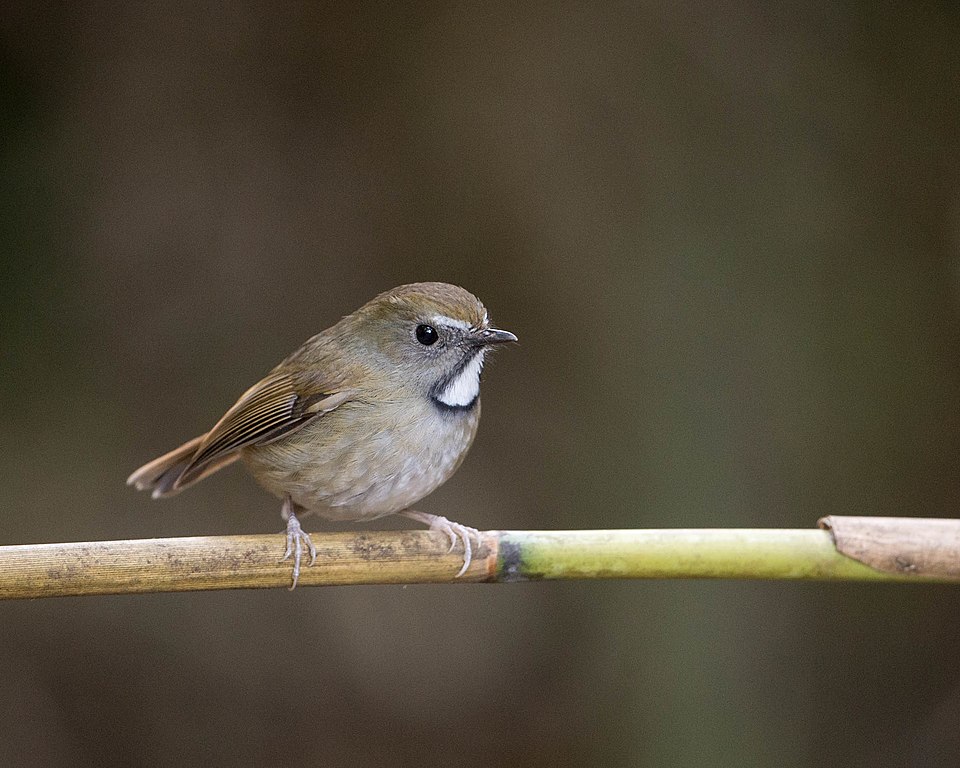
These species are often confused with the Yellow-breasted Forest-robin due to similar appearance or overlapping range.