Pallas's Fish-Eagle
Haliaeetus leucoryphus
Order: Accipitriformes / Family: Accipitridae
Wikimedia Commons
About the Pallas's Fish-Eagle
The Pallas's Fish-Eagle, scientifically known as Haliaeetus leucoryphus, is a captivating bird of prey belonging to the family Accipitridae. This eagle is a significant component of the ecosystems it inhabits, primarily due to its role as both predator and scavenger in freshwater and riparian environments. Found predominantly in Asia, it frequents large rivers, lakes, and reservoirs across the Indian subcontinent, parts of China, and Southeast Asia. Its presence is a testament to the health of aquatic ecosystems, making it an important bioindicator species. This eagle is typically solitary or found in pairs, emphasizing its territorial nature. During the breeding season, which occurs from February to April, Pallas's Fish-Eagle becomes particularly prominent along riverbanks and wetland areas, where it constructs large nests high in trees or on cliffs. As water bodies begin to freeze in its northern range, this species migrates southwards, moving toward more temperate regions. Its seasonal movements are closely tied to the availability of open water and food resources, reflecting its dependence on aquatic environments. By preying on fish and other aquatic organisms, the Pallas's Fish-Eagle helps regulate prey populations, maintaining a balanced ecosystem. Beyond its ecological role, this species also holds cultural significance in several regions, often revered as a symbol of strength and freedom. Despite its majestic presence, Pallas's Fish-Eagle faces numerous threats, including habitat destruction, pollution, and direct persecution. These challenges underscore the need for concerted conservation efforts to ensure the survival of this remarkable raptor. Engaging communities in conservation initiatives and improving habitat protection are critical steps in safeguarding the future of Pallas's Fish-Eagle.
The Pallas's Fish-Eagle belongs to the family Accipitridae, within the order Accipitriformes. These birds typically live typically lives 15-20 years, with some individuals reaching up to 25 years..
How to Identify a Pallas's Fish-Eagle
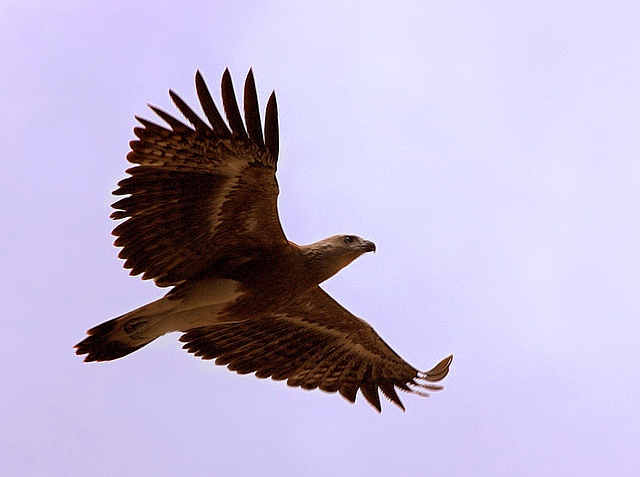
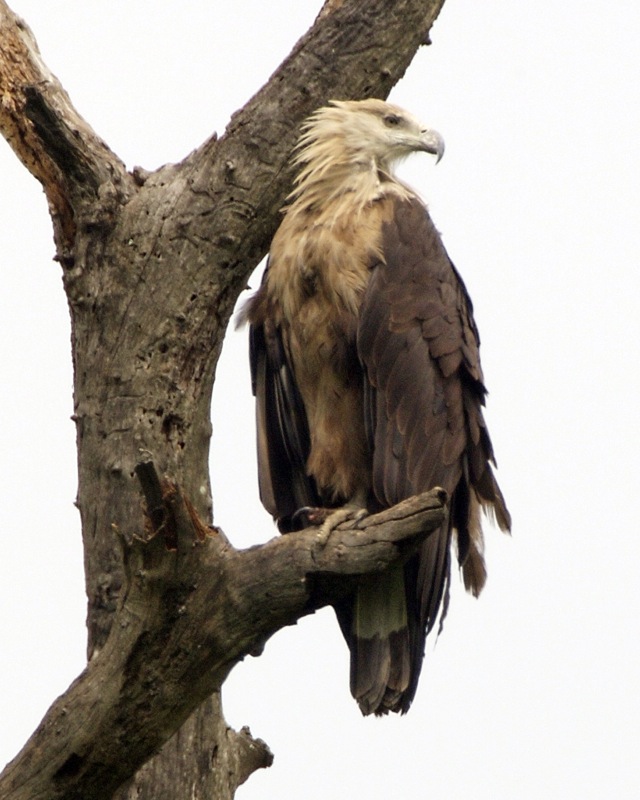
Pallas's Fish-Eagle is unmistakable with its stark contrast in plumage. Adults display a striking white head, neck, and breast, which sharply contrasts with their dark brown body and wings. The tail is also white, providing an easy field mark in flight. Juveniles differ markedly, showing a more mottled appearance with brown and white streaks, gradually acquiring the adult plumage over several years. Both males and females appear similar in plumage, but females are generally larger, a common dimorphism among raptors. When perched, Pallas's Fish-Eagle exudes a commanding presence with its robust build and strong, hooked bill. In flight, it features broad wings and a relatively short tail, giving it a distinctive silhouette against the sky. This eagle may be confused with the White-tailed Sea-Eagle, particularly in regions where their ranges overlap. However, Pallas's Fish-Eagle's white head and tail are more defined, and its habitat preference for freshwater bodies further aids identification. Observers should note its flight style, characterized by slow, deliberate wingbeats interspersed with gliding.
Having trouble telling birds apart? Upload a photo to our bird identification tool for an instant species match.
Pallas's Fish-Eagle Habitat and Range
Preferred Habitat
Pallas's Fish-Eagle occupies a range of aquatic habitats, primarily large rivers, lakes, and reservoirs. It shows a preference for areas with abundant fish populations, often found in regions with extensive wetland systems such as the Brahmaputra and Ganges river basins. During breeding season, the eagle selects habitats that offer tall trees or cliff faces for nesting, often near water. It can be found from lowland areas to elevations up to 3,000 meters, depending on water availability. Seasonal shifts occur, with the eagle moving to lower elevations and more temperate areas as winter approaches. While it is predominantly found in rural and semi-natural landscapes, Pallas's Fish-Eagle can occasionally be seen near human settlements, especially where water bodies are present. However, it is not a typical urban bird, as it relies on more pristine aquatic environments.
Geographic Range
The breeding range of Pallas's Fish-Eagle spans across parts of central and southern Asia, including northern India, Nepal, Bhutan, and Bangladesh. It also breeds in regions of northern Pakistan and parts of China such as Tibet and Xinjiang. During winter, the eagle migrates south to avoid freezing water bodies, reaching regions in Myanmar, Thailand, and northern Vietnam. Migration corridors often follow major river systems, allowing the eagle to utilize available resources along its journey. Population density hotspots include the Assam region in India and parts of the Tibetan Plateau, where significant concentrations can be observed. Pallas's Fish-Eagle is considered rare in many parts of its range, with populations generally localized and fragmented, reflecting both habitat specificity and ongoing pressures from human activities.
Want to know which birds visit your area? Browse our backyard birds by location guides for region-specific species lists.
What Does the Pallas's Fish-Eagle Eat?
Pallas's Fish-Eagle primarily feeds on fish, which constitute the bulk of its diet. It captures prey using a characteristic hunting technique, swooping down from a perch or in flight to snatch fish near the water's surface with its powerful talons. Preferred prey size ranges from small to medium-sized fish, but the eagle is opportunistic, occasionally consuming waterfowl, carrion, and small mammals. Seasonal diet changes are evident, with a higher reliance on carrion during winter months when fish may be less accessible due to frozen water bodies. The eagle often hunts during early morning and late afternoon, correlating with periods of increased fish activity. Its role as a top predator and scavenger in aquatic ecosystems underscores the importance of maintaining healthy fish populations for its survival.
Pallas's Fish-Eagle Behavior and Social Structure
The social structure of Pallas's Fish-Eagle tends towards solitary or paired lifestyles, particularly during the breeding season. Territorial behavior is pronounced, with pairs defending their nesting and hunting grounds vigorously against intruders. Courtship displays involve aerial acrobatics and vocalizations, strengthening the bond between mates. Unlike many raptors, Pallas's Fish-Eagle does not typically form large flocks, although temporary aggregations can occur in areas with abundant food resources. The eagle exhibits a strong response to predators, especially during nesting, aggressively chasing away threats such as other birds of prey and even humans. Daily activity patterns show peaks in the early morning and late afternoon, aligning with optimal hunting conditions. Resting periods often occur during midday, with the eagle perching in shade or high vantage points for surveillance.
Pallas's Fish-Eagle Nesting and Reproduction
Pallas's Fish-Eagle constructs large nests, often reused for several years, which are built primarily of sticks and lined with softer materials such as grass and leaves. Nests are typically located high in trees, near water, or on cliffs, providing a strategic vantage point and protection from ground predators. Clutch size ranges from one to three eggs, with two being most common. The incubation period lasts about 40-45 days, with both parents sharing duties, although the female predominantly incubates. After hatching, chicks remain in the nest for approximately 70-75 days before fledging. Both parents are involved in feeding and caring for the young, ensuring their growth and development. Pallas's Fish-Eagle usually raises one brood per year, although in rare cases, a second brood may occur if conditions allow.
Pallas's Fish-Eagle Sounds and Vocalizations
The primary vocalizations of the Pallas's Fish-Eagle include a series of sharp, high-pitched whistles, often described as 'ki-ki-ki,' which can vary in intensity and duration. These calls serve various purposes, from territorial defense to communication between mates. Alarm calls are more rapid and intense, signaling potential threats to mates or offspring. Unlike songbirds, Pallas's Fish-Eagle does not produce melodious songs, but its vocalizations are distinct and carry well over its aquatic habitats. During dawn, the eagle is most vocal, with its calls resonating across river valleys and lakes, setting the tone for the day's activities.
Interesting Facts About the Pallas's Fish-Eagle
- 1Pallas's Fish-Eagle can lift prey weighing up to half its body weight, showcasing its incredible strength.
- 2The eagle's nest, often reused for decades, can grow to over 2 meters in diameter and weigh several hundred kilograms.
- 3Despite its name, Pallas's Fish-Eagle occasionally preys on waterfowl and even small mammals when fish are scarce.
- 4The species was first described by the German naturalist Peter Simon Pallas in the 18th century, hence its name.
- 5The eagle's eyesight is estimated to be 4-5 times sharper than that of a human, aiding in its hunting efficiency.
- 6Juvenile Pallas's Fish-Eagles take up to 5 years to acquire their distinctive adult plumage.
- 7The Pallas's Fish-Eagle's call can be heard over a kilometer away, aiding in long-distance communication between mates.
Pallas's Fish-Eagle Conservation Status
Pallas's Fish-Eagle is currently listed as Vulnerable by the IUCN, reflecting ongoing population declines. Primary threats include habitat destruction due to agriculture, damming of rivers, and pollution, which degrade the quality of aquatic environments essential for its survival. Conservation efforts focus on habitat protection and restoration, alongside community engagement to reduce human-wildlife conflict. Historical data indicates a significant contraction in range and numbers, emphasizing the need for urgent action. Legal protection in some countries provides a framework for conservation, although enforcement remains challenging.
Other Accipitridae Species


Birds Similar to the Pallas's Fish-Eagle
These species are often confused with the Pallas's Fish-Eagle due to similar appearance or overlapping range.