
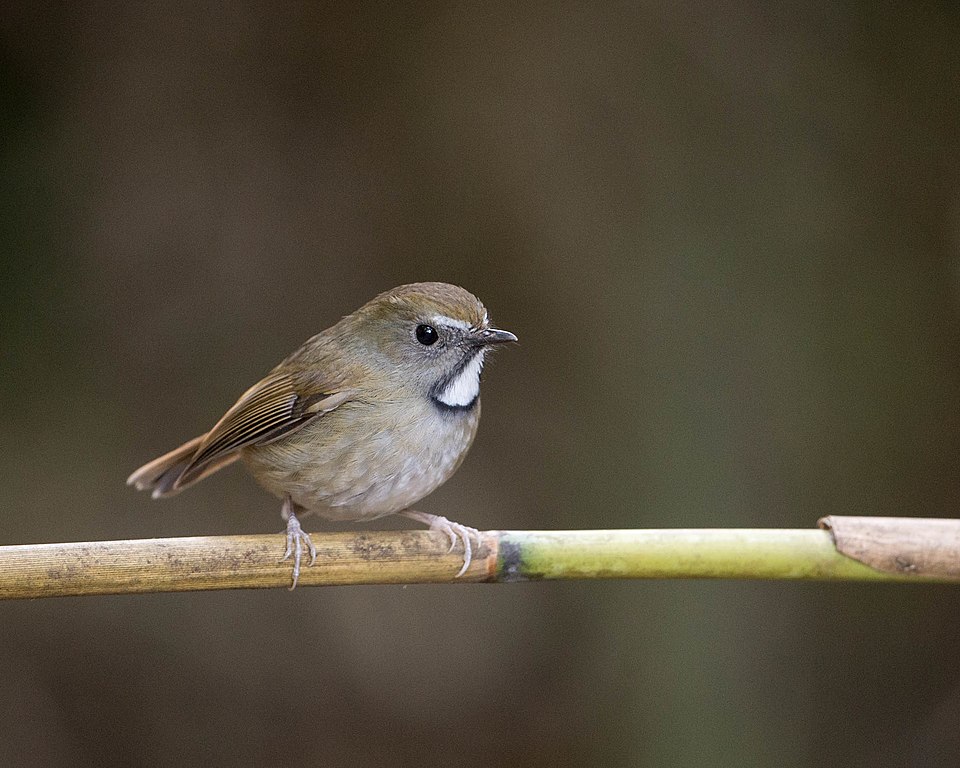
Pentholaea collaris
Pentholaea collaris
Order: Passeriformes / Family: Muscicapidae

Wikimedia Commons
About the Pentholaea collaris
The Pentholaea collaris, commonly known as the collared flycatcher, is a notable member of the Muscicapidae family. Found predominantly in the deciduous woodlands of Central and Eastern Europe, this species is a classic example of avian adaptability. The male collared flycatcher is instantly recognizable by its stark black and white plumage, a striking contrast to the more subdued grayish-brown of the female. Their presence is significant in ecosystems as they play a crucial role in controlling insect populations. During breeding season, these birds inhabit a range of habitats, from mixed deciduous forests to isolated groves in suburban areas. They are particularly drawn to habitats that provide ample nesting opportunities, such as old trees with abundant cavities. The collared flycatcher primarily serves as an insectivore, aiding in the management of pest populations, which benefits plant life and other species in their environment. Seasonally, the Pentholaea collaris exhibits fascinating migratory behaviors. They migrate from their breeding grounds in Europe to wintering habitats in sub-Saharan Africa. During this time, they traverse great distances, showcasing remarkable endurance and navigational skills. Their journey includes flying across diverse terrains, from the Mediterranean Basin to the Sahel region of Africa. This migration plays a significant role in nutrient cycling as they disperse seeds and fertilize ground through their droppings. The collared flycatcher is also an indicator of environmental health, with its presence signaling a balanced ecosystem. Their adaptability to different habitats, including urban parks and gardens, demonstrates their flexibility. As habitats are altered by climate change and human development, the collared flycatcher’s responses to these changes provide valuable data for scientists studying biodiversity and environmental impacts.
The Pentholaea collaris belongs to the family Muscicapidae, within the order Passeriformes. These birds typically live typically 4-6 years, with the oldest recorded at 9 years..
How to Identify a Pentholaea collaris
Identifying the collared flycatcher, or Pentholaea collaris, involves noting several distinct features. Adult males are marked by a bold black cap and bib, contrasting sharply with their white underparts and wing patches. The females, on the other hand, display a more muted appearance with brownish-gray tones replacing the male's black, yet they retain the characteristic white oval spot on the forehead. Juveniles resemble females but are generally duller, often showing streaky patterns as they mature. When observing these birds, pay attention to their perching posture. They often sit upright on branches, a stance that aids in their fly-catching prowess. In flight, they exhibit a bounding motion, with their white wing bars visible against the dark wing feathers. This flight pattern, combined with their distinctive plumage, helps distinguish them from similar species like the pied flycatcher. Another potential source of confusion could be the European pied flycatcher; however, the collared flycatcher’s more extensive white wing patches and forehead spot are reliable differentiators. Careful observation during the breeding season when males are most vocal can further aid in accurate identification.
Having trouble telling birds apart? Upload a photo to our bird identification tool for an instant species match.
Pentholaea collaris Habitat and Range
Preferred Habitat
The collared flycatcher thrives in a variety of habitats, predominantly favoring deciduous forests with abundant old-growth trees. These environments, found extensively across Central and Eastern Europe, provide the necessary nesting sites and food resources. They are also drawn to mixed woodlands and, on occasion, suburban areas featuring mature trees. Typically, they inhabit altitudes ranging from sea level to about 1,000 meters, with some populations adapting to slightly higher elevations in mountainous regions. During migration and wintering, they adjust to a variety of African habitats, including savannas and woodlands. Urban environments see occasional visits, especially in areas with parks or large gardens. Seasonal shifts in habitat preference are evident as they move from breeding grounds to winter habitats, demonstrating their adaptability.
Geographic Range
The breeding range of the collared flycatcher spans from Central and Eastern Europe, extending into parts of Russia. Key countries include Poland, Hungary, and the Czech Republic. During the non-breeding season, they migrate to sub-Saharan Africa, with significant populations wintering across the Sahel, including regions in Nigeria, Chad, and Sudan. This migration is a well-established pattern, with distinct corridors utilized annually. While breeding, the collared flycatcher populations are denser in forested regions with suitable habitats. Migration corridors often pass through the Mediterranean, with hotspots in areas like the Balkans, where they are observed during spring and autumn. Their movements are not solitary, often occurring in loose aggregations with other migratory passerines.
Want to know which birds visit your area? Browse our backyard birds by location guides for region-specific species lists.
What Does the Pentholaea collaris Eat?
The diet of the collared flycatcher is predominantly insectivorous, consisting mainly of flies, beetles, and caterpillars. During the breeding season, they actively forage for insects to meet the increased nutritional demands. They employ a 'sit-and-wait' strategy, perching on branches and swooping down to capture prey mid-flight. This technique is highly efficient, allowing them to capitalize on abundant insect populations in forested habitats. In winter, their diet broadens to include berries and seeds, especially when insect availability declines. They are known to forage throughout the day, with peaks in activity during early morning and late afternoon. The size of their prey generally ranges from small flying insects to larger beetles, showcasing their adaptability to available food sources.
Pentholaea collaris Behavior and Social Structure
The collared flycatcher exhibits intriguing social and territorial behaviors. Males establish territories during the breeding season, often engaging in vocal displays to assert dominance and attract females. Their courtship involves complex vocalizations and visual displays, including wing-flicking and tail-spreading. These behaviors are integral to mate selection and territory defense. Once paired, they exhibit monogamous tendencies, though extra-pair copulations are not uncommon. Outside the breeding season, collared flycatchers are less territorial, often forming mixed-species flocks during migration. These flocks provide safety in numbers, reducing the risk of predation. Daily activities align with a diurnal rhythm, with most foraging and social interactions occurring during daylight hours. Their response to predators involves alarm calls and evasive flight maneuvers, highlighting their vigilance and agility.
Pentholaea collaris Nesting and Reproduction
The nesting habits of the collared flycatcher are closely tied to their habitat preferences. They favor natural tree cavities or nest boxes, particularly in deciduous forests. The nest construction, primarily by the female, involves using a mix of moss, leaves, and feathers. Clutch size typically ranges from 5 to 7 eggs, with an incubation period of about 12 to 14 days. The female primarily incubates the eggs, while the male provides food and protection. After hatching, both parents partake in feeding the chicks, which fledge approximately 14 to 16 days post-hatching. Generally, collared flycatchers produce one brood per year, though in optimal conditions, a second brood might occur. Their choice of nesting sites, often in aged trees, emphasizes the importance of forest conservation for their reproductive success.
Pentholaea collaris Sounds and Vocalizations
The song of the collared flycatcher is a series of melodious warbles and whistles, often described as a sweet, flute-like tune. This primary song serves both territorial and courtship functions. Call notes are simpler, typically a soft 'pit' or 'tic', used for communication between mates or as alarm signals. Alarm calls are sharper and more urgent, alerting nearby birds to potential threats. During the dawn chorus, males are particularly vocal, showcasing their songs in a competitive display that underscores their territory and attracts mates. The quality of their song, rhythmic and clear, distinguishes them from related flycatcher species.
Interesting Facts About the Pentholaea collaris
- 1The collared flycatcher can travel over 6,000 kilometers during its migration from Europe to Africa.
- 2Male collared flycatchers often return to the same breeding territory each year.
- 3The white patch on the male's forehead is a key factor in attracting females.
- 4Collared flycatchers can capture insects mid-flight with remarkable precision and agility.
- 5Nest site competition with other cavity-nesting birds can influence collared flycatcher breeding success.
- 6In Hungary, collared flycatchers are one of the most studied species due to their abundance and accessibility.
- 7Their migratory patterns provide critical insights into climate change impacts on bird populations.
Pentholaea collaris Conservation Status
Currently, the collared flycatcher is listed as Least Concern on the IUCN Red List. Their population trend is stable, although localized declines have occurred due to habitat loss and fragmentation. The primary threats include deforestation, urban expansion, and changes in agricultural practices. Conservation efforts focus on habitat preservation and the installation of nest boxes to compensate for the loss of natural breeding sites. Historical data indicate fluctuations in population density, often correlated with environmental changes. Continued monitoring and conservation initiatives play a crucial role in safeguarding the future of this species.
Other Muscicapidae Species


Birds Similar to the Pentholaea collaris
These species are often confused with the Pentholaea collaris due to similar appearance or overlapping range.

