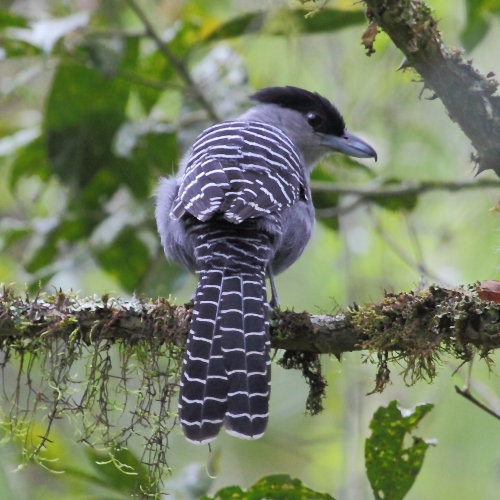
Peruvian Warbling-Antbird
Hypocnemis peruviana
Order: Passeriformes / Family: Thamnophilidae

Wikimedia Commons
About the Peruvian Warbling-Antbird
The Peruvian Warbling-Antbird (Hypocnemis peruviana) is a captivating species belonging to the Thamnophilidae family, a group known for their association with ant swarms and dense forest habitats. This bird is primarily found in the western Amazon Basin, thriving in the humid and biodiverse environments of Peru, Bolivia, and Brazil. Its presence highlights the rich avifaunal diversity of these regions, contributing significantly to the ecological balance of its habitat. The Peruvian Warbling-Antbird plays a crucial role in the ecosystem by helping control insect populations. During the breeding season, which typically extends from November to February, this antbird exhibits heightened territorial behavior, defending its nesting sites vigorously. Outside the breeding period, the Peruvian Warbling-Antbird remains active year-round, maintaining its territory and playing a part in mixed-species flocks, which is typical of many understory birds. These flocks often help in cooperative foraging, enhancing food availability for all members. The bird's ecological role extends beyond just insect control; it also serves as a bioindicator, reflecting the health of its environment. The presence of the Peruvian Warbling-Antbird in a given area indicates a healthy, undisturbed forest. However, habitat loss due to deforestation poses a significant threat to its population, emphasizing the need for effective conservation strategies. Understanding the Peruvian Warbling-Antbird's behavior and habitat preferences aids in formulating conservation plans, ensuring this species continues to enchant birdwatchers and researchers alike in its native regions.
The Peruvian Warbling-Antbird belongs to the family Thamnophilidae, within the order Passeriformes. These birds typically live 5 years with a maximum recorded of 8 years.
How to Identify a Peruvian Warbling-Antbird
The Peruvian Warbling-Antbird is a small, distinctive passerine, measuring around 12-13 cm in length. Adult males are striking with their contrasting black-and-white plumage. They exhibit a black face and throat, with a white eyebrow stripe and white underparts, while the back and wings display a mottled black and gray pattern. Females differ by having a rufous wash on the chest and a paler throat, making them less conspicuous in their forest habitats. Juvenile birds often resemble females but exhibit a more subdued coloration. This species can be confused with the similar-looking Yellow-breasted Warbling-Antbird, yet the latter boasts a more prominent yellow breast. In flight, the Peruvian Warbling-Antbird shows short, rounded wings and a short tail, consistent with its adaptation to dense forest undergrowth. When perched, often on low branches or vines, it maintains an alert posture, frequently flicking its wings and tail, a behavior that helps in distinguishing it from other understory birds. The bird's distinctive vocalizations also aid in identification, as its song is melodious yet complex.
Having trouble telling birds apart? Upload a photo to our bird identification tool for an instant species match.
Peruvian Warbling-Antbird Habitat and Range
Preferred Habitat
The Peruvian Warbling-Antbird inhabits the dense undergrowth of lowland tropical rainforests, particularly favoring areas with a thick understory that provides ample cover and food resources. These habitats are typically found in regions such as the Amazon Basin, covering parts of Peru, Bolivia, and Brazil. The bird is most commonly found at elevations ranging from 100 to 800 meters above sea level, although it occasionally ventures higher. Unlike some species, the Peruvian Warbling-Antbird does not exhibit significant seasonal movements, preferring to remain within its established territory throughout the year. It is rarely encountered in urban or heavily disturbed areas, as it relies on pristine forest environments to thrive. The bird's presence is usually indicative of intact forest ecosystems, making it a valuable species for assessing habitat quality.
Geographic Range
The Peruvian Warbling-Antbird is primarily found within the Amazon Basin, with its range extending across eastern Peru, northern Bolivia, and western Brazil. It inhabits a relatively small geographical area compared to some of its relatives, which makes conservation efforts particularly critical. This bird is a non-migratory resident, maintaining its territory year-round within the dense forests it calls home. Population densities are highest in regions with undisturbed forest cover, such as the Manu National Park in Peru and the Madidi National Park in Bolivia. These protected areas provide crucial refuges for the species, allowing stable population numbers despite ongoing deforestation elsewhere. While it is not considered globally threatened, localized habitat destruction could pose risks to specific populations if not managed properly.
Want to know which birds visit your area? Browse our backyard birds by location guides for region-specific species lists.
What Does the Peruvian Warbling-Antbird Eat?
The Peruvian Warbling-Antbird primarily feeds on insects and other small arthropods, which it skillfully gleans from leaves and branches in the understory. Its diet includes beetles, spiders, ants, and caterpillars, with occasional consumption of small vertebrates such as frogs or lizards. The bird often follows swarms of army ants, taking advantage of the insects flushed out by the ants' movement through the forest floor. This behavior, known as ant-following, is a characteristic trait of many antbird species. The Peruvian Warbling-Antbird's foraging activity peaks during the early morning and late afternoon, times when insect activity is also heightened. Seasonal changes in insect availability can lead to slight variations in diet composition, yet the bird remains primarily insectivorous year-round.
Peruvian Warbling-Antbird Behavior and Social Structure
The Peruvian Warbling-Antbird is a social species, often found in pairs or small family groups. During the breeding season, pairs become highly territorial, engaging in vocal duets to mark their territory boundaries and deter intruders. Courtship displays involve intricate movements and vocalizations, with males showcasing their plumage to attract mates. Outside the breeding season, the bird participates in mixed-species flocks, enhancing its foraging efficiency and reducing predation risk. These flocks are typically composed of various understory bird species, each occupying different foraging niches. When threatened by predators, such as snakes or raptors, the Peruvian Warbling-Antbird exhibits alarm calls and may engage in mobbing behavior to drive the threat away. Daily activity patterns involve foraging during cooler parts of the day, with periods of rest and preening during the hottest hours.
Peruvian Warbling-Antbird Nesting and Reproduction
The Peruvian Warbling-Antbird constructs cup-shaped nests, typically located low in dense vegetation to conceal them from predators. Nests are crafted from leaves, twigs, and other plant materials, often lined with softer fibers for added comfort. Preferred nesting sites include tangles of vines or dense shrubbery within their forest habitat. Clutch size usually consists of two eggs, which both parents incubate over a period of approximately 14-16 days. After hatching, both parents share feeding and care duties, ensuring the chicks receive adequate nourishment. Fledging occurs roughly 10-12 days after hatching, although the young remain dependent on parental care for several weeks thereafter. The Peruvian Warbling-Antbird typically raises one brood per year, with breeding closely tied to seasonal insect abundance.
Peruvian Warbling-Antbird Sounds and Vocalizations
The Peruvian Warbling-Antbird has a melodious and complex primary song, characterized by a series of rapid, whistling notes that rise and fall in pitch. This song is often delivered in a rhythmic pattern, serving both to attract mates and to establish territory boundaries. Call notes are more subdued, consisting of soft chips and trills used for communication between paired birds or within family groups. Alarm calls are harsh and loud, designed to alert other birds to potential threats. During the dawn chorus, the Peruvian Warbling-Antbird is particularly vocal, contributing its song to the symphony of sounds that fill the forest at daybreak.
Interesting Facts About the Peruvian Warbling-Antbird
- 1The Peruvian Warbling-Antbird often follows army ant swarms, a behavior shared by many antbird species.
- 2Despite its small size, the Peruvian Warbling-Antbird is known for its loud and complex song, which plays a crucial role in territory defense.
- 3Both male and female Peruvian Warbling-Antbirds participate equally in nest building and chick rearing, showcasing strong parental cooperation.
- 4This antbird's preference for dense understory habitats makes it a reliable indicator of forest health and biodiversity.
- 5The Peruvian Warbling-Antbird is one of over 200 species in the Thamnophilidae family, illustrating the diversity of antbirds in South America.
- 6Unlike some antbirds, the Peruvian Warbling-Antbird does not rely solely on ant swarms, often foraging independently in the understory.
- 7The species' distinctive vocalizations make it a favorite subject for sound recording among ornithologists and bird enthusiasts.
Peruvian Warbling-Antbird Conservation Status
The Peruvian Warbling-Antbird is currently classified as Least Concern by the IUCN, with stable population trends in many parts of its range. However, habitat loss due to deforestation and land conversion poses a growing threat to this species, particularly in regions where forest protection measures are weak. Conservation efforts focus on preserving critical habitats, such as national parks and reserves, which provide safe havens for the bird and other forest-dependent species. Historically, the Peruvian Warbling-Antbird has maintained stable populations, aided by its adaptability to dense forest environments. Continued habitat conservation and restoration efforts are vital to ensuring the long-term survival of the species.