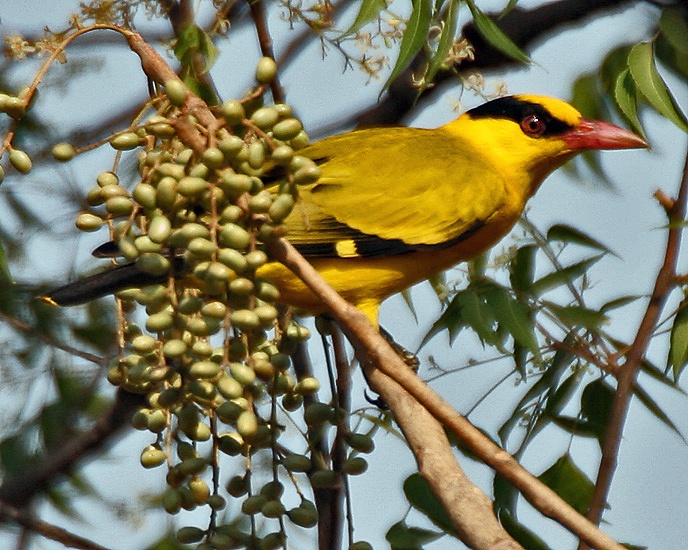
Philippine Fairy-bluebird
Irena cyanogastra
Order: Passeriformes / Family: Irenidae

Wikimedia Commons
About the Philippine Fairy-bluebird
The Philippine Fairy-bluebird (Irena cyanogastra) stands out as an avian marvel endemic to the Philippines. This species, part of the family Irenidae, exhibits vibrant blue plumage that captures the essence of its fairy-like namesake. Found primarily in the archipelago’s forested regions, it plays a significant role in the local ecosystem as both a pollinator and seed disperser, thanks to its frugivorous diet. In Luzon, Mindanao, and several smaller islands, the Philippine Fairy-bluebird thrives in humid, lowland forests and occasionally ventures into mountain forests up to 1,800 meters in elevation. Its presence signifies a healthy forest ecosystem, as it relies on diverse fruit sources that flourish in unfragmented habitats. Ecologically, this bird contributes to maintaining forest biodiversity by aiding in the germination of various tree species through its droppings. Seasonal behaviors of the Philippine Fairy-bluebird include more pronounced vocal activity during the breeding season, typically from March to August, when males sing to establish territories and attract mates. Outside the breeding season, these bluebirds may form small, loose flocks, allowing them to forage more efficiently and possibly deter predators through collective vigilance. The significance of the Philippine Fairy-bluebird extends beyond its ecological contributions; it is a cultural symbol for locals who associate its vivid colors with the lushness of their natural heritage.
The Philippine Fairy-bluebird belongs to the family Irenidae, within the order Passeriformes. These birds typically live average 5-7 years, with a maximum recorded of 10 years.
How to Identify a Philippine Fairy-bluebird
The unmistakable Philippine Fairy-bluebird captivates observers with its striking plumage. Adult males display a vivid cobalt blue hue on their upperparts, including the head, back, and tail, which contrasts with their black wings and underparts. Females, while less vibrant, possess a more subdued blue-green coloration, making them less conspicuous but equally enchanting. Juveniles resemble females but with duller tones, lacking the intensity of adult plumage. When perched, the Philippine Fairy-bluebird maintains an upright posture, showcasing its long tail and slender build. In flight, its silhouette is characterized by broad wings and a straight flight path, which aids in distinguishing it from other forest-dwelling birds. While its coloration is unique among avian species in the Philippines, it can occasionally be mistaken for the Asian Fairy-bluebird (Irena puella), found in nearby regions. However, the latter species does not inhabit the Philippine archipelago, and its deeper blue plumage and different vocalizations can help avoid confusion.
Having trouble telling birds apart? Upload a photo to our bird identification tool for an instant species match.
Philippine Fairy-bluebird Habitat and Range
Preferred Habitat
The Philippine Fairy-bluebird predominantly inhabits primary and secondary forests on the Philippine islands. Preferring dense, humid environments, this species is most commonly found in lowland dipterocarp forests but can also adapt to montane forests at elevations up to 1,800 meters. While traditionally restricted to undisturbed habitats, it occasionally ventures into forest edges and degraded areas, provided these locations offer sufficient food resources. The species shows some adaptability to habitat changes but remains largely absent from urban settings, reflecting its reliance on forest ecosystems. During the breeding season, the Philippine Fairy-bluebird exhibits a preference for secluded forest interiors where it can find ample nesting sites and food sources.
Geographic Range
The Philippine Fairy-bluebird is endemic to the Philippines, with its range encompassing major islands such as Luzon, Mindanao, and several Visayan islands. This species is non-migratory, residing year-round within these islands' forests. While it does not undertake long-distance migrations, it may exhibit altitudinal movements, descending from montane regions to lower elevations during certain times of the year, likely in response to food availability. The highest population densities occur in well-preserved forest areas where primary growth remains intact. However, habitat fragmentation poses a threat to its continuous range, with populations becoming increasingly isolated in smaller forest patches.
Want to know which birds visit your area? Browse our backyard birds by location guides for region-specific species lists.
What Does the Philippine Fairy-bluebird Eat?
Primarily frugivorous, the Philippine Fairy-bluebird feeds on a diverse array of fruits found within its forest habitat. It particularly favors figs and berries, which provide essential nutrients and energy. During the dry season, when fruit abundance may decline, the bird supplements its diet with insects and other invertebrates, demonstrating its dietary flexibility. Foraging typically occurs in the forest canopy, where it adeptly plucks ripe fruit with its strong bill. It often joins mixed-species feeding flocks, which can enhance foraging efficiency and reduce predation risk. The bird's role as a seed disperser is crucial, as it aids in the propagation of various plant species, contributing to forest regeneration.
Philippine Fairy-bluebird Behavior and Social Structure
The Philippine Fairy-bluebird exhibits a complex array of social behaviors, particularly evident during the breeding season. Males establish and defend territories through song and displays, using their vivid plumage to attract females. During courtship, males engage in elaborate flight displays, showcasing their agility and strength. These birds tend to be solitary or found in pairs, though they may form small flocks outside of breeding periods. Territorial disputes are common, with birds engaging in vocal duels and aerial chases to assert dominance. Despite their territorial nature, Philippine Fairy-bluebirds are generally wary of predators, relying on their acute vision and flight capabilities to evade threats. Their daily activities peak during the early morning and late afternoon, times when they are most active in foraging and social interactions.
Philippine Fairy-bluebird Nesting and Reproduction
The nesting habits of the Philippine Fairy-bluebird are intricately linked to its forested environment. These birds build cup-shaped nests using twigs, leaves, and other plant materials, typically situated in the mid-canopy layers of trees. Nest sites are chosen for their concealment and proximity to food sources. A typical clutch consists of two to three eggs, with both parents sharing incubation duties over roughly two weeks. After hatching, the chicks remain in the nest for about 16 to 20 days before fledging. Both parents participate in feeding and protecting the young, ensuring their survival in the dense forest habitat. The species usually raises one brood per year, although if conditions are favorable, a second brood may be attempted.
Philippine Fairy-bluebird Sounds and Vocalizations
The Philippine Fairy-bluebird produces a variety of vocalizations, with its primary song being a melodious series of fluty notes that rise and fall in pitch. These songs are particularly prevalent during the breeding season when males sing to declare territory and attract mates. Call notes include sharp, metallic 'chip' sounds used for communication between mates or to signal alarm. When disturbed, the bird emits a high-pitched, rapid trill, serving as an alarm call to warn others of impending danger. During the dawn chorus, its song contributes to the symphony of forest sounds, creating an enchanting auditory experience that is as vibrant as its plumage.
Interesting Facts About the Philippine Fairy-bluebird
- 1The Philippine Fairy-bluebird's bright plumage can be seen from over 100 meters away, making it a standout in dense forests.
- 2Unlike many other songbirds, the Philippine Fairy-bluebird often sings during the hottest part of the day.
- 3Its scientific name, Irena cyanogastra, reflects its striking blue belly, with 'cyano' meaning blue and 'gastra' referring to the stomach.
- 4The Philippine Fairy-bluebird has a unique flight call that can be heard up to 500 meters in dense forest conditions.
- 5Due to its fruit-heavy diet, the Philippine Fairy-bluebird plays a vital role in seed dispersal, aiding in forest regeneration.
- 6Despite its vibrant coloration, the Philippine Fairy-bluebird's nest is well-camouflaged to protect against predators.
- 7The species' strong affinity for figs links it to the health of fig tree populations, which are keystone species in their ecosystems.
Philippine Fairy-bluebird Conservation Status
Currently listed as Near Threatened on the IUCN Red List, the Philippine Fairy-bluebird faces challenges from habitat loss and fragmentation due to deforestation and land conversion. Population trends indicate a decline, primarily driven by the destruction of its forest habitats. Conservation efforts focus on protecting and restoring these critical habitats, with several forest reserves and national parks in the Philippines playing a key role in safeguarding remaining populations. Historically, population numbers were more robust, with declines correlating to increased logging activities and agricultural expansion. Continued conservation action is necessary to ensure the survival of this striking species.
Other Irenidae Species


Birds Similar to the Philippine Fairy-bluebird
These species are often confused with the Philippine Fairy-bluebird due to similar appearance or overlapping range.