
Pomarine Jaeger
Stercorarius pomarinus
Order: Charadriiformes / Family: Stercorariidae
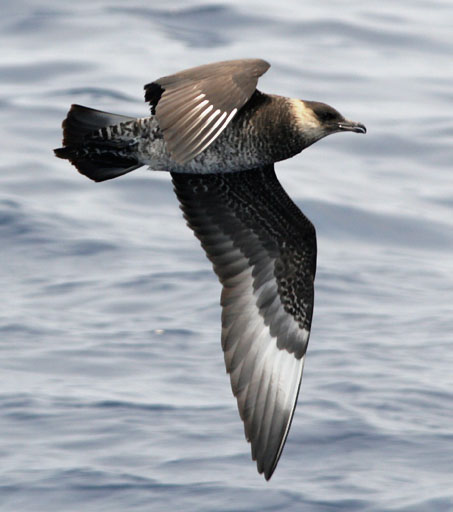
Wikimedia Commons
About the Pomarine Jaeger
The Pomarine Jaeger, Stercorarius pomarinus, is a formidable seabird known for its aggressive predatory habits and distinct physical features. This medium-sized jaeger is part of the Stercorariidae family, sharing its lineage with other skuas and jaegers. Unlike many seabirds, the Pomarine Jaeger is notorious for its piratical behavior, often seen chasing other birds to steal their hard-earned catch. Its role in marine ecosystems is significant, as it helps maintain balance by controlling prey populations and competing with other predators. Found primarily in northern latitudes, the Pomarine Jaeger breeds in the Arctic tundra, favoring areas such as the coastal plains of Alaska and Siberia. During the breeding season, these birds are often seen in open tundra regions, nesting on the ground amidst sparse vegetation. The habitat varies with the season, and during non-breeding months, they migrate to the open ocean, where they spend most of their time. These jaegers have a vast migratory range, wintering at sea in the Southern Hemisphere, notably off the coasts of South America, Africa, and Australia. Their seasonal migrations are impressive, spanning thousands of miles between breeding and wintering grounds. The Pomarine Jaeger's ecological role extends beyond predation and piracy, as it serves as an indicator species for the health of marine environments. Changes in their population can signal shifts in oceanic ecosystems, often linked to climate change and human activities. As a species that depends on both terrestrial and marine habitats, the Pomarine Jaeger's presence across diverse environments underscores its adaptability and resilience.
The Pomarine Jaeger belongs to the family Stercorariidae, within the order Charadriiformes. These birds typically live average 12-14 years with max recorded at 28 years..
How to Identify a Pomarine Jaeger
The Pomarine Jaeger is distinguished by its robust size and unique tail structure. Adult birds exhibit a striking combination of dark and light plumage. The head and upperparts are generally dark brown, while the underparts range from white to pale brown, often streaked with brown. A key identification feature is the central tail feathers' distinct spoon shape, which gives the bird its name. Juvenile Pomarine Jaegers, however, lack this tail feature and display a more uniform brown plumage, making them more challenging to identify at a distance. Unlike many other seabirds, there are no significant differences between the sexes in plumage. In flight, the Pomarine Jaeger's broad wings and steady, powerful wingbeats are notable. This species often flies with a direct and purposeful manner, contrasting with the more buoyant flight of smaller seabirds. On the ground or at rest, the jaeger's posture is upright and alert, with a keen, predatory gaze. Careful observation of these field marks helps differentiate the Pomarine Jaeger from similar species like the Parasitic and Long-tailed Jaegers, which are smaller and have more slender tails.
Having trouble telling birds apart? Upload a photo to our bird identification tool for an instant species match.
Pomarine Jaeger Habitat and Range
Preferred Habitat
Pomarine Jaegers inhabit a range of environments throughout their life cycle. During the breeding season, they seek out Arctic tundra regions, favoring coastal plains with sparse vegetation for nesting. These areas, such as the northern coasts of Alaska and Siberia, provide ample space for ground-nesting and a supply of prey like lemmings. Outside the breeding season, Pomarine Jaegers are predominantly pelagic, inhabiting open ocean waters and rarely venturing close to land. They are often seen far offshore, where they follow fishing vessels or track schools of fish. This species exhibits distinct habitat shifts with the season, moving from terrestrial nesting grounds to vast oceanic expanses during migration and wintering periods. While primarily associated with marine environments, Pomarine Jaegers do not typically inhabit urban areas, maintaining their presence in more remote and less disturbed locations.
Geographic Range
The breeding range of the Pomarine Jaeger spans the Arctic regions, with notable populations in northern Alaska, Canada, and Siberia. During the non-breeding season, these birds undertake extensive migrations, traveling to the Southern Hemisphere's oceans. They winter off the coasts of South America, including areas from Peru to Argentina, as well as along the African coast from Senegal to South Africa. Some populations also reach the waters around Australia and New Zealand. Migration corridors are vast, with birds often seen off the coasts of the United States and Europe during transit. Population density hotspots include the Bering Sea and the Barents Sea during the breeding season, where food availability and suitable nesting conditions attract significant numbers. These jaegers demonstrate a remarkable ability to adapt to a wide range of marine environments across their migratory routes.
Want to know which birds visit your area? Browse our backyard birds by location guides for region-specific species lists.
What Does the Pomarine Jaeger Eat?
The Pomarine Jaeger's diet primarily consists of fish, which they often acquire through kleptoparasitism, a behavior where they chase other seabirds to steal their catch. They are also known to consume small mammals, particularly lemmings, during the breeding season in the Arctic tundra. In addition to pirating food, Pomarine Jaegers actively hunt for fish and squid, diving to catch prey or snatching it from the water's surface. Their diet shifts seasonally, reflecting the availability of prey in different regions. During migration and wintering at sea, they rely more heavily on marine food sources, demonstrating adaptability in their feeding strategies. The Pomarine Jaeger's foraging techniques are diverse, ranging from direct predation to opportunistic scavenging, allowing them to thrive across varied marine environments.
Pomarine Jaeger Behavior and Social Structure
Pomarine Jaegers exhibit complex social and territorial behaviors, particularly during the breeding season. These birds are known for their aggressive nature, often engaging in aerial pursuits to steal food from other seabirds. Territorial displays are common, with pairs defending their nesting grounds from intruders. Courtship involves intricate displays, including aerial maneuvers and vocalizations, to establish pair bonds. Outside the breeding season, Pomarine Jaegers are less territorial, often seen in loose flocks or solitary at sea. Their response to predators involves both aggression and evasion, with skilled flying playing a key role in defense. Daily activity patterns vary, with birds more active during daylight hours, especially when foraging. The Pomarine Jaeger's behavior reflects a high degree of adaptability and competitiveness, essential for survival in diverse and challenging environments.
Pomarine Jaeger Nesting and Reproduction
Pomarine Jaegers nest on the ground in the Arctic tundra, selecting sites with minimal vegetation to provide clear visibility of approaching predators. Nests are simple scrapes in the earth, sometimes lined with grasses or moss. Clutch size typically ranges from one to three eggs, with both parents sharing incubation duties over a period of approximately 24 to 27 days. After hatching, chicks remain in the nest for a few weeks before fledging. Parental roles are well defined, with both male and female sharing feeding and protection responsibilities. Typically, Pomarine Jaegers produce one brood per year, with breeding success closely tied to prey availability, particularly populations of lemmings. The nesting period is a critical time, demanding vigilance from parents to ensure chick survival in the harsh Arctic environment.
Pomarine Jaeger Sounds and Vocalizations
The Pomarine Jaeger's vocalizations include a range of calls and sounds. Their primary call is a harsh, repetitive 'kak-kak-kak', often heard during aggressive interactions or when defending territory. Alarm calls are sharp and piercing, used to alert mates and chicks of potential threats. The Pomarine Jaeger does not have a complex song like many passerines, but its vocal repertoire is effective for communication in the open tundra and at sea. During courtship, softer, more melodic calls might be exchanged between pairs to reinforce bonds. Compared to other seabirds, their vocalizations are less varied but serve essential functions in social interactions and predator avoidance.
Interesting Facts About the Pomarine Jaeger
- 1Pomarine Jaegers are known for their long migrations, traveling over 10,000 miles between breeding and wintering grounds.
- 2This species exhibits kleptoparasitism, often chasing and harassing other seabirds to steal their food.
- 3The Pomarine Jaeger's spoon-shaped tail feathers are unique among jaegers and aid in identification.
- 4These birds can adjust their diet based on availability, consuming fish, squid, and small mammals.
- 5The Pomarine Jaeger's population can fluctuate dramatically depending on lemming abundance in breeding areas.
- 6Their powerful flight allows them to thrive in harsh oceanic environments, often following ships for food.
- 7Pomarine Jaegers play a role in controlling prey populations, helping maintain ecological balance in marine habitats.
Pomarine Jaeger Conservation Status
The Pomarine Jaeger is currently listed as Least Concern by the IUCN, reflecting a stable global population. However, certain regional populations face threats from habitat loss and climate change, particularly in breeding areas where warming temperatures affect prey availability. Conservation efforts focus on monitoring population trends and protecting critical habitats. Historically, the Pomarine Jaeger's population has fluctuated in response to lemming cycles, underscoring the interconnectedness of Arctic ecosystems. Ongoing research and international cooperation are vital to ensure the continued survival of this adaptable seabird.
Other Stercorariidae Species


Birds Similar to the Pomarine Jaeger
These species are often confused with the Pomarine Jaeger due to similar appearance or overlapping range.
