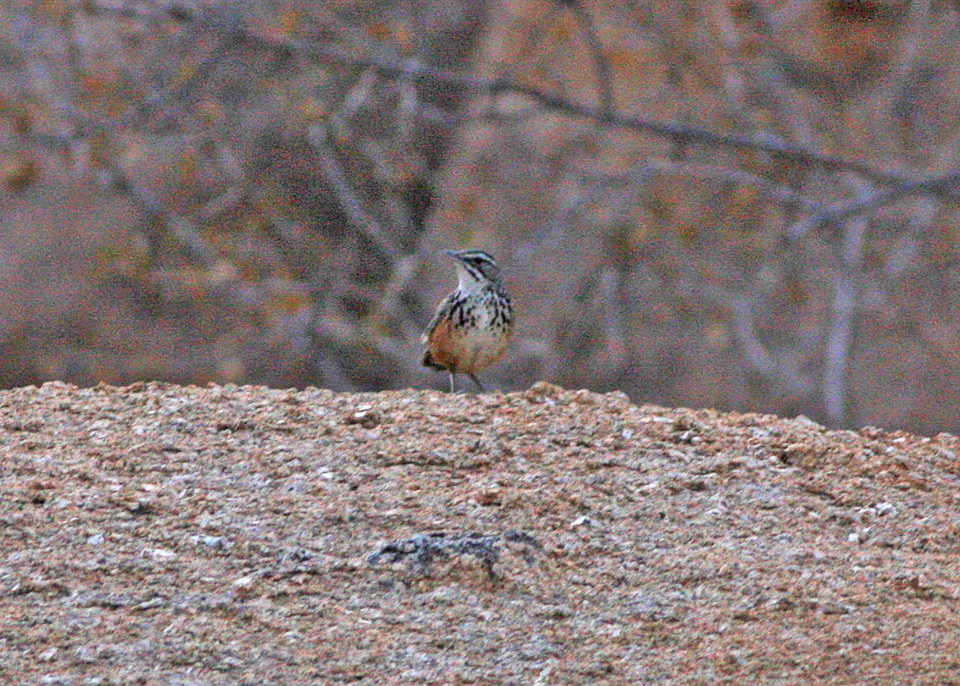
Pulitzer's Longbill
Macrosphenus pulitzeri
Order: Passeriformes / Family: Macrosphenidae

Wikimedia Commons
About the Pulitzer's Longbill
The Pulitzer's Longbill, scientifically known as Macrosphenus pulitzeri, is a captivating species endemic to specific regions of Central Africa, particularly thriving in the lowland rainforests of Angola. This bird is part of the Macrosphenidae family, a group distinguished by their relatively slender, elongated forms and specialized bills that adapt them to specific ecological niches. The Pulitzer's Longbill plays a crucial role in its ecosystem, contributing to insect control through its diet, which primarily consists of small invertebrates. Its presence in the forest understory is vital for maintaining ecological balance, as it influences the population dynamics of its prey species. The bird's ecological significance extends to its role as a seed disperser, indirectly facilitating forest regeneration by spreading seeds of various plants that form part of its habitat. This bird is particularly active during the early morning hours and late afternoon, times when it is most likely to be observed foraging or displaying territorial behavior. The Pulitzer's Longbill is a non-migratory species, although it may exhibit local movements in response to seasonal variations in food availability. This behavioral adaptability enables it to withstand the seasonal fluctuations characteristic of its tropical habitat. While this bird is adept at navigating the dense vegetation of its forest home, deforestation and habitat fragmentation pose significant threats to its population. The preservation of its natural habitat is vital not only for the Pulitzer's Longbill but also for the myriad of species that share its environment.
The Pulitzer's Longbill belongs to the family Macrosphenidae, within the order Passeriformes. These birds typically live average 4 years, with a maximum recorded of 6 years..
How to Identify a Pulitzer's Longbill
The Pulitzer's Longbill is a small passerine bird, measuring approximately 14 centimeters in length. Its most distinctive feature is its elongated bill, which is adapted for probing into crevices and accessing insects hidden within foliage. Adult plumage is predominantly olive-brown on the upperparts, with a subtle grayish underbelly. This coloration provides excellent camouflage against the forest floor and lower canopy. Juvenile Pulitzer's Longbills exhibit similar coloration to adults, although with slightly paler underparts and less pronounced bill length. Males and females are similar in appearance, making it challenging to distinguish between the sexes in the field. The bird's flight silhouette is characterized by a short, rounded tail and relatively long wings, which it uses to maneuver skillfully through dense vegetation. When perching, the Pulitzer's Longbill often adopts a horizontal posture, frequently flicking its tail as it observes its surroundings. This behavior, coupled with its distinctive bill, helps differentiate it from similar species within the same habitat, such as the African Warbler.
Having trouble telling birds apart? Upload a photo to our bird identification tool for an instant species match.
Pulitzer's Longbill Habitat and Range
Preferred Habitat
The Pulitzer's Longbill predominantly inhabits lowland tropical rainforests, favoring areas with dense understory and abundant leaf litter. It is most frequently found in undisturbed primary forests, although it can occasionally be seen in secondary forests and well-vegetated forest edges. This bird typically resides at elevations ranging from sea level to about 1,200 meters. Throughout the year, the Pulitzer's Longbill remains within these forested environments, showing little tendency to migrate or shift habitats seasonally. Unlike some other species, it does not adapt well to urban settings and is rarely observed outside forested regions. Its reliance on pristine forest habitats makes it particularly vulnerable to deforestation and land conversion for agriculture.
Geographic Range
The Pulitzer's Longbill is primarily found in Central Africa, with its range largely restricted to the lowland rainforests of Angola. It is an endemic species, meaning it occurs nowhere else in the world, which makes its conservation status particularly critical. Within Angola, the bird's presence is concentrated in the eastern and central forested areas, with high population densities noted in regions like the Mayombe Forest. The species does not undertake long-distance migrations, thus its distribution remains relatively stable year-round. However, local movements in response to food availability or habitat changes can occur, particularly following seasonal rains that influence prey abundance.
Want to know which birds visit your area? Browse our backyard birds by location guides for region-specific species lists.
What Does the Pulitzer's Longbill Eat?
The diet of the Pulitzer's Longbill primarily consists of small invertebrates, including insects such as beetles, ants, and termites. This bird employs a foraging technique that involves probing leaf litter and bark crevices with its long bill to extract hidden prey. The size of the prey typically ranges from a few millimeters to about one centimeter, allowing the bird to efficiently manage its food resources. During the wet season, when insect populations peak, the Pulitzer's Longbill may also consume a small number of seeds and berries. Feeding activity is most intense during the cooler parts of the day, particularly in the early morning and late afternoon, aligning with the periods of peak insect activity in its habitat.
Pulitzer's Longbill Behavior and Social Structure
The Pulitzer's Longbill exhibits a predominantly solitary or paired social structure, with individuals or pairs maintaining and defending small territories within the forest. Territorial behavior includes vocal displays and physical posturing to deter intruders. During the breeding season, courtship involves males performing a series of aerial displays and vocalizations to attract females. These displays are often accompanied by a rapid fluttering of wings and distinctive calls. The species does not typically form large flocks, although several individuals may be observed in close proximity if food resources are abundant. In response to predators, the Pulitzer's Longbill may employ a freeze response, relying on its cryptic coloration to blend into the surroundings. Daily activity patterns are diurnal, with periods of rest during the hottest part of the day.
Pulitzer's Longbill Nesting and Reproduction
The nesting behavior of the Pulitzer's Longbill involves the construction of cup-shaped nests, typically built low within dense understory vegetation or small shrubs. Nests are made using a combination of twigs, grasses, and leaves, providing camouflage and protection from predators. The typical clutch size ranges from two to three eggs, with both parents participating in incubation, which lasts approximately 12 to 14 days. After hatching, the chicks remain in the nest for about 15 to 18 days before fledging. The parents continue to feed and care for the fledglings until they are fully independent. The species is known to produce one or two broods per year, depending on environmental conditions and food availability.
Pulitzer's Longbill Sounds and Vocalizations
The primary song of the Pulitzer's Longbill is a series of melodious whistles, characterized by a rising and falling pattern that is both clear and penetrating. These vocalizations are often repeated in rapid succession, serving as both territorial markers and mating calls. Call notes are softer, consisting of gentle chirps used for communication between mates or with fledglings. Alarm calls are sharper and more abrupt, designed to alert nearby individuals to potential threats. During the dawn chorus, the Pulitzer's Longbill's song is a prominent component, contributing to the rich acoustic landscape of its forest habitat.
Interesting Facts About the Pulitzer's Longbill
- 1The Pulitzer's Longbill was first described in 1953, making it a relatively recent addition to ornithology.
- 2Its long bill is a specialized adaptation for extracting insects from bark and leaf litter, a rare trait among small forest birds.
- 3Despite its elusive nature, the Pulitzer's Longbill is an important indicator species for forest health in its native range.
- 4This bird spends much of its time in the forest understory, a layer often overlooked by casual observers.
- 5The Pulitzer's Longbill's song is considered one of the most melodious among its family, often compared to the notes of a flute.
- 6Endemic to Angola, the Pulitzer's Longbill is a testament to the region's unique biodiversity.
- 7The species' cryptic plumage makes it exceptionally difficult to spot, even for seasoned birdwatchers.
Pulitzer's Longbill Conservation Status
The Pulitzer's Longbill is currently listed as Near Threatened on the IUCN Red List, with population trends indicating a gradual decline due to habitat loss and fragmentation. The primary threats include deforestation for agriculture, logging, and infrastructure development, which reduce available habitat and food resources. Conservation efforts focus on protecting and preserving forested areas within its range, with some areas designated as protected reserves. Historical population changes highlight the impact of human activities, underscoring the need for ongoing conservation initiatives to ensure the survival of this unique species.