Red-chested Flufftail
Sarothrura rufa
Order: Gruiformes / Family: Rallidae

Wikimedia Commons
About the Red-chested Flufftail
The Red-chested Flufftail (Sarothrura rufa) is a small, elusive bird from the Rallidae family, primarily inhabiting the wetlands and marshy areas of sub-Saharan Africa. Its range extends from Senegal and Gambia in the west, across central Africa to Ethiopia, and south to South Africa. This species plays an integral role in its ecosystem by contributing to the control of insect populations, as its diet largely consists of various invertebrates. It is also prey for larger birds and mammals, providing a critical link in the food chain. The Red-chested Flufftail is especially significant in regions like the Okavango Delta in Botswana, where its presence indicates healthy wetland ecosystems. Seasonal behaviors include breeding during the rainy season, when water levels are high and food is abundant. Unlike some other birds, the Red-chested Flufftail is non-migratory, staying within its range year-round. This bird exhibits a secretive nature, often heard rather than seen, as it navigates the dense vegetation of its habitat. Its role in the ecosystem underscores the importance of preserving wetland areas, which are under threat from human activities such as agriculture and urban development. The Red-chested Flufftail's elusive nature and specialized habitat preferences make it a fascinating subject of study for ornithologists and conservationists alike.
The Red-chested Flufftail belongs to the family Rallidae, within the order Gruiformes. These birds typically live average 3-5 years with a maximum recorded of 7 years..
How to Identify a Red-chested Flufftail
Identifying the Red-chested Flufftail involves noting its size and distinctive coloration. Adults measure about 14 to 16 centimeters in length and have a wingspan of approximately 25 centimeters, making them small birds. The males are particularly striking, with a bright rufous chest and throat, contrasting with their darker, mottled brown back and wings. The females are less vibrant, featuring a more subdued brownish-red chest and a paler belly. Juveniles resemble females but are slightly duller in coloration. Compared to similar species, such as the Buff-spotted Flufftail, the Red-chested Flufftail's red chest is a key distinguishing feature. The bird's flight silhouette is characterized by short, rounded wings and a rapid, direct flight pattern. When perching, it often remains low in the vegetation, making it difficult to spot. This bird is more often detected by listening for its distinctive calls emitted from dense reed beds.
Having trouble telling birds apart? Upload a photo to our bird identification tool for an instant species match.
Red-chested Flufftail Habitat and Range
Preferred Habitat
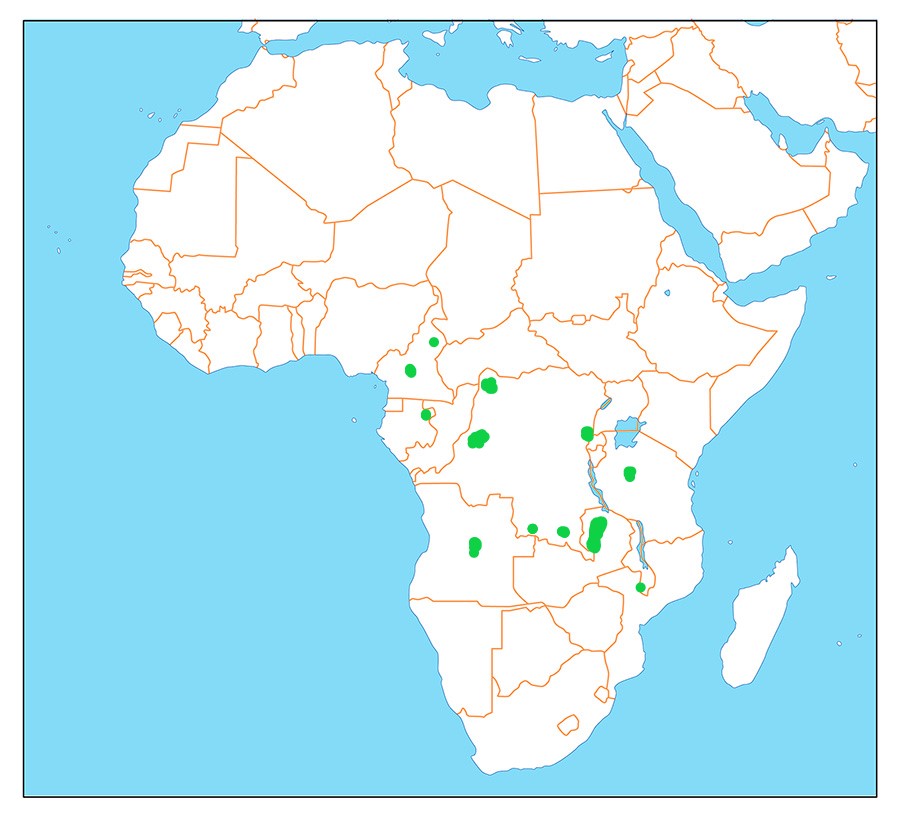
The Red-chested Flufftail resides in a variety of wetland habitats, including marshes, swamps, and reed beds. It favors areas with dense vegetation near water sources, such as papyrus and reed-filled wetlands. This species can be found from sea level to elevations of up to 2,000 meters, depending on the availability of suitable habitat. It shows a preference for freshwater environments but can occasionally be found in brackish waters. Unlike urban-adapted species, the Red-chested Flufftail avoids heavily populated areas, instead thriving in rural and undeveloped wetlands. During the dry season, these birds may shift slightly to areas with permanent water sources to maintain access to food and suitable nesting sites.
Geographic Range
The Red-chested Flufftail's range covers sub-Saharan Africa, with populations in countries such as Nigeria, Cameroon, Uganda, Kenya, and Zambia. It is particularly abundant in the southern parts of its range, including Zimbabwe, Mozambique, and South Africa. As a non-migratory species, the Red-chested Flufftail does not undertake long-distance migrations, remaining in its home range throughout the year. However, it may undertake local movements in response to changing water levels and habitat conditions, particularly during the breeding season when it seeks optimal nesting sites. Population densities vary, with hotspots often occurring in extensive wetland complexes like the Okavango Delta and the Zambezi River floodplains.
Want to know which birds visit your area? Browse our backyard birds by location guides for region-specific species lists.
What Does the Red-chested Flufftail Eat?
The diet of the Red-chested Flufftail primarily consists of small invertebrates, including insects, spiders, and mollusks. It forages by walking through dense vegetation, using its bill to probe the ground and vegetation for prey. During the rainy season, when insect activity is at its peak, this bird capitalizes on the abundance of food, supplementing its diet with seeds and plant matter. Prey size generally ranges from small to medium-sized invertebrates, allowing the bird to exploit a variety of food sources. The Red-chested Flufftail typically feeds during the early morning and late afternoon when temperatures are cooler and prey is more active. Its foraging behavior is adapted to its wetland environment, with the bird navigating through reeds and grasses in search of food.
Red-chested Flufftail Behavior and Social Structure
The Red-chested Flufftail exhibits solitary and secretive behavior, often staying hidden within dense wetland vegetation. Territorial by nature, males call frequently to establish and defend their territory, especially during the breeding season. Their calls are a series of short, repeated whistles that can be heard over long distances, serving both as a mating call and a warning to rivals. Courtship displays include males approaching females with lowered wings and head bobs, often accompanied by soft calls. Although generally solitary, the Red-chested Flufftail may form loose associations with other flufftails during non-breeding periods when food resources are abundant. When faced with predators, the bird relies on its cryptic plumage and ability to remain motionless to avoid detection. Its daily activity pattern includes periods of feeding and preening interspersed with rest, primarily during midday.
Red-chested Flufftail Nesting and Reproduction
The nesting habits of the Red-chested Flufftail involve constructing a well-concealed nest on or near the ground within dense wetland vegetation. The nest is often a shallow cup made of grasses and reeds, carefully woven to provide stability and concealment. Nest locations are chosen for their proximity to water and dense cover, ensuring safety from predators and easy access to food. Clutch size typically ranges from 2 to 5 eggs, with incubation lasting about 16 to 19 days. Both parents share incubation duties and are involved in feeding and caring for the hatchlings. Fledging occurs approximately 20 days after hatching, although young birds may remain in the vicinity of the nest for several weeks. The Red-chested Flufftail generally raises one to two broods per year, depending on environmental conditions and food availability.
Red-chested Flufftail Sounds and Vocalizations
The Red-chested Flufftail's vocalizations are a key aspect of its behavior, with the primary song consisting of a series of short, repetitive whistles that can be described as 'whit-whit-whit,' delivered in a slow, deliberate rhythm. This song is most often heard during the breeding season, particularly at dawn and dusk. Call notes are softer and more subdued, used in communication between mates or responding to disturbances. Alarm calls, on the other hand, are sharper and more rapid, signaling the presence of predators or other threats. The bird's vocalizations play a crucial role in territory establishment and mate attraction, with their distinctive sound often being the primary means by which the species is detected in the wild.
Interesting Facts About the Red-chested Flufftail
- 1The Red-chested Flufftail's distinctive call can be heard over 100 meters away in dense vegetation.
- 2Unlike many wetland birds, the Red-chested Flufftail is non-migratory and stays in its range year-round.
- 3The species plays a crucial role in controlling insect populations in its wetland habitat.
- 4Red-chested Flufftails are often detected by their calls rather than sightings, due to their secretive nature.
- 5The bird's habitat preferences make it a bioindicator of healthy wetland ecosystems.
- 6During courtship, males exhibit a unique display involving head bobbing and wing lowering.
- 7The Red-chested Flufftail constructs its nest with reeds and grasses, expertly camouflaged within dense vegetation.
Red-chested Flufftail Conservation Status
The Red-chested Flufftail is currently listed as Least Concern by the IUCN, reflecting a stable population trend across much of its range. However, local populations face threats from habitat destruction, particularly the drainage of wetlands for agriculture and urban development. Conservation efforts focus on habitat protection and restoration, with several key wetland areas designated as protected sites. Historical changes in population have been influenced by fluctuating water levels and human encroachment, but the species' adaptability to various wetland habitats has helped mitigate some negative impacts. Continued monitoring and conservation initiatives are essential to ensure the long-term survival of this iconic wetland bird.
Other Rallidae Species


Birds Similar to the Red-chested Flufftail
These species are often confused with the Red-chested Flufftail due to similar appearance or overlapping range.