
Red-shouldered Vanga
Calicalicus rufocarpalis
Order: Passeriformes / Family: Vangidae

Wikimedia Commons
About the Red-shouldered Vanga
The Red-shouldered Vanga (Calicalicus rufocarpalis) is a distinctive bird native to the arid and semi-arid regions of southwestern Madagascar. As a member of the Vangidae family, this species plays a crucial role in the ecological balance of its habitat. With its striking red shoulders, this bird stands out against the often sparse and dry landscape it inhabits. Its range is localized, primarily confined to the spiny forests and scrublands characterized by Didiereaceae plants. These regions, including the Mikea Forest and areas around Toliara, provide a unique environment that supports its specialized feeding and breeding behaviors. The Red-shouldered Vanga's significance extends beyond its striking appearance, as it represents the biodiversity unique to Madagascar, a focal point for conservation efforts given the island's high level of endemism and habitat degradation. The bird's ecological role includes insect control, as it preys on various insects, thus contributing to the health of its ecosystem. Seasonally, the Red-shouldered Vanga exhibits slight changes in behavior, particularly during the breeding season when it becomes more conspicuous and vocal. Outside the breeding period, it may be less noticeable as it forages quietly within its habitat. Understanding the Red-shouldered Vanga's niche helps in appreciating the intricate web of life in Madagascar's unique dry forests and underscores the importance of conserving these habitats for future generations.
The Red-shouldered Vanga belongs to the family Vangidae, within the order Passeriformes. These birds typically live average around 5 years with a max recorded of 8 years.
How to Identify a Red-shouldered Vanga
The Red-shouldered Vanga is a medium-sized bird with a body length of approximately 17-19 cm. Adult males exhibit a striking red coloration on their shoulders, which is the primary distinguishing feature of the species. The rest of the plumage is predominantly black and white, with a black head and back contrasted against a white belly. Females and juveniles, however, display more subdued coloration, with females showing a brownish tint instead of the vivid red, and juveniles having a more mottled appearance overall. Both sexes have a robust, slightly hooked bill typical of vangas, which aids in their insectivorous diet. In flight, the bird's silhouette is characterized by broad wings and a somewhat short tail, making it identifiable against the sky when it takes to the air. Perched, the Red-shouldered Vanga often holds a slightly hunched posture, a typical stance that assists in its identification when not immediately visible. While similar in size to other vanga species, its unique coloration and habitat preferences reduce confusion with other birds within its range.
Having trouble telling birds apart? Upload a photo to our bird identification tool for an instant species match.
Red-shouldered Vanga Habitat and Range
Preferred Habitat
The Red-shouldered Vanga inhabits the dry deciduous forests and scrublands of southwestern Madagascar. These habitats are typically marked by the presence of Didiereaceae plants and thorny vegetation. The bird is found at elevations ranging from sea level to about 600 meters, although it predominantly occupies lowland areas. Unlike many other bird species, the Red-shouldered Vanga does not migrate, remaining within its specialized habitat year-round. It is more often found in rural and undeveloped areas, as its habitat is not well-suited to urban environments. Seasonal shifts in habitat use are minimal, as the bird's needs are consistently met by the dry forest ecosystem.
Geographic Range
The range of the Red-shouldered Vanga is restricted to southwestern Madagascar, particularly in regions like the Mikea Forest and areas around Toliara. This bird does not exhibit migratory behavior, maintaining a year-round presence within its limited range. Its population density is highest in areas where the characteristic spiny forest habitat is most intact. These areas are crucial for the species' survival, as they provide the necessary resources for feeding and breeding. While the Red-shouldered Vanga is considered rare, it can still be found in the right habitats, though its localized range makes it vulnerable to habitat destruction.
Want to know which birds visit your area? Browse our backyard birds by location guides for region-specific species lists.
What Does the Red-shouldered Vanga Eat?
The diet of the Red-shouldered Vanga consists primarily of insects, which it forages actively among the dense foliage of its dry forest habitat. Beetles, grasshoppers, and caterpillars form the bulk of its diet, with occasional consumption of small fruits and seeds when insects are less abundant. Its foraging technique involves gleaning from branches and leaves, occasionally employing short flights to capture flying insects. This diet is consistent throughout the year, although seasonal fluctuations in insect populations may influence its feeding habits. The bird typically hunts during the cooler parts of the day, such as early morning and late afternoon, adapting its schedule to the temperatures of its arid environment.
Red-shouldered Vanga Behavior and Social Structure
The Red-shouldered Vanga exhibits a range of behaviors that highlight its adaptability to the dry forests of Madagascar. It maintains a primarily solitary or paired existence, especially during the breeding season when pairs become highly territorial. Courtship displays involve both vocalizations and visual signals, with males showcasing their red shoulder patches in a series of elaborate postures. Outside of the breeding season, these vangas may form loose associations with other bird species, participating in mixed-species foraging flocks. This behavior helps them find food more efficiently and provides added protection from predators. The Red-shouldered Vanga is generally diurnal, becoming active shortly after dawn and remaining busy through the late afternoon. Its response to predators includes a combination of alarm calls and evasive maneuvers, often retreating into dense thickets where it is less visible.
Red-shouldered Vanga Nesting and Reproduction
Nesting for the Red-shouldered Vanga occurs during the dry season, typically between September and November. The birds construct cup-shaped nests using twigs, grass, and spider webs, usually placed in the fork of a tree at a height of 1-3 meters. This strategic placement helps protect the nest from ground predators. A typical clutch consists of 2-3 eggs, which both parents incubate over a period of approximately 14-16 days. After hatching, the chicks remain in the nest for about 18-20 days before fledging. During this time, both parents play significant roles in feeding and defending the young. The species typically raises one brood per year, although in exceptional circumstances, a second brood may be attempted if conditions are favorable.
Red-shouldered Vanga Sounds and Vocalizations
The Red-shouldered Vanga's primary song is a series of melodious whistles and trills, delivered at a moderate pace with a clear, ringing quality. Males often sing from exposed perches to announce territory and attract mates during the breeding season. In addition to their primary song, these birds produce a variety of call notes that serve different purposes, such as short, sharp calls for communication between partners, and harsher alarm calls when predators are nearby. During the dawn chorus, the Red-shouldered Vanga's song can be heard blending with those of other forest inhabitants, contributing to the vibrant soundscape of its habitat.
Interesting Facts About the Red-shouldered Vanga
- 1The Red-shouldered Vanga was only discovered in 1997, making it one of the more recently identified bird species.
- 2Despite its striking appearance, the Red-shouldered Vanga can be difficult to spot due to its preference for dense, thorny vegetation.
- 3This vanga species is endemic to Madagascar, meaning it is found nowhere else in the world.
- 4The Red-shouldered Vanga contributes to insect control in its habitat, preying on a variety of insects.
- 5While the bird is not migratory, it may travel short distances within its range in search of food and nesting sites.
- 6The vanga's distinctive red shoulder patch is a key feature used in mate attraction and territorial displays.
- 7The species is part of a unique family of birds, the Vangidae, which exhibits a wide range of morphologies and behaviors.
Red-shouldered Vanga Conservation Status
The Red-shouldered Vanga is currently listed as Near Threatened by the IUCN, with habitat loss posing the primary threat to its survival. The ongoing deforestation and degradation of Madagascar's unique dry forests due to agricultural expansion and logging have led to declines in available habitat. Conservation efforts focus on protecting these critical areas through the establishment of reserves and community-based conservation programs. Despite these challenges, the population trend of the Red-shouldered Vanga remains relatively stable, thanks to localized conservation initiatives and increased awareness of the importance of preserving Madagascar's biodiversity.
Other Vangidae Species
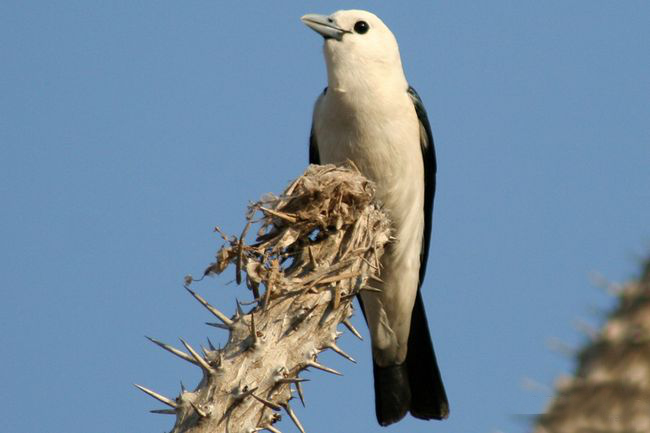

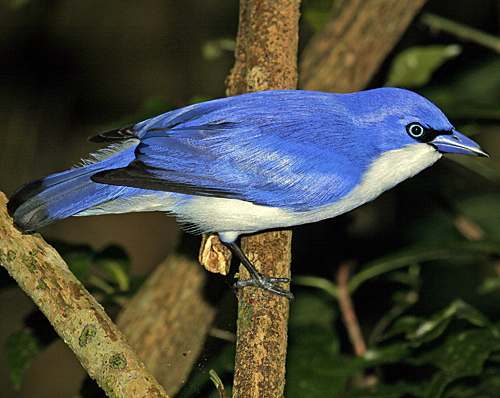

Birds Similar to the Red-shouldered Vanga
These species are often confused with the Red-shouldered Vanga due to similar appearance or overlapping range.