
Red-tailed Vanga
Calicalicus madagascariensis
Order: Passeriformes / Family: Vangidae

Wikimedia Commons
About the Red-tailed Vanga
The Red-tailed Vanga, Calicalicus madagascariensis, is a vibrant member of the Vangidae family endemic to Madagascar. This bird plays a vital role in its ecosystem, acting as both a predator and a seed disperser. Inhabiting primarily the humid forests of the island, it contributes to the control of insect populations, thereby maintaining ecological balance. The Red-tailed Vanga's presence is particularly noted in the eastern rainforests, where dense canopies provide ample foraging opportunities. During the breeding season, this bird becomes more territorial, asserting its dominance through vocal displays. Outside of this period, it can often be seen foraging in mixed-species flocks, showcasing its adaptability and social nature. The Red-tailed Vanga's ecological role extends beyond predation; it participates in the regeneration of forest vegetation by dispersing seeds of various plants. This function is critical in areas affected by deforestation, where natural regrowth is imperative. Moreover, the bird's presence in diverse forest types, from lowland rainforests to montane regions, highlights its adaptability to different environmental conditions. Seasonal behaviors of the Red-tailed Vanga include shifts in feeding strategies and social structures. During the wet season, when insect abundance peaks, the vanga's diet primarily consists of a variety of invertebrates. However, in drier months, the bird supplements its diet with fruits and seeds, demonstrating its opportunistic feeding habits. Its role as a seed disperser becomes more pronounced during these periods, aiding in the maintenance of plant diversity in its habitat. The species' resilience and adaptability make it a crucial component of Madagascar's unique avian biodiversity.
The Red-tailed Vanga belongs to the family Vangidae, within the order Passeriformes. These birds typically live average 5-7 years with a max recorded of 10 years.
How to Identify a Red-tailed Vanga
The adult Red-tailed Vanga is a striking bird with a distinctive red tail that sets it apart from other species. Its plumage features a combination of black and white, with the back and wings being predominantly black, while the underparts are white. The male and female differ slightly in coloration, with the male displaying a more intense red on the tail and a darker head. Juveniles are similar but have duller colors, lacking the bright red tail of adults. When perched, the Red-tailed Vanga maintains an upright posture, often flicking its tail in a characteristic manner. In flight, its silhouette can be recognized by the broad wings and slightly rounded tail, which is conspicuously red. Despite these distinctive features, it can sometimes be confused with other vangas, such as the Rufous Vanga, but the red tail and contrasting plumage of the Red-tailed Vanga are reliable identifiers. Observers should note these details, especially in habitats where multiple vanga species coexist.
Having trouble telling birds apart? Upload a photo to our bird identification tool for an instant species match.
Red-tailed Vanga Habitat and Range
Preferred Habitat
The Red-tailed Vanga thrives in Madagascar's varied forest habitats, with a preference for humid and deciduous forests. It is commonly found in the eastern rainforests, where the dense canopy provides an ideal environment for foraging and nesting. This bird also inhabits montane forests at elevations up to 1500 meters. Unlike some other vangas, the Red-tailed Vanga shows limited presence in urban areas, favoring natural forest settings. Seasonal habitat shifts occur as the bird moves to lower elevations during the dry season in search of food, illustrating its adaptability. Despite its preference for forests, the bird can sometimes be spotted in forest edges and secondary growth areas, highlighting its resilience in the face of habitat alteration.
Geographic Range
The Red-tailed Vanga is endemic to Madagascar, with a range primarily concentrated in the eastern part of the island. Its breeding range extends across the island's humid forests, from the northern tip near Montagne d'Ambre to the southern regions such as the Andohahela National Park. During the non-breeding season, the species can be found in lower elevation areas, reflecting its partial altitudinal migration. The population is most dense in regions with well-preserved forests, such as the Ranomafana and Masoala National Parks. While the species does not undertake long-distance migrations, local movements in response to food availability are common, ensuring its presence across various forest types throughout the year.
Want to know which birds visit your area? Browse our backyard birds by location guides for region-specific species lists.
What Does the Red-tailed Vanga Eat?
Primarily insectivorous, the Red-tailed Vanga preys on a wide array of invertebrates, including beetles, caterpillars, and spiders. This diet is particularly prevalent during the wet season, when insect populations are abundant. The bird employs a variety of foraging techniques, such as gleaning insects from leaves and bark, utilizing its strong bill for probing. In drier months, the vanga diversifies its intake by consuming fruits and seeds, demonstrating opportunistic feeding habits. Prey size generally falls within small to medium categories, allowing the bird to maximize energy intake while minimizing effort. Feeding occurs predominantly during the day, with peak activity in the early morning and late afternoon, aligning with insect activity patterns.
Red-tailed Vanga Behavior and Social Structure
The Red-tailed Vanga exhibits a complex social structure, with behaviors varying seasonally. During the breeding season, pairs become highly territorial, engaging in vocal displays to assert dominance and deter intruders. Their courtship involves a series of calls and mutual displays, reinforcing pair bonds. Outside of the breeding season, the bird often joins mixed-species flocks, benefiting from the increased foraging efficiency and predator vigilance these groups afford. The vanga's response to predators involves a combination of alarm calls and evasive flight, showcasing its alertness and agility. Daily activities follow a diurnal pattern, with periods of intense foraging interspersed with rest during the hottest parts of the day. The bird's adaptability to different social situations underlines its resilience and intelligence.
Red-tailed Vanga Nesting and Reproduction
Red-tailed Vangas construct their nests primarily in the fork of tree branches, using materials such as twigs, leaves, and spider silk for binding. Nest placement typically occurs at mid-canopy levels, providing protection from ground predators. The clutch size ranges from two to four eggs, with both parents sharing incubation duties, which last about two weeks. Once hatched, the chicks remain in the nest for approximately another two weeks before fledging. Parental roles are shared, with both males and females involved in feeding and protecting the young. The species generally raises one brood per year, although favorable conditions may allow for a second.
Red-tailed Vanga Sounds and Vocalizations
The Red-tailed Vanga's primary song consists of a series of clear, melodious notes that rise and fall in pitch, often described as a rhythmic 'cheer-up, cheer-up.' Its call notes are sharp and staccato, used frequently to maintain contact between pairs. Alarm calls are more abrupt and harsh, serving to alert other birds to potential threats. During the dawn chorus, the Red-tailed Vanga is one of the first to vocalize, its song carrying through the forest canopy, signaling the start of its daily activities.
Interesting Facts About the Red-tailed Vanga
- 1The Red-tailed Vanga's red tail is not just for show; it's an important visual cue in courtship displays.
- 2Unlike many birds, both male and female Red-tailed Vangas share in the incubation and rearing of their young.
- 3The species is a part of Madagascar's unique avifauna, which includes over 100 endemic bird species.
- 4Red-tailed Vangas have been observed using spider silk to reinforce their nests, adding strength and flexibility.
- 5Their adaptability allows them to join mixed-species flocks, enhancing foraging success and predator detection.
- 6Despite their striking appearance, Red-tailed Vangas are adept at blending into their dense forest habitats.
- 7The bird's song is a notable part of the dawn chorus, marking its territory and attracting mates.
Red-tailed Vanga Conservation Status
Currently listed as Least Concern by the IUCN, the Red-tailed Vanga's population appears stable, though localized threats persist. Habitat loss due to deforestation poses the most significant risk, particularly in eastern Madagascar. Conservation efforts focus on habitat preservation through the establishment of protected areas and sustainable land management practices. Historical population trends indicate stability, with fluctuations primarily linked to habitat changes. Continued conservation initiatives are vital to ensure the survival of this and other endemic species.
Other Vangidae Species
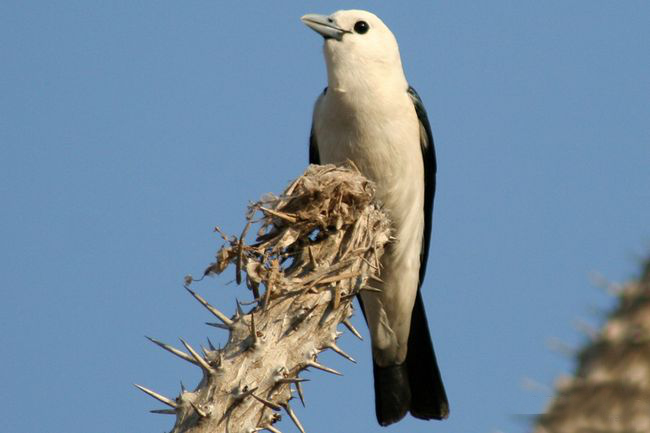

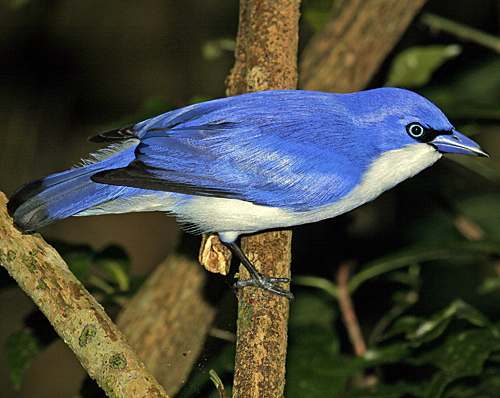

Birds Similar to the Red-tailed Vanga
These species are often confused with the Red-tailed Vanga due to similar appearance or overlapping range.