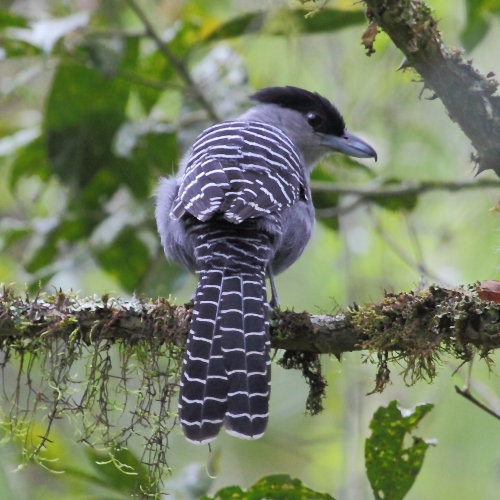
Roraiman Antwren
Herpsilochmus roraimae
Order: Passeriformes / Family: Thamnophilidae

Wikimedia Commons
About the Roraiman Antwren
The Roraiman Antwren, scientifically known as Herpsilochmus roraimae, inhabits the unique montane forest ecosystems of the tepuis, which are isolated tabletop mountains predominantly found in the Guiana Highlands of Venezuela, northern Brazil, and Guyana. This bird plays a significant ecological role in these biodiverse regions, serving as both predator and prey in its environment. As an insectivore, it helps control insect populations, while also providing food for larger predators. The Roraiman Antwren primarily resides in the mid to upper strata of these forests, often flitting among the branches in search of food. It exhibits a preference for subtropical or tropical moist montane forests, illustrating the rich biodiversity of these areas. During the breeding season, this bird becomes more vocal and active, engaging in courtship behaviors that are pivotal for maintaining its population. The tepuis, often referred to as "islands in the sky," provide a relatively stable environment for the Roraiman Antwren, though seasonal changes can affect food availability, prompting slight shifts in activity and feeding patterns. The significance of the Roraiman Antwren extends beyond its ecological role. Its presence is an indicator of the health of its montane forest habitat. Conservationists pay close attention to such species, as they can reflect broader environmental changes. Efforts to preserve these habitats are crucial, as they host numerous endemic species with limited ranges. The Roraiman Antwren's reliance on pristine forest environments underscores the importance of conserving these unique landscapes, highlighting the interconnectedness of species and the habitats they depend upon. The Roraiman Antwren's behavior and ecology offer valuable insights into the complex dynamics of montane forest ecosystems. Its interactions with other species, both plant and animal, contribute to the intricate web of life that defines its habitat. As a year-round resident of the tepuis, the Roraiman Antwren exemplifies the adaptations necessary for survival in a specialized environment, providing researchers and bird enthusiasts alike with a fascinating subject for study and observation.
The Roraiman Antwren belongs to the family Thamnophilidae, within the order Passeriformes. These birds typically live average 4 years with a max recorded of 6 years..
How to Identify a Roraiman Antwren
The Roraiman Antwren is a small passerine, measuring approximately 12 cm in length, with a striking black and white plumage. The adult male displays a bold black cap and throat, contrasted by white cheeks and underparts, creating a stark visual distinction. Its wings and back are predominantly black with subtle white spots, providing effective camouflage among the dappled light of the forest canopy. Females differ slightly, sporting a less defined black cap and more buff-toned underparts, aiding in identification during field observations. Juveniles resemble females but with even less distinct markings, requiring careful attention to detail when differentiating between ages and sexes. In flight, the Roraiman Antwren's silhouette is characterized by rapid wingbeats and a short, rounded tail. Its perching posture is typically upright, often seen darting between branches or hanging momentarily upside-down to glean insects from beneath leaves. This agile behavior, coupled with its distinctive coloration, assists in distinguishing it from similar species such as the Spot-tailed Antwren, which shares its habitat but differs in tail pattern and vocalizations. The Roraiman Antwren's unique combination of field marks, including its black and white patterning, and behavior make it a relatively straightforward identification for experienced birders familiar with the avifauna of the tepuis.
Having trouble telling birds apart? Upload a photo to our bird identification tool for an instant species match.
Roraiman Antwren Habitat and Range
Preferred Habitat
The Roraiman Antwren thrives in the montane forests of the Guiana Highlands, particularly favoring the tepui ecosystems characterized by high humidity and frequent mist. These forests, found at elevations ranging from 1000 to 3000 meters, provide a dense canopy with a rich undergrowth, supporting a variety of insect prey. Seasonal habitat shifts are minimal due to the consistent climate of these high-altitude regions. However, microhabitat preferences may change slightly with variations in food availability and breeding activities. The Roraiman Antwren is not typically found in urban or heavily disturbed areas, maintaining a strong preference for pristine forest environments. Its reliance on such specialized habitats underscores the importance of conservation efforts aimed at protecting these unique ecosystems from deforestation and other anthropogenic pressures.
Geographic Range
The Roraiman Antwren's range is restricted to the tepuis of the Guiana Highlands, encompassing parts of southeastern Venezuela, northern Brazil, and western Guyana. It is considered a resident species, with no significant migratory patterns. The breeding range aligns closely with its overall distribution, as the bird remains within these high-altitude montane forests throughout the year. The tepuis, being isolated by lowland forests, create distinct population clusters where the density of the Roraiman Antwren can be relatively high. These isolated habitats result in a patchy distribution, with some tepuis supporting robust populations, while others may host only a few individuals. The bird's presence across multiple countries highlights the need for international cooperation in conservation efforts, particularly as these regions face increasing threats from mining and deforestation.
Want to know which birds visit your area? Browse our backyard birds by location guides for region-specific species lists.
What Does the Roraiman Antwren Eat?
The Roraiman Antwren primarily consumes insects, with ants, beetles, and caterpillars forming the bulk of its diet. Seasonal changes in insect populations can influence its foraging behavior, prompting shifts in prey selection and foraging locations. This bird typically employs a gleaning technique, meticulously searching leaves and branches for hidden insects. It may also engage in hover-gleaning, briefly suspending itself mid-air to snatch prey from foliage. The Roraiman Antwren's diet may vary slightly between the wet and dry seasons as different insect groups become more or less abundant. Prey size tends to be small, consistent with the bird's diminutive stature, allowing it to efficiently capture and consume its meals. Feeding activity peaks in the early morning and late afternoon, coinciding with periods of increased insect activity.
Roraiman Antwren Behavior and Social Structure
The Roraiman Antwren exhibits a generally solitary or paired social structure, with individuals or mated pairs defending small territories within their forest habitat. Territorial displays, including vocalizations and physical posturing, help maintain these boundaries and deter potential intruders. During the breeding season, courtship displays become prominent, with males showcasing their plumage and engaging in aerial displays to attract females. Flocking behavior is rare, although the Roraiman Antwren may join mixed-species foraging flocks, particularly when food is scarce. These flocks provide increased foraging efficiency and protection against predators. In response to threats, the Roraiman Antwren often employs evasive flight or seeks cover within dense foliage. Its daily activity patterns are diurnal, with peak activity during the cooler parts of the day, allowing it to avoid the midday heat typical of its montane environment.
Roraiman Antwren Nesting and Reproduction
The Roraiman Antwren constructs small cup-shaped nests, typically situated in dense foliage or on thin branches to provide concealment from predators. Nest materials commonly include fine twigs, leaves, and spider silk, which help secure the structure. Nesting sites are carefully chosen within their territory, often at heights ranging from 1 to 3 meters above the ground. The typical clutch size consists of two eggs, with an incubation period of around 14 days. Both parents share incubation duties and later participate in feeding and caring for the hatchlings. The fledgling period extends for approximately two weeks post-hatching, during which time the young remain dependent on parental care. The Roraiman Antwren typically raises one brood per year, although favorable conditions may occasionally support a second attempt.
Roraiman Antwren Sounds and Vocalizations
The Roraiman Antwren's primary song is a rapid series of sharp, high-pitched notes delivered in a consistent rhythm, often described as a "tsee-tsee-tsee-tsee". These notes are clear and melodious, serving as both a territorial declaration and a means of attracting mates. Call notes are shorter, softer, and often used between mated pairs to maintain contact while foraging. Alarm calls are more abrupt and harsh, alerting others to potential threats. The bird participates in the dawn chorus, where its song contributes to the vibrant soundscape of the montane forests. Its vocalizations, though distinctive, may be confused with those of other sympatric antwrens, necessitating careful listening for accurate identification.
Interesting Facts About the Roraiman Antwren
- 1The Roraiman Antwren is endemic to the tepuis, isolated mountains that inspired Arthur Conan Doyle's "The Lost World".
- 2Despite its small size, the Roraiman Antwren plays a crucial role in controlling insect populations within its habitat.
- 3These birds are adept at navigating dense foliage, often using acrobatic maneuvers to catch elusive prey.
- 4The Roraiman Antwren's song is an important tool for territory defense, particularly in the dense montane forests they inhabit.
- 5The montane forests of the tepuis are home to numerous endemic species, of which the Roraiman Antwren is a prime example.
- 6Due to their isolated habitats, Roraiman Antwrens have limited genetic diversity compared to other antwren species.
- 7The unique ecosystem of the tepuis provides the Roraiman Antwren with a stable environment, but also limits its ability to disperse.
Roraiman Antwren Conservation Status
Currently, the Roraiman Antwren is listed as Least Concern by the IUCN, with population trends considered stable. However, its restricted range makes it vulnerable to habitat loss and degradation, primarily due to logging and mining activities. Conservation efforts focus on habitat preservation within protected areas and promoting sustainable land use practices. Historical population changes are not well-documented, but the bird's continued presence in its known range suggests resilience under current conditions. Ongoing monitoring and research are essential to ensure the long-term survival of this species, particularly as environmental pressures increase in the Guiana Highlands.