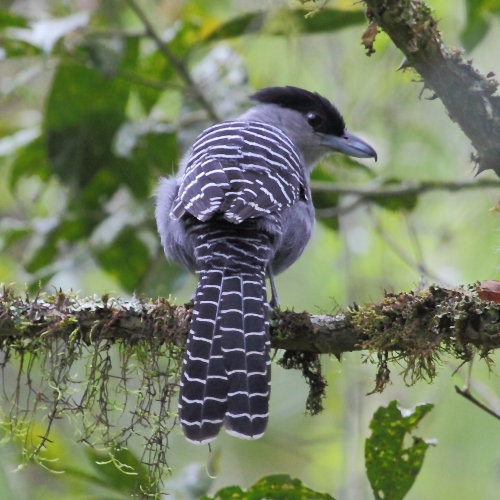
Rufous-backed Antvireo
Dysithamnus xanthopterus
Order: Passeriformes / Family: Thamnophilidae

Wikimedia Commons
About the Rufous-backed Antvireo
The Rufous-backed Antvireo (Dysithamnus xanthopterus) is a bird of the Thamnophilidae family, a group well known for their association with dense forests and intricate vocalizations. This species inhabits the lush montane forests of southeastern Brazil, particularly in regions such as the Serra do Mar and Serra da Mantiqueira. These areas are known for their rich biodiversity and unique ecosystems. The bird’s presence signifies the health of these environments, as it thrives in undisturbed, mature forests with dense understory.
The Rufous-backed Antvireo plays a significant ecological role as an insectivore, helping to control the population of insects within its habitat. This function is crucial, particularly in the montane forests where insect populations can impact the growth of flora. The presence of the Rufous-backed Antvireo also indicates the presence of healthy forest structures, as it relies on the intricate layers of vegetation for foraging and nesting.
Throughout the year, the Rufous-backed Antvireo remains in its montane forest habitat, as it is a non-migratory species. However, its behaviors can vary seasonally; during the breeding season, which typically occurs from September to February, the antvireo becomes more vocal and displays increased territorial behavior. Outside of the breeding season, the bird may join mixed-species foraging flocks, which is common among forest-dwelling birds in the Neotropics, allowing for enhanced foraging efficiency and predator avoidance.
The Rufous-backed Antvireo belongs to the family Thamnophilidae, within the order Passeriformes. These birds typically live average 5-9 years, with some individuals living up to 12 years..
How to Identify a Rufous-backed Antvireo
The Rufous-backed Antvireo is a small bird, measuring approximately 13 centimeters in length. Adult males exhibit a distinctive rufous coloration on their back, which provides a stark contrast to their gray head and underparts. This rufous plumage is a key field mark that distinguishes them from similar species. Females are slightly duller in coloration, with less intense rufous tones, but share the same general patterning.
Juveniles resemble adult females, although they may appear even duller and lack the crispness of adult plumage. As they mature, they gradually acquire the richer colors of adults. The bill of the Rufous-backed Antvireo is short and hooked, reflecting its diet of insects and other small arthropods.
In terms of posture, this species typically adopts a horizontal stance while perched, often scanning the foliage for prey. In flight, the Rufous-backed Antvireo appears somewhat cumbersome, with rapid wing beats interspersed with brief glides. This flight pattern is typical of many forest-dwelling passerines and aids in navigating through dense vegetation.
Having trouble telling birds apart? Upload a photo to our bird identification tool for an instant species match.
Rufous-backed Antvireo Habitat and Range
Preferred Habitat
The Rufous-backed Antvireo primarily inhabits montane forests, preferring elevations ranging from 500 to 2,000 meters. These forests, often characterized by high humidity and dense understory, provide the ideal environment for foraging and nesting. In southeastern Brazil, they are most commonly found in the Atlantic Forest biome, a region noted for its exceptional biodiversity.
Within these forests, the Rufous-backed Antvireo favors areas with thick vegetation, which offer both protection from predators and abundant foraging opportunities. The bird is generally absent from urban areas and does not typically venture into open landscapes, indicating a strong preference for well-preserved forest habitats.
During the breeding season, they may become more selective in their habitat choice, opting for regions with extensive canopy cover and a rich insect population, which supports both adult and juvenile birds. Seasonal habitat shifts are minimal, as the species is non-migratory and relies on the consistent environmental conditions of montane forests year-round.
Geographic Range
The Rufous-backed Antvireo is endemic to southeastern Brazil, with its range primarily concentrated in the states of Minas Gerais, Rio de Janeiro, and São Paulo. This species is a year-round resident of the Atlantic Forest, a region that stretches along the eastern coast of Brazil and is considered one of the world's most vital biodiversity hotspots.
Within this range, populations are particularly dense in the Serra do Mar and Serra da Mantiqueira mountain ranges. These areas provide the necessary forest structure and climate conditions that the Rufous-backed Antvireo requires for survival. Unlike many passerines, this species does not undertake long-distance migrations, instead remaining within its preferred habitat throughout the year.
Population density hotspots coincide with regions of well-preserved forest, reflecting the bird’s reliance on mature, undisturbed environments. The bird’s restricted range and specialized habitat requirements have made it a species of concern, particularly in the face of ongoing habitat destruction in Brazil.
Want to know which birds visit your area? Browse our backyard birds by location guides for region-specific species lists.
What Does the Rufous-backed Antvireo Eat?
The Rufous-backed Antvireo primarily feeds on insects, which comprise the bulk of its diet. It actively forages in the mid to lower levels of the forest, often gleaning prey from leaves and branches with its short, hooked bill. Common prey items include beetles, caterpillars, ants, and spiders, reflecting the diverse insect fauna of the montane forests.
This antvireo exhibits a foraging technique known as 'gleaning,' where it carefully inspects foliage and bark for hidden insects. During the breeding season, dietary needs increase, prompting frequent foraging to support the nutritional demands of both adults and chicks.
The Rufous-backed Antvireo’s feeding schedule is largely crepuscular, with peak activity occurring during the early morning and late afternoon when insect activity is highest. Seasonal variations in diet are minimal, as the montane forests provide a relatively stable supply of insects throughout the year. However, during wetter months, increased insect abundance can lead to heightened feeding activity.
Rufous-backed Antvireo Behavior and Social Structure
Rufous-backed Antvireos are generally solitary or found in pairs, particularly during the breeding season when they establish and defend territories. Territorial behavior is pronounced, with males engaging in vocalizations to assert dominance over an area. These vocalizations also serve to attract potential mates.
Courtship displays involve a combination of vocalizations and physical displays, where males may exhibit their rufous plumage to entice females. Once paired, the bond between mates is typically strong, with both sexes participating in nesting and chick-rearing activities.
Outside of the breeding season, the Rufous-backed Antvireo may join mixed-species flocks, a behavior that enhances foraging efficiency and provides safety in numbers from predators. These flocks often include other insectivorous birds, allowing for a dynamic and cooperative foraging strategy.
The daily activity pattern of the Rufous-backed Antvireo is characterized by active foraging during the cooler parts of the day. When confronted with predators, the antvireo often relies on its cryptic plumage and the dense forest understory to evade detection rather than engaging in confrontational behaviors.
Rufous-backed Antvireo Nesting and Reproduction
The Rufous-backed Antvireo constructs a cup-shaped nest using a variety of materials, including twigs, leaves, and moss. These nests are typically located in dense vegetation, often within a few meters of the ground, where they are well-concealed from predators.
During the breeding season, which spans from September to February, the female lays a clutch of two to three eggs. The eggs are incubated for approximately 14 to 16 days, with both parents participating in the incubation process.
After hatching, the chicks are altricial and require extensive parental care. They fledge approximately 12 to 14 days after hatching, although they remain dependent on their parents for several weeks thereafter. Rufous-backed Antvireos typically raise one to two broods per year, depending on environmental conditions and food availability.
Parental roles are relatively equal, with both male and female contributing to feeding and defending the nest. This cooperative breeding strategy enhances the survival rate of the chicks, ensuring that the next generation of Rufous-backed Antvireos can thrive in their montane forest habitat.
Rufous-backed Antvireo Sounds and Vocalizations
The primary song of the Rufous-backed Antvireo is a series of clear, whistled notes that increase in tempo and pitch. This song is often described as a 'chew-chew-chew,' with each note delivered in rapid succession. It is most frequently heard during the breeding season, serving both territorial and courtship functions.
In addition to their song, Rufous-backed Antvireos produce a variety of call notes, including short, sharp 'chit' sounds used for communication between mates and within mixed-species flocks. Alarm calls, which are harsher and more insistent, alert other birds to the presence of predators.
During the dawn chorus, the Rufous-backed Antvireo’s song can be a prominent feature of the soundscape, although it is often overshadowed by the louder calls of larger forest inhabitants. Despite this, the antvireo's song remains an important auditory signal within its ecological niche.
Interesting Facts About the Rufous-backed Antvireo
- 1The Rufous-backed Antvireo is one of over 230 species in the Thamnophilidae family, known for their diverse vocalizations.
- 2Despite their small size, Rufous-backed Antvireos play a vital role in controlling insect populations in their forest habitats.
- 3The Atlantic Forest, home to the Rufous-backed Antvireo, is one of the most endangered tropical forests, with only about 15% of its original coverage remaining.
- 4Unlike many birds, the Rufous-backed Antvireo does not migrate, instead remaining in its montane forest habitat year-round.
- 5The Rufous-backed Antvireo's cryptic plumage provides excellent camouflage, allowing it to blend seamlessly into the forest understory.
- 6Both male and female Rufous-backed Antvireos participate equally in raising their young, a strategy that enhances chick survival.
- 7The Rufous-backed Antvireo has a remarkable ability to join mixed-species foraging flocks, which increases its foraging success.
Rufous-backed Antvireo Conservation Status
The Rufous-backed Antvireo is currently listed as Near Threatened on the IUCN Red List, with populations experiencing a decline due to habitat loss and fragmentation. The primary threats to this species stem from deforestation and land conversion for agriculture and urban development in Brazil. Conservation efforts are focused on preserving the remaining tracts of Atlantic Forest, which are crucial for the survival of not only the Rufous-backed Antvireo but also countless other endemic species. Protected areas such as national parks and reserves play a vital role in maintaining these habitats. Historically, the population of Rufous-backed Antvireos was more widespread, but extensive deforestation over the past century has significantly reduced their range. Current conservation strategies emphasize habitat restoration and the establishment of ecological corridors to connect fragmented forest patches. Ongoing monitoring and research are essential to better understand the population dynamics of the Rufous-backed Antvireo and to implement effective conservation actions. Public awareness and engagement are also critical components in safeguarding the future of this charismatic forest bird.