Rufous-bellied Eagle
Lophotriorchis kienerii
Order: Accipitriformes / Family: Accipitridae
Wikimedia Commons
About the Rufous-bellied Eagle
The Rufous-bellied Eagle, Lophotriorchis kienerii, is a vibrant raptor inhabiting the dense forests and mountainous regions of Asia. As a member of the Accipitridae family, this eagle is a powerful predator known for its distinctive rufous-colored belly and underparts, which contrast sharply with its dark upper feathers. This coloration is not merely aesthetic but serves as a form of camouflage, aiding the eagle as it hunts in the dappled light of the forest canopy. Found primarily in the Indian subcontinent, Southeast Asia, and parts of China, the Rufous-bellied Eagle occupies a significant ecological role as a top predator, controlling the population of its prey species and maintaining the balance of its ecosystem. Its presence is often an indicator of a healthy forest habitat, as it requires large, contiguous tracts of forest to thrive. Seasonal behaviors of the Rufous-bellied Eagle include breeding during the cooler months when food is more abundant, and temperatures are favorable for raising young. This eagle's adaptability to various forest types, from tropical to subtropical, highlights its ecological versatility. By preying on smaller mammals, birds, and reptiles, the Rufous-bellied Eagle helps regulate species populations, preventing overgrazing and ensuring vegetation diversity. This role underscores the eagle's importance in maintaining forest health and stability. In regions where deforestation has led to habitat fragmentation, the Rufous-bellied Eagle's numbers have dwindled, signaling the broader environmental impacts of habitat loss. Conservation efforts are crucial in these areas to preserve the remaining habitats and support the eagle's population recovery. The Rufous-bellied Eagle's reliance on expansive forested areas makes it particularly vulnerable to the ongoing threats of deforestation and habitat degradation. The eagle's existence in these ecosystems serves as a barometer for the health of the broader ecological community. Conservationists often focus on protecting and restoring forest habitats not only for the eagle's survival but also for the myriad of other species that coexist in these environments. Through these efforts, the Rufous-bellied Eagle continues to symbolize the intricate web of life within Asia's diverse forest ecosystems.
The Rufous-bellied Eagle belongs to the family Accipitridae, within the order Accipitriformes. These birds typically live average 10-15 years, with a maximum recorded of 20 years..
How to Identify a Rufous-bellied Eagle
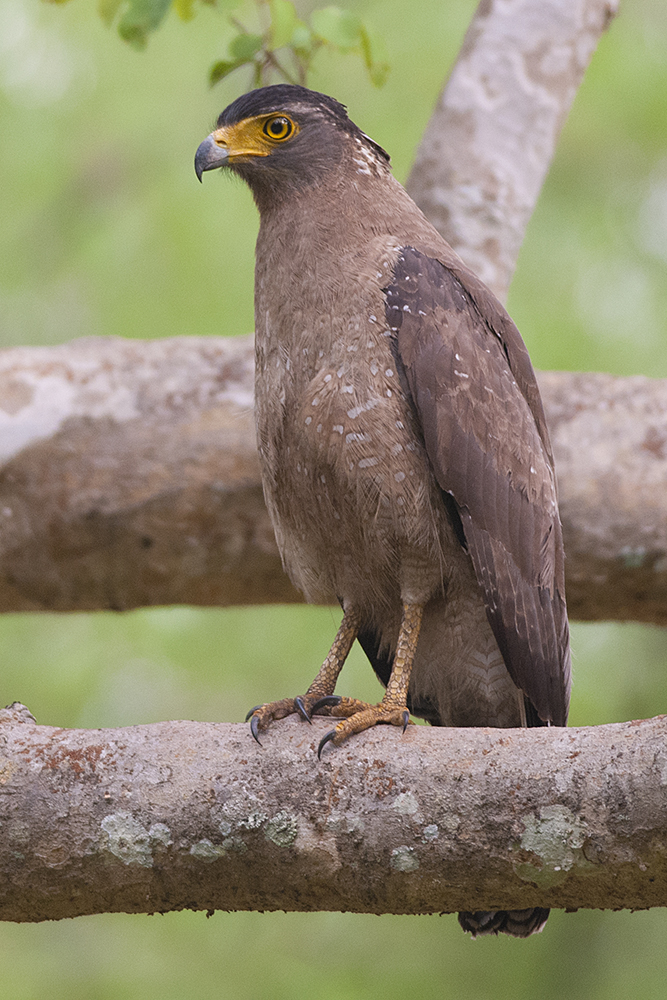
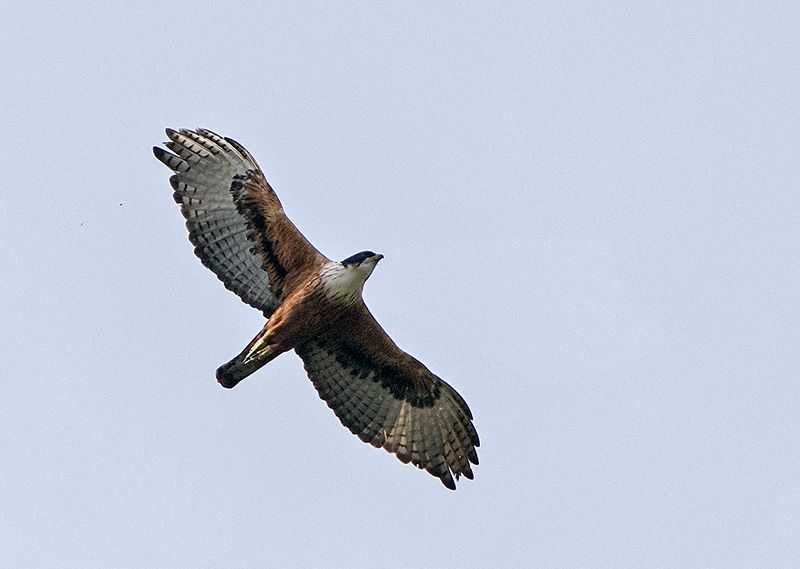
Adult Rufous-bellied Eagles display a striking contrast between their rufous underparts and dark upperparts. The head, back, and wings are predominantly blackish, providing a stark backdrop to their rich, rusty bellies. Juveniles, however, differ significantly, exhibiting a more subdued coloration with mottled brown and white plumage. This distinction aids in identification, particularly for birders familiar with the species' variable plumage across age classes. Male and female Rufous-bellied Eagles are similar in appearance, though females tend to be slightly larger, a common trait among raptors. In flight, the eagle's broad wings and long tail make for a distinctive silhouette, with the contrasting colors of its plumage visible even from a distance. When perched, the Rufous-bellied Eagle maintains an upright posture, often in high vantage points from which it can survey its surroundings. Confusion with similar species, such as the Changeable Hawk-Eagle, is possible; however, the Rufous-bellied Eagle's unique coloration and size help distinguish it. The Changeable Hawk-Eagle lacks the consistent rufous coloring and tends to be larger, with more variability in its plumage. Observers can discern the Rufous-bellied Eagle by its characteristic wing beats and flight pattern, which are both agile and powerful, typical of forest-dwelling raptors.
Having trouble telling birds apart? Upload a photo to our bird identification tool for an instant species match.
Rufous-bellied Eagle Habitat and Range
Preferred Habitat
The Rufous-bellied Eagle primarily inhabits dense, humid forests across its range. These include tropical and subtropical rainforests, montane forests, and occasionally open woodlands. The species is found at elevations ranging from lowland areas up to 3,000 meters, with a preference for elevations between 500 and 2,500 meters. Seasonal habitat shifts may occur as the eagle follows prey availability and breeding requirements, often moving to slightly lower elevations during the breeding season. While primarily a forest species, the Rufous-bellied Eagle can sometimes be seen on the forest edge or in fragmented habitats, though its presence in urban areas is rare. The eagle's reliance on intact forest ecosystems underscores the importance of preserving these habitats in the face of deforestation and land-use changes. Its preference for large, continuous tracts of forest makes it a key species for conservation efforts aimed at protecting these vital ecosystems.
Geographic Range
The Rufous-bellied Eagle's range spans across South and Southeast Asia, with populations found in India, Nepal, Bhutan, and Bangladesh, extending through Myanmar, Thailand, Malaysia, Indonesia, and into southern China. This eagle is generally a resident species, exhibiting no long-distance migratory behavior, although local movements within its range are common, particularly in response to seasonal prey abundance. Its breeding range is largely confined to the same areas where it resides year-round, as suitable habitats provide ample resources for nesting and raising young. Population density tends to be higher in regions with extensive forest cover, such as the Western Ghats in India and the forests of northern Myanmar and Thailand. The eagle's presence in these regions highlights the importance of forest conservation efforts in maintaining healthy populations. Although not migratory, the Rufous-bellied Eagle may undertake altitudinal movements, shifting to lower elevations during colder months or in response to changes in prey availability.
Want to know which birds visit your area? Browse our backyard birds by location guides for region-specific species lists.
What Does the Rufous-bellied Eagle Eat?
The Rufous-bellied Eagle's diet primarily consists of small to medium-sized mammals, birds, and reptiles, showcasing its adaptability as an apex predator. Common prey items include tree-dwelling mammals like squirrels, small monkeys, and bats. Birds such as pigeons, doves, and smaller passerines also form a significant portion of its diet. In regions where reptiles are abundant, the eagle may prey on lizards and snakes. Seasonal changes can influence the eagle's diet, with certain prey types becoming more or less available at different times of the year. The Rufous-bellied Eagle employs a hunting technique characterized by stealth and surprise. From a concealed perch, it scans for prey before launching into a swift, powerful flight to capture its target. This method requires both patience and precision, making the eagle a formidable hunter within its forested habitat. The eagle typically hunts during daylight hours, with peak activity often occurring in the morning and late afternoon, aligning with the activity patterns of its prey.
Rufous-bellied Eagle Behavior and Social Structure
The Rufous-bellied Eagle exhibits primarily solitary behavior, maintaining territories that it defends vigorously against conspecifics and other raptors. These territories provide not only hunting grounds but also nesting sites, ensuring the eagle has access to sufficient resources. During the breeding season, pairs engage in courtship displays that include aerial acrobatics and vocalizations, strengthening pair bonds and establishing territories. Unlike some raptor species, the Rufous-bellied Eagle does not form flocks, preferring to hunt and reside alone or in pairs. When threatened by potential predators or intruders, both male and female eagles will engage in defensive behaviors, utilizing their powerful talons and beaks as formidable weapons. Daily activity patterns revolve around hunting, with periods of rest and preening interspersed throughout the day. The eagle's keen eyesight and acute hearing make it an adept hunter, able to detect prey even in the dense canopy. Despite its solitary nature, the Rufous-bellied Eagle is known for its strong pair bonds, with mated pairs often remaining together for several breeding seasons.
Rufous-bellied Eagle Nesting and Reproduction
Rufous-bellied Eagles construct large, stick-based nests high in the canopy of tall trees, often reusing and adding to existing nests over successive years. Preferred nesting sites are typically located in remote, undisturbed areas of the forest, providing safety from predators and human disturbances. The typical clutch consists of one to two eggs, with the incubation period lasting around 35 to 40 days. Both parents share responsibilities during incubation, although the female spends more time on the nest, while the male provides food. After hatching, the nestlings remain under parental care for approximately 60 to 70 days until fledging. During this period, both parents feed and protect the young, ensuring their development and survival. The fledging timeline is crucial, as young eagles must develop strong flight muscles and honing hunting skills before independence. Rufous-bellied Eagles typically produce one brood per year, though conditions such as food availability and habitat quality can influence reproductive success. Parental investment remains high until the young are capable of independent survival.
Rufous-bellied Eagle Sounds and Vocalizations
The Rufous-bellied Eagle's vocalizations are an integral part of its communication toolkit, particularly during breeding and territorial disputes. Its primary call is a series of high-pitched, piercing whistles, often repeated in rapid succession. These calls vary in pitch and intensity depending on the context, with courtship and territorial calls being more elaborated and complex. Alarm calls, utilized to deter potential threats or signal distress, tend to be sharper and more abrupt. The dawn chorus is a particularly active period for vocalizations, as pairs reinforce bonds and assert territorial presence. While not as vocally diverse as some songbirds, the Rufous-bellied Eagle's sounds are distinctive, serving essential functions within its ecological niche.
Interesting Facts About the Rufous-bellied Eagle
- 1The Rufous-bellied Eagle's wingspan ranges from 100 to 140 cm, providing impressive lift and maneuverability.
- 2This eagle can live up to 20 years in the wild, a testament to its adaptability and resilience.
- 3Females are larger than males, a common trait among birds of prey, with size aiding in territory defense.
- 4Rufous-bellied Eagles are known to use the same nest for multiple years, reinforcing it with fresh materials annually.
- 5Their diet flexibility allows them to thrive in various forest types, though they prefer dense, undisturbed habitats.
- 6The eagle's rufous belly serves as camouflage, blending with the forest's filtered sunlight and shadows.
- 7Despite its solitary nature, the Rufous-bellied Eagle maintains strong pair bonds, often staying with the same mate for life.
Rufous-bellied Eagle Conservation Status
The Rufous-bellied Eagle currently holds a Near Threatened status on the IUCN Red List, with population trends showing a decline primarily due to habitat loss and fragmentation. As forests are cleared for agriculture, logging, and urban development, the eagle's habitat shrinks, impacting its ability to find suitable nesting and hunting grounds. Conservation efforts focus on protecting and restoring forest habitats, implementing sustainable land-use practices, and raising awareness of the eagle's ecological importance. Historical data indicates that the Rufous-bellied Eagle's range and numbers were once more extensive, but human-induced changes have confined it to increasingly isolated areas. Organizations working in its range countries strive to mitigate these threats through policy advocacy, habitat restoration, and community engagement.
Other Accipitridae Species


Birds Similar to the Rufous-bellied Eagle
These species are often confused with the Rufous-bellied Eagle due to similar appearance or overlapping range.