
Rufous-capped Antshrike
Thamnophilus ruficapillus
Order: Passeriformes / Family: Thamnophilidae

Wikimedia Commons
About the Rufous-capped Antshrike
The Rufous-capped Antshrike (Thamnophilus ruficapillus) is a distinctive member of the Thamnophilidae family, thriving primarily in the subtropical and tropical regions of South America. Known for its striking rufous crown, this medium-sized bird inhabits dense undergrowth and draws the attention of birders and researchers due to its unique behaviors and calls. Found predominantly in countries such as Brazil, Argentina, Paraguay, and Uruguay, the Rufous-capped Antshrike plays a significant role in the ecosystem as both a predator and a prey species. Its presence indicates healthy forest environments, as it requires dense vegetation for cover and foraging.
The Rufous-capped Antshrike's ecological role extends beyond mere predation. By controlling insect populations, it helps maintain the delicate balance of its habitat. The species demonstrates fascinating behavior through its territorial nature, with pairs often engaging in duets to establish and defend their territory. Seasonally, these birds may exhibit slight shifts in habitat preference, moving to areas with optimal food availability. The Rufous-capped Antshrike is non-migratory, though some local movements occur in response to environmental changes.
As a resident of dense forests, the Rufous-capped Antshrike is integral to the biodiversity of its region. Its presence enriches the avian community, contributing to the rich tapestry of South America's forest ecosystems. Conservationists and ornithologists monitor this bird closely, as its sensitivity to habitat degradation can provide early warning signs of ecological imbalance. The Rufous-capped Antshrike's behaviors, including its unique vocalizations and territorial displays, continue to captivate those who study the avian life of South America.
The Rufous-capped Antshrike belongs to the family Thamnophilidae, within the order Passeriformes. These birds typically live average 6 years, with a maximum recorded of 9 years..
How to Identify a Rufous-capped Antshrike
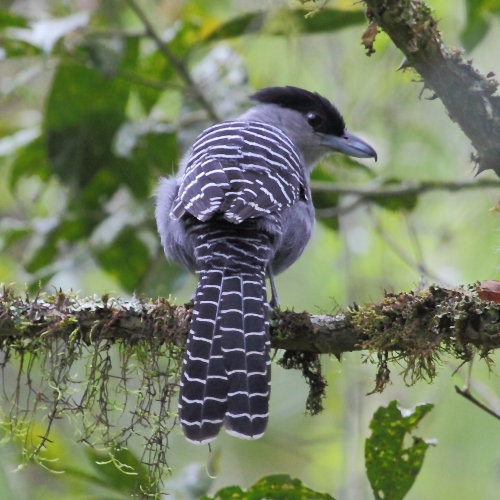
The Rufous-capped Antshrike is easily identified by its rufous crown, which contrasts sharply with its otherwise grayish-brown plumage. Adult males and females are similar in appearance, though males may exhibit slightly more vibrant plumage. The bird's underparts are paler, blending from gray to a creamy off-white. Its small, stout bill is adapted for its insectivorous diet, providing a key characteristic for identification.
Juvenile Rufous-capped Antshrikes are often duller in color, with less pronounced rufous crowns. They gradually acquire the adult plumage as they mature. The bird's silhouette is typical of antshrikes, with a robust body and a relatively short tail. In flight, the Rufous-capped Antshrike appears direct and purposeful, though it is more often observed clambering through dense vegetation.
Similar species might include other antshrikes, such as the Barred Antshrike, but the Rufous-capped's distinct head coloring is a reliable differentiator. Observers should note the bird's tendency to perch low and its habit of flicking its tail and wings, adding to its unique field marks.
Having trouble telling birds apart? Upload a photo to our bird identification tool for an instant species match.
Rufous-capped Antshrike Habitat and Range
Preferred Habitat
The Rufous-capped Antshrike inhabits dense, humid forests, favoring the undergrowth where it can find cover and abundant food. It thrives in subtropical and tropical moist lowland forests and montane regions, particularly in the Atlantic Forest of Brazil and patches of forest in Argentina and Paraguay. The bird typically resides at elevations ranging from sea level up to 1,500 meters.
This antshrike tends to avoid urban areas, preferring the seclusion and complexity of dense forest habitats. Seasonal habitat shifts might occur as the bird searches for food, but it generally remains within forested areas. The Rufous-capped Antshrike's presence in specific habitats serves as a strong indicator of environmental health, demonstrating the importance of forest conservation efforts in its range.
Geographic Range
The Rufous-capped Antshrike is a resident species, primarily found in South America. Its range extends across southeastern Brazil, eastern Paraguay, northeastern Argentina, and Uruguay. Within these countries, it occupies regions known for their rich biodiversity and dense forests, such as the Atlantic Forest, a hotspot for endemism and diversity.
Unlike many bird species, the Rufous-capped Antshrike does not undergo long-distance migrations. Instead, it exhibits localized movements, often dictated by the availability of food and habitat conditions. Population densities are highest in well-preserved forest areas, where the bird's ecological requirements are met.
While the Rufous-capped Antshrike's range is relatively limited, it remains widespread within suitable habitats. Conservation efforts focusing on forest protection are crucial for maintaining its populations across its natural range.
Want to know which birds visit your area? Browse our backyard birds by location guides for region-specific species lists.
What Does the Rufous-capped Antshrike Eat?
The Rufous-capped Antshrike primarily consumes insects, making it an important insectivore within its ecosystem. Its diet consists of a variety of arthropods, including beetles, caterpillars, spiders, and ants. During the breeding season, the bird may increase its intake of protein-rich prey to support the demands of raising offspring.
The antshrike employs a sit-and-wait strategy, often perching quietly before swiftly capturing unsuspecting prey. It forages at various heights within the forest, though it is most commonly seen in the lower strata, moving deliberately through the undergrowth.
The Rufous-capped Antshrike's feeding schedule is largely diurnal, with peak activity occurring in the early morning and late afternoon. Seasonal changes in prey availability can influence its diet composition, prompting the bird to adapt its foraging behavior accordingly.
Rufous-capped Antshrike Behavior and Social Structure
The Rufous-capped Antshrike is a territorial species, often found in pairs or small family groups. Its social structure revolves around monogamous pair bonds, with both members of a pair contributing to territory defense and care of the young. Vocal duets are a distinctive feature of this species, with pairs coordinating their calls to strengthen their bond and deter intruders.
Courtship displays include mutual preening and synchronized movements, which reinforce the pair's connection. While aggressive encounters with other birds are rare, the Rufous-capped Antshrike will defend its territory fiercely if necessary.
Daily activity patterns show a preference for foraging during cooler parts of the day. The bird responds to predators by seeking cover in dense foliage, relying on its cryptic coloration and quick movements for protection. The Rufous-capped Antshrike's behaviors, from vocalizations to foraging strategies, exemplify its adaptation to the forest environments in which it resides.
Rufous-capped Antshrike Nesting and Reproduction
The Rufous-capped Antshrike constructs a cup-shaped nest, typically situated in dense undergrowth or low shrubbery. The nest is crafted from twigs, leaves, and grasses, providing camouflage and protection for the eggs and chicks. Preferred nesting locations are often within well-concealed areas of the forest, reducing the risk of predation.
Clutch sizes generally consist of two to three eggs, with both parents sharing incubation duties over a period of approximately 14 to 16 days. Once hatched, the chicks are altricial, requiring significant parental care. Fledging occurs around 12 to 14 days after hatching, though the young may remain dependent on their parents for some time afterward.
The Rufous-capped Antshrike typically raises one brood per year, though favorable conditions may permit a second. Parental roles are shared, with both male and female contributing to feeding and protection. The species' reproductive success is closely linked to the availability of suitable nesting sites and the abundance of food resources.
Rufous-capped Antshrike Sounds and Vocalizations
The Rufous-capped Antshrike's primary song consists of a series of sharp, staccato notes delivered in rapid succession. The rhythm is consistent, with a clear, metallic quality that carries through the dense forest. These vocalizations serve both territorial and communication purposes, particularly during the breeding season.
Call notes are varied, including short 'chik' sounds used for contact between mates and family members. Alarm calls are more abrupt, intended to alert others of potential threats. The Rufous-capped Antshrike participates in the dawn chorus, its calls blending with those of other forest inhabitants to create a vibrant symphony of sound.
Comparatively, its song is less melodious than some other passerines, but its distinctive cadence and pitch make it recognizable to experienced birders familiar with its habitat.
Interesting Facts About the Rufous-capped Antshrike
- 1The Rufous-capped Antshrike's duets are not just for show - they help reinforce pair bonds and establish territory.
- 2Despite its small range, the Rufous-capped Antshrike is a critical part of the Atlantic Forest's biodiversity.
- 3Its rufous crown is not just for identification; it plays a role in courtship and territorial disputes.
- 4The Rufous-capped Antshrike's diet makes it a key player in controlling insect populations in its habitat.
- 5This bird can adapt its foraging technique to seasonal changes, demonstrating remarkable ecological flexibility.
- 6The Rufous-capped Antshrike's nests are expertly camouflaged, making them difficult to spot even by keen observers.
- 7Its vocalizations are less about melody and more about rhythm and clarity, crucial for communication in dense forests.
Rufous-capped Antshrike Conservation Status
The Rufous-capped Antshrike is currently listed as a species of Least Concern by the IUCN, though its population trend shows signs of decline due to habitat loss and fragmentation. The primary threats to its survival stem from deforestation and agricultural expansion, which continue to reduce the availability of suitable habitats. Conservation efforts focus on preserving the Atlantic Forest and other key habitats within its range. Protected areas and reserves play a crucial role in maintaining populations, providing safe havens amidst increasing human pressures. The Rufous-capped Antshrike's sensitivity to environmental changes makes it a valuable indicator species for ecosystem health. Historical population changes reflect broader trends in habitat alteration, underscoring the need for ongoing research and conservation initiatives. By addressing habitat degradation, efforts can help stabilize and potentially increase Rufous-capped Antshrike numbers across its native range.
Other Thamnophilidae Species



Birds Similar to the Rufous-capped Antshrike
These species are often confused with the Rufous-capped Antshrike due to similar appearance or overlapping range.