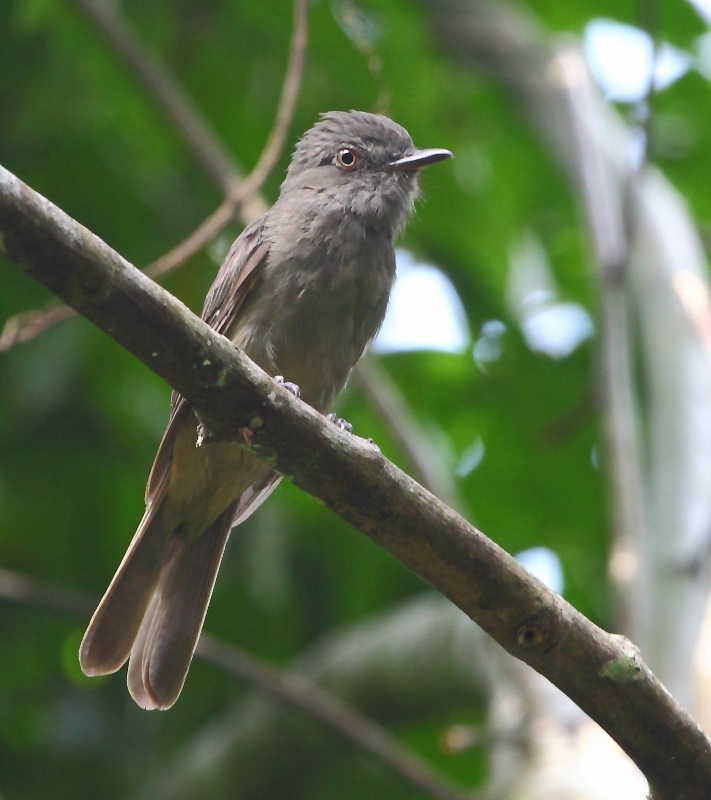
Rufous Mourner
Rhytipterna holerythra
Order: Passeriformes / Family: Tyrannidae

Wikimedia Commons
About the Rufous Mourner
The Rufous Mourner, scientifically known as Rhytipterna holerythra, is a striking bird within the Tyrannidae family. This species inhabits the tropical forests of Central and South America, predominantly found in countries such as Costa Rica, Panama, and Colombia. The Rufous Mourner primarily resides in lowland and foothill forests where its unmistakable song resonates through the dense canopy. It thrives in undisturbed, mature forests, playing a crucial ecological role as both a predator and prey within its ecosystem.
The Rufous Mourner's significance extends beyond its ecological niche. It serves as an indicator species for forest health, as its presence often signifies a well-preserved habitat. Conservationists pay close attention to this bird, using its population trends to gauge the effects of environmental changes in tropical regions. This bird's dependence on primary forests highlights the broader need for tropical forest conservation, making it a focal point in discussions about biodiversity preservation.
Seasonally, the Rufous Mourner does not exhibit long-distance migratory behavior but may move locally within its range in response to food availability and habitat conditions. During the breeding season, which typically aligns with the rainy season, these birds become more vocal and active, contributing to the symphony of sounds that characterize tropical forests. Their consistent presence in these ecosystems throughout the year underscores their role in forest dynamics, from seed dispersal to insect population control.
The Rufous Mourner belongs to the family Tyrannidae, within the order Passeriformes. These birds typically live 5-10 years, with some living up to 12 years..
How to Identify a Rufous Mourner
Identifying the Rufous Mourner involves noting its distinct rufous coloration, which covers its entire body, including the wings and tail. Adult Rufous Mourners exhibit a uniform warm reddish-brown hue, a trait that sets them apart from many other birds in their habitat. Both males and females share similar plumage, making sex differentiation through appearance challenging.
Juvenile Rufous Mourners, however, can be distinguished by slightly duller and more mottled feathering, which gradually changes as they mature. The Rufous Mourner's size is moderate, with an average length of about 20 cm and a wingspan that aids in its agile flight through dense foliage.
In terms of flight silhouette, the Rufous Mourner maintains a slightly hunched posture when perched, often remaining motionless for extended periods. This behavior, combined with its rufous coloration, allows it to blend seamlessly into the forest background. While it might be confused with similarly colored species, such as certain thrushes or flycatchers, the Mourner’s song and habitat preferences aid in its identification.
Having trouble telling birds apart? Upload a photo to our bird identification tool for an instant species match.
Rufous Mourner Habitat and Range
Preferred Habitat
The Rufous Mourner inhabits primarily tropical lowland and foothill forests, with a preference for undisturbed and mature ecosystems. These birds are common in dense forests, particularly where the canopy is closed and creates a humid microclimate. They are most frequently observed at elevations ranging from sea level to about 1200 meters, though they are predominantly found below 800 meters.
In terms of habitat specificity, the Rufous Mourner is less commonly seen in secondary or fragmented forests, as it favors primary growth areas where insect prey is abundant. This species is not typically found in urban environments, remaining elusive in more human-altered landscapes. Seasonal habitat shifts are minimal, as the Rufous Mourner is largely sedentary, with any movement likely linked to food availability rather than migratory instincts.
Geographic Range
Geographically, the Rufous Mourner is distributed across parts of Central and South America, with its range extending from southern Nicaragua through Panama and into western Colombia and Ecuador. This bird exhibits a fairly stable breeding range within these regions, utilizing the tropical lowland forests for nesting and feeding.
While the Rufous Mourner does not undertake long migratory journeys, it may exhibit some altitudinal movements within its range, particularly in response to seasonal changes in resource availability. Population density hotspots include areas like the Darien region in Panama and the Choco-Darien moist forests, where conservation efforts focus on preserving the rich biodiversity.
The Rufous Mourner's relatively restricted range and specific habitat requirements make it a species of interest for conservationists monitoring the impacts of deforestation and habitat fragmentation in these biodiverse tropical regions.
Want to know which birds visit your area? Browse our backyard birds by location guides for region-specific species lists.
What Does the Rufous Mourner Eat?
The Rufous Mourner's diet primarily consists of insects and other small invertebrates, which it skillfully captures through a combination of gleaning from foliage and aerial sallies. This bird exhibits a keen eye for spotting prey among the dense leaves, often targeting caterpillars, beetles, and spiders.
During the dry season, when insect abundance may decline, the Rufous Mourner demonstrates dietary flexibility by incorporating small fruits and berries into its diet. This opportunistic feeding behavior ensures a consistent food supply throughout the year. Prey size typically ranges from small to medium, matching the bird's moderate size and agile hunting techniques.
Foraging activity peaks during the early morning and late afternoon, capitalizing on the cooler temperatures and increased prey visibility. The Rufous Mourner's ability to adapt its feeding strategy to seasonal variations underscores its resilience and ecological adaptability.
Rufous Mourner Behavior and Social Structure
The Rufous Mourner exhibits a solitary and territorial nature, with each bird maintaining a specific territory for feeding and breeding. Males assert their dominance through vocalizations, using their distinctive song to ward off rivals and attract mates. This behavior intensifies during the breeding season, when males become more active in establishing and defending their territories.
Courtship displays involve subtle movements and vocal exchanges, as the male strives to impress the female with his song repertoire and plumage. Once paired, Rufous Mourners generally remain monogamous for the duration of the breeding season, jointly defending their territory against intruders.
Flocking behavior is uncommon in this species, as the Rufous Mourner prefers the solitude of its forest domain. However, it may occasionally join mixed-species flocks to exploit feeding opportunities. When faced with predators, such as snakes or raptors, the Rufous Mourner relies on its cryptic plumage and stillness to avoid detection, rather than engaging in active defense.
Rufous Mourner Nesting and Reproduction
The Rufous Mourner constructs a simple cup-shaped nest, typically located in the fork of a tree branch or hidden among dense foliage. The nest is primarily composed of twigs, leaves, and moss, providing camouflage and protection for the eggs.
Preferred nesting locations are within the mid-canopy level, where the nests are shielded from ground predators but remain accessible for parental care. The typical clutch size ranges from 2 to 3 eggs, with both parents sharing incubation duties over a period of approximately two weeks.
Fledging occurs roughly three weeks after hatching, with both parents actively involved in feeding and protecting the chicks during this vulnerable stage. The Rufous Mourner generally produces one brood per year, although favorable conditions may occasionally allow for a second attempt in the same breeding season.
Rufous Mourner Sounds and Vocalizations
The Rufous Mourner is renowned for its melodious and haunting song, which consists of a series of clear, flute-like notes delivered in a deliberate, rhythmic sequence. The song's pitch can vary, often starting low and rising to a more piercing tone, reminiscent of a distant whistle.
In addition to its primary song, the Rufous Mourner emits a range of call notes, including soft chips and harsh scolds, used in communication and to signal alarm. These vocalizations become particularly prominent during the dawn chorus, when the bird joins the cacophony of the tropical forest.
The alarm calls are sharp and abrupt, serving as a warning to nearby birds of potential threats. The Rufous Mourner's vocal repertoire adds an auditory richness to its habitat, contributing to the soundscape of its tropical domain.
Interesting Facts About the Rufous Mourner
- 1The Rufous Mourner's song is so distinct that locals often use it to mark the start of the rainy season.
- 2Despite its name, the Rufous Mourner does not display overtly mournful behavior, but its song has a plaintive quality.
- 3A Rufous Mourner can remain motionless for extended periods, blending perfectly into its surroundings.
- 4The Rufous Mourner has been observed to mimic the songs of other birds, a rare trait among its relatives.
- 5Rufous Mourners are known for their agility, capable of catching insects in mid-air with high precision.
- 6Their preference for dense forest makes Rufous Mourners challenging to spot, often heard before they are seen.
- 7The Rufous Mourner's consistent presence in a forest can indicate a healthy, biodiverse ecosystem.
Rufous Mourner Conservation Status
The Rufous Mourner is currently classified as Least Concern by the IUCN, although its population trend is suspected to be decreasing due to habitat loss. Deforestation for agriculture and urban development poses the most significant threat, reducing the availability of suitable habitats. Conservation efforts focus on preserving and restoring tropical forest ecosystems, with initiatives aimed at sustainable land use and the establishment of protected areas. The Rufous Mourner's reliance on primary forests makes it particularly vulnerable to environmental changes, necessitating concerted efforts to curb habitat destruction. Historically, population changes have correlated with shifts in land use practices, highlighting the importance of maintaining intact forest corridors to ensure the survival of this species and other forest-dependent wildlife.
Other Tyrannidae Species


Birds Similar to the Rufous Mourner
These species are often confused with the Rufous Mourner due to similar appearance or overlapping range.