
Rusty-backed Monjita
Xolmis rubetra
Order: Passeriformes / Family: Tyrannidae
Wikimedia Commons
About the Rusty-backed Monjita
The Rusty-backed Monjita, scientifically known as Xolmis rubetra, is a charismatic member of the Tyrannidae family. This bird showcases a unique combination of vibrant plumage and intriguing behaviors, making it a fascinating subject for both amateur and seasoned birdwatchers. Found primarily in the open grasslands and savannas of South America, particularly in Uruguay, Argentina, and southern Brazil, the Rusty-backed Monjita plays an important role in the ecosystem as both a predator and a prey species. Its presence indicates healthy grassland habitats, where it contributes to pest control by feeding on various insects.
During the breeding season, which occurs from October to January, the Rusty-backed Monjita becomes more conspicuous as it engages in elaborate aerial displays to attract mates. These displays often include a series of undulating flights followed by a quick descent, showcasing their agility and strength. Outside of the breeding season, these birds are more solitary or found in loose flocks, often observed perched conspicuously on fences or low shrubs from where they launch to catch passing insects. In terms of ecological significance, the Rusty-backed Monjita's insectivorous diet helps regulate populations of potentially harmful insects, thus maintaining the balance within its grassland habitat.
The Rusty-backed Monjita is an adaptable species, thriving in a variety of open habitats but showing a strong preference for areas with sparse vegetation where it can easily spot prey. Its adaptability also extends to its diet, as it shifts its feeding strategies and prey choices according to seasonal availability. Despite facing challenges such as habitat destruction due to agricultural expansion, this bird exhibits resilience, often persisting in areas of human activity. Conservation efforts focus on preserving native grasslands and understanding the impact of land use changes on this species, which remains relatively stable compared to other grassland birds facing more severe declines.
The Rusty-backed Monjita belongs to the family Tyrannidae, within the order Passeriformes. These birds typically live average 5 years with a maximum recorded of 9 years..
How to Identify a Rusty-backed Monjita
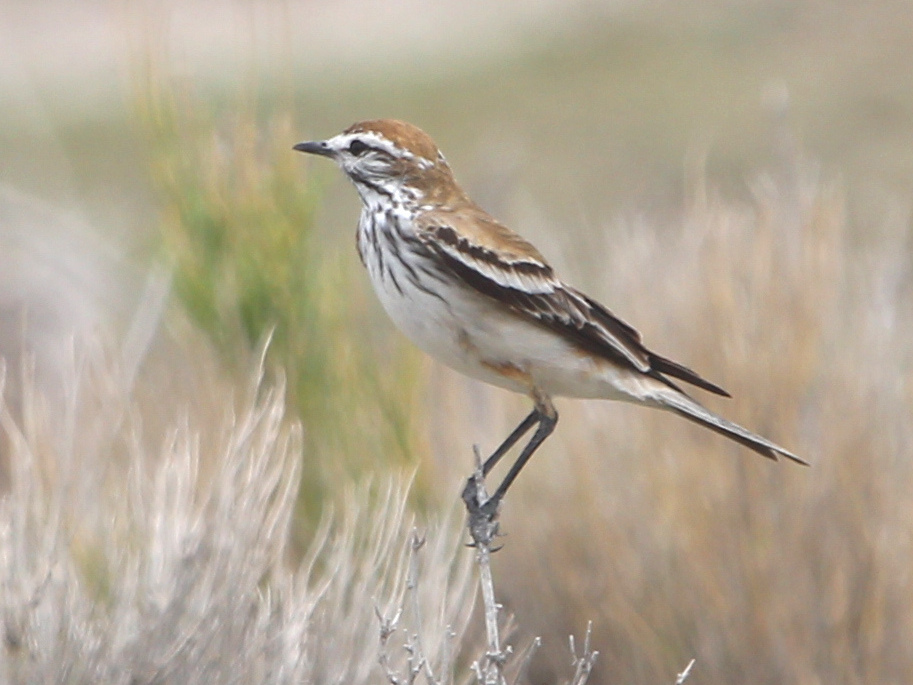
The Rusty-backed Monjita is a medium-sized bird, measuring approximately 18-20 cm in length. Its distinctive rusty-brown back contrasts sharply with its otherwise light gray plumage, which includes a pale underside and a white throat and face. The wings and tail are mostly dark, adding to its striking appearance when in flight. Males and females are similar in appearance, though males may often appear slightly brighter during the breeding season.
Juvenile Rusty-backed Monjitas can be differentiated from adults by a more subdued coloration, with less pronounced rusty tones and more speckling on their upperparts. This can occasionally lead to confusion with other similar species, such as the White Monjita (Xolmis irupero), which lacks the distinctive rusty coloration. The flight silhouette of the Rusty-backed Monjita is characterized by broad, rounded wings and a medium-length tail, often fanned out during aerial maneuvers.
When perched, the Rusty-backed Monjita maintains an upright posture, often tilting its head as it surveys its surroundings for prey. Its bold coloration and active behavior make it relatively easy to spot against the open landscapes it prefers. Birdwatchers can distinguish this species from others by noting the combination of its rusty back and prominent wing bars.
Having trouble telling birds apart? Upload a photo to our bird identification tool for an instant species match.
Rusty-backed Monjita Habitat and Range
Preferred Habitat
The Rusty-backed Monjita primarily inhabits open grasslands and savannas, preferring areas with sparse vegetation that allow for easy foraging and visibility. It is commonly found at elevations ranging from sea level to about 1,500 meters. In Uruguay, for example, this bird can be observed in the vast pampas, where the open terrain provides ideal conditions for hunting insects.
While the Rusty-backed Monjita shows a preference for natural grasslands, it can also adapt to modified landscapes, such as pastures and agricultural fields, as long as there is sufficient open space and perching sites. During the non-breeding season, it may venture into scrublands and areas with scattered bushes, though it generally avoids densely forested regions.
Urban presence is limited, as the Rusty-backed Monjita tends to avoid heavily built-up areas, preferring the quieter, open expanses where it can easily spot and pursue its prey. Seasonal habitat shifts are minimal, as the bird remains relatively sedentary, occupying its chosen territories year-round.
Geographic Range
The Rusty-backed Monjita's range is primarily confined to the southern part of South America, where it is a resident species. This bird breeds across central and southern Uruguay, northeastern Argentina, and parts of southern Brazil, regions characterized by expansive grasslands and savannas.
Unlike many other bird species, the Rusty-backed Monjita does not engage in long-distance migrations, remaining in its breeding range throughout the year. However, it may exhibit some local movements in response to changes in food availability or environmental conditions, especially during periods of extreme weather.
Population density hotspots include the pampas of Uruguay and Argentina, where suitable habitat conditions support relatively high densities of this species. In these regions, birdwatchers can frequently observe the Rusty-backed Monjita perched on fence posts or low shrubs, scanning for prey. Despite being considered common within its range, localized threats such as habitat loss and degradation can impact specific populations, emphasizing the importance of monitoring and conservation efforts.
Want to know which birds visit your area? Browse our backyard birds by location guides for region-specific species lists.
What Does the Rusty-backed Monjita Eat?
The Rusty-backed Monjita primarily feeds on insects, making it an important insectivore in its ecosystem. Its diet consists mainly of beetles, grasshoppers, and other small arthropods, which it captures through a combination of aerial sallies and ground foraging. During the breeding season, the bird's diet may shift slightly, with an increased focus on protein-rich prey to support the nutritional demands of raising young.
Foraging behavior typically involves perching on low shrubs or fences, from which the Rusty-backed Monjita launches quick, agile flights to snatch insects either in mid-air or from the ground. This method allows it to cover large areas efficiently, capitalizing on the abundance of prey in open grasslands.
Seasonal diet changes are influenced by prey availability, with the Rusty-backed Monjita adjusting its feeding strategies accordingly. In some areas, it may also consume small seeds and berries, though insects remain the primary component of its diet. The bird's active feeding schedule peaks during the early morning and late afternoon, coinciding with periods of increased insect activity.
Rusty-backed Monjita Behavior and Social Structure
The Rusty-backed Monjita exhibits a range of interesting behaviors, particularly during the breeding season when it becomes more territorial. Males engage in aerial displays and vocalizations to attract females and establish dominance over a territory. These displays often involve acrobatic flights and occasional clashes with rival males.
Socially, the Rusty-backed Monjita is generally solitary or found in pairs, especially during the breeding season. Outside this period, they may form loose flocks, particularly when foraging. Territorial behavior is pronounced, with both males and females actively defending their chosen areas from intruders.
In response to predators, the Rusty-backed Monjita relies on its agility and alertness to avoid potential threats. It may emit alarm calls to warn conspecifics and take flight to a safer location if necessary. Daily activity patterns show peaks during cooler parts of the day, with reduced activity during the hottest hours.
Courtship displays are prominent, involving singing, dancing, and specific flight patterns to woo potential mates. These intricate behaviors not only serve to attract partners but also reinforce pair bonds, which are crucial for successful breeding and cooperative parenting.
Rusty-backed Monjita Nesting and Reproduction
The Rusty-backed Monjita constructs open cup-shaped nests, typically placed in low shrubs or small trees. The nest is made of twigs, grasses, and rootlets, often lined with softer materials like feathers or animal hair to provide comfort for the eggs and chicks.
The preferred location for nesting is in areas with good visibility and access to open spaces for foraging. Clutch size generally ranges from 2 to 4 eggs, which are incubated primarily by the female for about 14 to 16 days. During this period, the male plays an active role in providing food for the incubating female.
Once the eggs hatch, both parents participate in feeding the chicks, bringing a steady supply of insects to the nest. The fledging period lasts approximately 15 to 20 days, during which time the young birds develop their flight feathers and learn essential foraging skills. The Rusty-backed Monjita typically raises one brood per year, though conditions may allow for a second brood in some favorable circumstances.
Rusty-backed Monjita Sounds and Vocalizations
The Rusty-backed Monjita's primary song is a series of melodious whistles, often described as a bright, cheerful tune repeated in quick succession. This song serves both territorial and courtship functions, with males singing more frequently during the breeding season.
Call notes are short and sharp, used primarily to communicate with mates or signal alarm. These calls can vary in intensity depending on the situation, with more urgent calls issued in the presence of predators.
Alarm calls are louder and more repetitive, designed to alert nearby birds to potential threats. During the dawn chorus, the Rusty-backed Monjita's song adds a distinctive layer to the soundscape of its habitat, blending with the calls of other grassland and savanna species.
Interesting Facts About the Rusty-backed Monjita
- 1The Rusty-backed Monjita can be found at elevations up to 1,500 meters, showcasing its adaptability to different grassland environments.
- 2While primarily insectivorous, the Rusty-backed Monjita occasionally supplements its diet with small seeds and berries.
- 3During courtship, males display a unique flight pattern that includes undulating loops and dives to impress potential mates.
- 4The Rusty-backed Monjita is often seen perching on fence posts, taking advantage of elevated views to spot prey.
- 5This bird's distinctive rusty-brown back makes it easy to identify against the backdrop of South America's expansive grasslands.
- 6Despite being common within its range, localized threats such as habitat loss can impact specific populations of the Rusty-backed Monjita.
- 7The Rusty-backed Monjita is an indicator species for healthy grassland ecosystems, highlighting the need for conservation of these habitats.
Rusty-backed Monjita Conservation Status
The IUCN currently lists the Rusty-backed Monjita as a species of Least Concern, with a stable population trend. Despite this relatively secure status, the bird faces ongoing threats from habitat destruction and fragmentation due to agricultural expansion and urban development. Conservation efforts focus on preserving native grasslands and implementing sustainable land use practices that support biodiversity. Historical population changes have shown some fluctuations, but overall the species has remained relatively stable compared to other grassland birds that have experienced more significant declines. Protected areas and reserves in regions like Uruguay and Argentina play a crucial role in conserving suitable habitats for the Rusty-backed Monjita, ensuring that this vibrant bird continues to thrive across its range.
Other Tyrannidae Species


Birds Similar to the Rusty-backed Monjita
These species are often confused with the Rusty-backed Monjita due to similar appearance or overlapping range.

