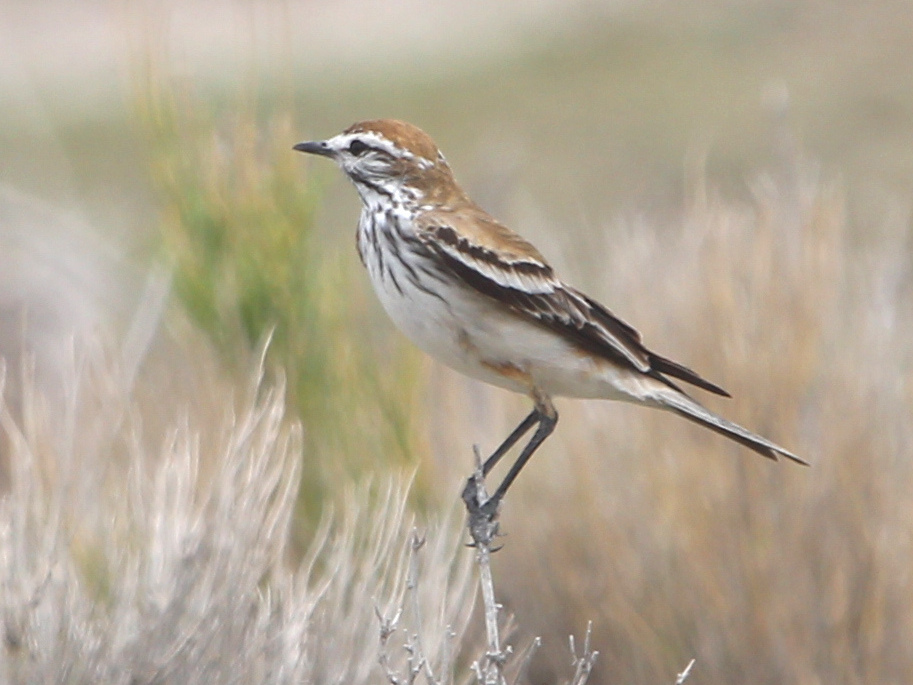
White Monjita
Xolmis irupero
Order: Passeriformes / Family: Tyrannidae

Wikimedia Commons
About the White Monjita
The White Monjita, known scientifically as Xolmis irupero, is a captivating member of the Tyrannidae family found predominantly in South America. This bird is easily recognizable due to its crisp white plumage contrasted with black wingtips, a combination that makes it striking against the often arid landscapes it inhabits. The species is primarily distributed throughout Argentina, Brazil, Paraguay, and Uruguay, favoring open habitats such as savannas, grasslands, and agricultural fields. These environments provide ample opportunities for the White Monjita to forage and nest, making it a common sight in rural areas. The ecological role of the White Monjita is significant as it helps control insect populations, thereby maintaining the health of its ecosystem. During the breeding season, which aligns with the Southern Hemisphere's spring and summer months, these birds become more territorial and vocal. They are known for their aerial displays and distinctive calls, which serve both to establish territory and attract mates. Outside the breeding season, White Monjitas may be found in small flocks, often seen perched conspicuously on fences or wires. This species is an important indicator of habitat health, as changes in its population can reflect broader environmental shifts. Its adaptability to modified landscapes, such as pastures and croplands, underscores its resilience yet also highlights the need for conservation measures to ensure its continued survival amid changing land use patterns. The White Monjita plays a crucial role in its native ecosystems by acting as both predator and prey. As insectivores, they help regulate insect populations, which can benefit agriculture by reducing pest numbers. In turn, they serve as prey for larger raptors and mammals, thus contributing to the food web. Their presence in a variety of habitats, from lowland plains to plateaus, demonstrates their adaptability and ecological importance. Understanding the habitat preferences and challenges faced by the White Monjita helps in formulating effective conservation strategies, particularly in regions where habitat loss and degradation pose significant threats.
The White Monjita belongs to the family Tyrannidae, within the order Passeriformes. These birds typically live average 4 years with a maximum recorded of 7 years..
How to Identify a White Monjita
Adult White Monjitas exhibit pristine white plumage, a feature that distinguishes them from many other passerines. The most notable field mark is their contrasting black wingtips and tail, which become especially apparent in flight. These birds measure about 20 cm in length, with a wingspan of approximately 35 cm, placing them in the medium size category. Males and females display similar plumage, making sexual dimorphism subtle and often only discernible through behavior during the breeding season. Juveniles can be differentiated by a slightly duller white plumage and more pronounced black markings on the wings, which gradually fade as they mature. The White Monjita's silhouette in flight is characterized by long, pointed wings and a slightly forked tail, aiding in swift, agile movements. When perched, they often adopt an upright posture, scanning the ground for insects. This vigilant stance, combined with their unique coloration, makes them relatively easy to spot against the backdrop of their favored open habitats. Similar species confusion may arise with the closely related Black-crowned Monjita, but the latter can be differentiated by its darker crown and more extensive black on the wings. Observers should also note the White Monjita's distinct lack of any dark crown or nape, which helps in differentiating it from other monjitas and tyrant flycatchers.
Having trouble telling birds apart? Upload a photo to our bird identification tool for an instant species match.
White Monjita Habitat and Range
Preferred Habitat
The White Monjita thrives in open landscapes, predominantly occupying savannas, pampas, and grasslands. These habitats provide the necessary elements for foraging and nesting. In regions like the Argentine Pampas and Brazilian Cerrado, they find ample opportunities for feeding on insects. The White Monjita is adaptable, often seen in modified environments such as agricultural fields and pasturelands. They are typically found at elevations from sea level up to 1500 meters, with a preference for lower to mid-elevation plains. During the breeding season, they may venture closer to water bodies where insects are more abundant. Unlike many birds, the White Monjita shows a degree of tolerance to urbanization, occasionally venturing into parks and gardens in rural towns. However, they are generally less common in densely populated urban centers. Seasonal shifts in habitat use are minimal, as they tend to remain in areas where food resources are consistently available.
Geographic Range
The White Monjita's range extends across much of southeastern South America, with significant populations in Argentina, Uruguay, Paraguay, and southern Brazil. They occupy a broad breeding range, particularly in the Pampas and Cerrado regions, which provide ideal conditions for nesting and feeding. While the species does not undertake long-distance migrations, some populations exhibit nomadic behavior, moving locally in response to food availability and climatic conditions. During the austral winter, some White Monjitas may travel northward to avoid harsher weather, though these movements are generally within the same countries or adjacent regions. Population density hotspots include the Argentine Pampas and the southern Pantanal in Brazil, where they are frequently observed in open fields and along roadsides. The White Monjita's presence in these areas is often indicative of healthy grassland ecosystems, as they thrive in environments with abundant insect life.
Want to know which birds visit your area? Browse our backyard birds by location guides for region-specific species lists.
What Does the White Monjita Eat?
The White Monjita primarily feeds on insects, including beetles, grasshoppers, and flying ants, which it captures through a variety of foraging techniques. This bird often employs a sit-and-wait strategy, perching on a prominent vantage point before swooping down to snatch prey from the ground or mid-air. During the breeding season, when energy demands are higher, its diet may expand to include small fruits and berries, supplementing its insectivorous intake. The White Monjita typically forages during daylight hours, with peak feeding activity occurring in the early morning and late afternoon when insects are most active. Its ability to adapt its diet based on seasonal availability ensures a consistent food supply throughout the year. While primarily ground-foragers, they are also known to catch insects on the wing, demonstrating agility and precision. Prey size varies, but they generally target insects ranging from 0.5 to 2 centimeters in length, optimizing their energy expenditure with the nutritional value of their captures.
White Monjita Behavior and Social Structure
White Monjitas exhibit a range of behaviors that reflect their adaptability and social structure. They are typically solitary or found in pairs during the breeding season, becoming more gregarious in the non-breeding months. Their territorial behavior is marked by aerial displays and vocalizations that serve to establish and defend their nesting areas. These displays often involve a series of rapid flights and conspicuous perching, designed to deter intruders and attract potential mates. Courtship involves both visual and auditory signals, with males performing elaborate flight patterns accompanied by song to woo females. In response to predators, White Monjitas rely on alarm calls and evasive maneuvers, often retreating to dense shrubs or trees for cover. Daily activity patterns revolve around feeding and territory maintenance, with peak activity occurring during cooler parts of the day. Flocking behavior is more common outside the breeding season, when individuals may join loose groups to forage in open fields, enhancing their vigilance against predators.
White Monjita Nesting and Reproduction
The White Monjita constructs an open cup nest, often placed in shrubby vegetation or low trees, which provides both concealment and proximity to feeding grounds. Nests are typically built from grasses, twigs, and roots, lined with softer materials such as feathers or hair. Clutch size ranges from two to four eggs, with an incubation period of approximately 14 to 16 days. Both parents participate in incubation, though the female takes a more active role in brooding. Once the eggs hatch, both parents share the responsibility of feeding and caring for the chicks. The fledging period lasts about 18 to 20 days, after which the young birds gradually gain independence. Breeding pairs may produce one or two broods per year, depending on environmental conditions and food availability. The selection of nesting sites is critical, as it influences chick survival rates. Parents exhibit protective behaviors, such as aggressive displays towards potential threats and strategic nest placement to minimize predation risk.
White Monjita Sounds and Vocalizations
The White Monjita's primary song is a series of melodious whistles, often described as clear and flute-like, with a rhythmic pattern that carries well across open landscapes. These songs play a crucial role in territory establishment and mate attraction, particularly during the breeding season. In addition to their song, White Monjitas produce a variety of call notes, including sharp 'pee' sounds that serve as contact calls between mates and family members. Alarm calls are harsher and more abrupt, signaling potential threats to nearby conspecifics. During the dawn chorus, their vocalizations become more frequent and energetic, contributing to the morning soundscape of their habitats. The clarity and simplicity of their calls make them relatively easy to distinguish from other birds in the field, aiding in identification and study.
Interesting Facts About the White Monjita
- 1The White Monjita can be seen using fence posts and utility wires as perching spots, showcasing their adaptability to human-modified landscapes.
- 2Despite their predominantly insectivorous diet, White Monjitas occasionally indulge in small fruits, highlighting their opportunistic feeding habits.
- 3White Monjitas are known to exhibit a fascinating behavior called 'mobbing,' where they join forces with other birds to drive away predators.
- 4The species' name 'Monjita,' meaning 'little nun' in Spanish, alludes to their distinctive white plumage.
- 5White Monjitas are non-migratory, but local movements can occur in response to food availability and climatic conditions.
- 6Their striking appearance makes them a favorite among birdwatchers and photographers, particularly in the open landscapes of the Pampas.
- 7White Monjitas are often one of the first bird species to recolonize pastures and fields after land is left fallow, indicating ecological resilience.
White Monjita Conservation Status
Currently, the White Monjita holds a status of 'Least Concern' according to the IUCN Red List, with a stable population trend. However, ongoing habitat destruction due to agricultural expansion and land-use changes poses a potential threat to their populations. Conservation efforts focus on preserving grassland and savanna ecosystems, which support not only the White Monjita but also a diverse array of wildlife. Historically, the species has demonstrated resilience to moderate habitat modification, though continued monitoring is essential to detect and mitigate emerging threats. Conservation programs emphasize habitat restoration and the establishment of protected areas to safeguard critical breeding and feeding sites. Public awareness and engagement in sustainable land management practices also play a crucial role in ensuring the long-term survival of this and other grassland-dependent species.
Other Tyrannidae Species


Birds Similar to the White Monjita
These species are often confused with the White Monjita due to similar appearance or overlapping range.