
Rusty-tailed Flycatcher
Muscicapa ruficauda
Order: Passeriformes / Family: Muscicapidae

Wikimedia Commons
About the Rusty-tailed Flycatcher
The Rusty-tailed Flycatcher, Muscicapa ruficauda, is a small passerine bird belonging to the family Muscicapidae. This inconspicuous yet fascinating species inhabits a variety of wooded environments across the Indian subcontinent, ranging from the Himalayan foothills to the dry deciduous forests of central and southern India. Known for its nimble flight and adeptness at catching insects mid-air, the Rusty-tailed Flycatcher plays a crucial role in controlling insect populations, contributing to the ecological balance of its habitat. Particularly active during the breeding season, these flycatchers are often observed in open wooded areas, where their presence indicates a healthy ecosystem.
The Rusty-tailed Flycatcher thrives in diverse ecosystems, from the lush lowland forests of Sri Lanka to the temperate forest edges of Bhutan. During the breeding season, they are typically found in altitudes ranging from 600 to 2500 meters, favoring regions with ample tree cover. As the monsoon season wanes, these birds descend to lower elevations, expanding their range into semi-urban settings, where they adapt to changes in their environment. Their adaptability allows them to occupy a range of habitats, including gardens and parks, though they maintain a preference for areas with substantial tree coverage.
Ecologically, the Rusty-tailed Flycatcher serves as an important bioindicator species. Its sensitivity to habitat changes makes it a valuable species for monitoring environmental health. This flycatcher's seasonal migrations and altitudinal range shifts reflect broader ecological patterns, providing insight into climate impacts on avian species. Conservation of the Rusty-tailed Flycatcher's habitat is essential not only for the species itself but also for maintaining the biodiversity of the regions it inhabits.
The Rusty-tailed Flycatcher belongs to the family Muscicapidae, within the order Passeriformes. These birds typically live average 4 years, with a maximum of 6 years recorded..
How to Identify a Rusty-tailed Flycatcher
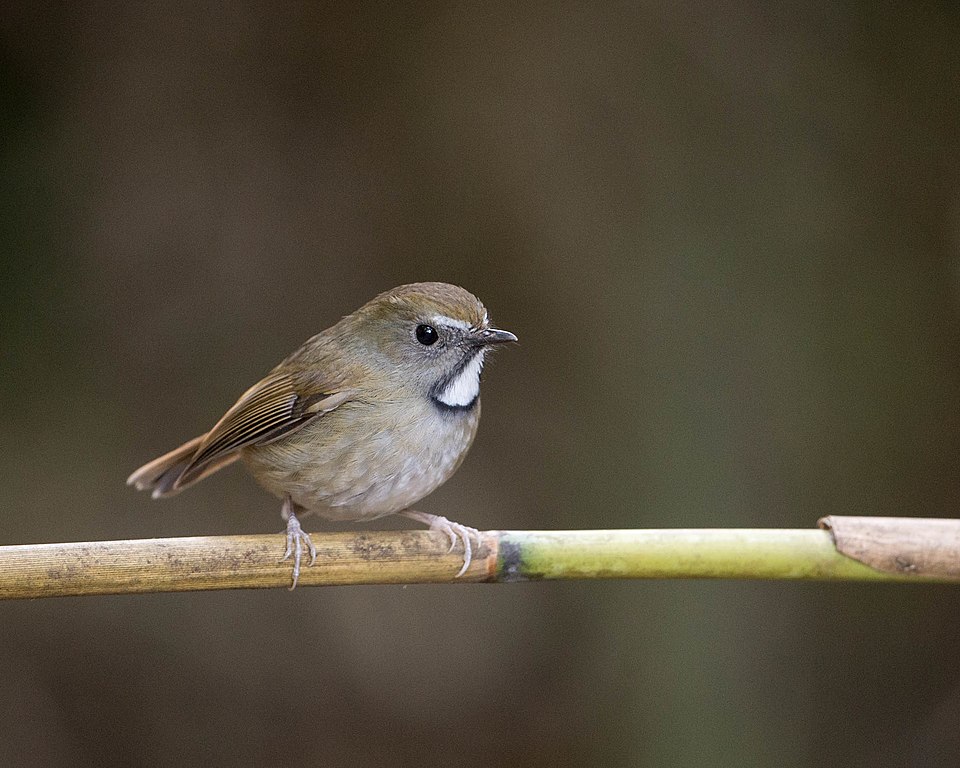
Adult Rusty-tailed Flycatchers exhibit a distinctive reddish-brown tail, setting them apart from other flycatchers in their range. Their upperparts are generally grayish-brown, and they possess a subtle white throat transitioning to a pale underbelly. Juvenile birds can be distinguished by their spotted upperparts and more muted coloration. Males and females share similar plumage, making them difficult to differentiate in the field. However, during the breeding season, males may appear slightly brighter.
The Rusty-tailed Flycatcher's flight silhouette is characterized by rapid wingbeats and agile maneuvers, often performed in pursuit of flying insects. When perched, they maintain an upright stance, frequently flicking their tails, a behavior that aids in their identification. This species can be confused with the Red-breasted Flycatcher, but the latter lacks the Rusty-tailed Flycatcher's distinctive tail coloring and exhibits a more vibrant breast.
In addition to visual identification, the Rusty-tailed Flycatcher's vocalizations offer another means of recognition. Their calls, while not as complex as some other songbirds, include a series of sharp, metallic notes that are unique to the species. Observers should listen for these calls, particularly in mixed woodland habitats, to confirm identification.
Having trouble telling birds apart? Upload a photo to our bird identification tool for an instant species match.
Rusty-tailed Flycatcher Habitat and Range
Preferred Habitat
The Rusty-tailed Flycatcher occupies a variety of habitat types across its range, showing a preference for open woodlands, forest edges, and scrubby areas. In the Himalayan foothills, they are frequently found in mountainous deciduous forests, often at elevations between 600 and 2500 meters. During the non-breeding season, these flycatchers move to lower elevations, occupying semi-urban environments such as gardens and parks, adapting to more open and fragmented landscapes with ease.
In southern India, the Rusty-tailed Flycatcher is often associated with dry deciduous forests and areas with scattered trees. Despite their adaptability, they are rarely found in dense, unbroken forest interiors. Instead, they favor areas where they can easily spot and capture their insect prey. Their presence in urban and suburban areas increases during migration and in the non-breeding season, reflecting their flexibility in habitat use.
While primarily a forest and woodland bird, the Rusty-tailed Flycatcher's ability to thrive in a range of environments underscores its adaptability. However, this does not diminish the importance of conserving natural habitats, as these environments provide the resources necessary for their survival and reproductive success.
Geographic Range
The Rusty-tailed Flycatcher breeds primarily across the Indian subcontinent, with a range extending from the foothills of the Himalayas in northern India, Nepal, and Bhutan, to the southern parts of India and Sri Lanka. During the breeding season, they are found at higher elevations, typically between 600 and 2500 meters in the Himalayan regions.
As the seasons change, these birds migrate to lower elevations, expanding their range into more open and semi-urban areas. This altitudinal migration is a response to the changing availability of food resources and climatic conditions. In southern India, they remain relatively sedentary, though they may move short distances in response to local environmental conditions.
Population density is highest in areas with a mix of forested and open spaces, such as the Western Ghats and the forests of central India. In these regions, the Rusty-tailed Flycatcher can be found in moderate numbers, although they are less common in areas where deforestation and habitat fragmentation are prevalent. Their adaptability to different environments allows them to occupy a wide range of habitats, ensuring their presence across much of the Indian subcontinent.
Want to know which birds visit your area? Browse our backyard birds by location guides for region-specific species lists.
What Does the Rusty-tailed Flycatcher Eat?
The Rusty-tailed Flycatcher's diet primarily consists of insects, which they catch with remarkable agility in mid-air. Their preferred prey includes various flies, beetles, and other small arthropods. During the breeding season, when energy demands are high, they may consume larger insects, such as grasshoppers and moths, to meet their nutritional needs.
Seasonal changes affect their diet, as the availability of different insect species fluctuates throughout the year. In the cooler months, these flycatchers may supplement their diet with small fruits and berries, taking advantage of the limited insect prey during this period.
Rusty-tailed Flycatchers employ a sit-and-wait hunting strategy, often perching silently in a tree before darting out to catch passing insects. This method allows them to conserve energy while maintaining a high success rate in capturing prey. They are most active during the early morning and late afternoon, coinciding with peak insect activity.
Their ability to adapt their diet to suit seasonal availability demonstrates the Rusty-tailed Flycatcher's ecological flexibility, allowing them to occupy a range of habitats with varying food resources.
Rusty-tailed Flycatcher Behavior and Social Structure
The Rusty-tailed Flycatcher exhibits intriguing social and territorial behaviors, especially during the breeding season. Typically solitary outside of breeding times, they become fiercely territorial when nesting. Males engage in aerial displays and vocalizations to establish and defend their territory from intruders. These displays, often involving rapid wing flutters and sharp calls, serve both as a deterrent to rivals and an attraction to potential mates.
Courtship involves a series of fluttery flights and the presentation of food by the male to the female, a behavior that strengthens pair bonds. Once paired, the Rusty-tailed Flycatchers work cooperatively in the territory, with both sexes participating in nest construction and defense.
Outside of the breeding season, these flycatchers are less territorial and may be seen foraging in loose associations. Their approach to predators involves a mix of evasive flight and alarm calls to alert nearby birds. Daily activity patterns are crepuscular, with peak foraging occurring during dawn and dusk when insect prey is most abundant.
This species' responsive behavior to environmental changes, such as shifts in food availability, reflects their adaptive strategies for survival across diverse habitats.
Rusty-tailed Flycatcher Nesting and Reproduction
Rusty-tailed Flycatchers construct cup-shaped nests, typically located in tree forks or on horizontal branches. These nests are made from twigs, grass, and lined with softer materials like feathers and plant down to provide insulation and comfort for the eggs. They prefer nesting sites that offer a blend of concealment and accessibility, often choosing locations several meters above the ground.
The typical clutch size for a Rusty-tailed Flycatcher ranges from two to four eggs. These eggs are incubated primarily by the female, with an incubation period lasting approximately 12 to 14 days. During this time, the male provides food for the female, ensuring she can devote time to warming the eggs.
Once hatched, the nestlings remain in the nest for around 12 to 16 days under the care of both parents. The fledging phase is critical as the young birds learn to fly and forage. Parents are attentive, feeding the chicks frequently to support their rapid growth. The number of broods per year typically depends on environmental conditions, with one or two broods being common in optimal habitats.
Rusty-tailed Flycatcher Sounds and Vocalizations
The primary song of the Rusty-tailed Flycatcher is a series of sharp, metallic notes that can be described as short bursts of sound, often repeated in rapid succession. These vocalizations serve multiple purposes, including territory defense and mate attraction during the breeding season.
In addition to their primary song, Rusty-tailed Flycatchers emit various call notes, including a distinctive 'tchick-tchick' sound that is often used as an alarm call. These calls help communicate the presence of predators or intruders to other birds in the vicinity.
During the dawn chorus, Rusty-tailed Flycatchers contribute with their sharp notes, adding to the symphony of avian sounds. This behavior is more pronounced during the breeding season, when vocal activity peaks.
Their calls, while not as melodious as some songbirds, are nevertheless distinctive and can be used effectively to identify them in the field, particularly in mixed woodland habitats.
Interesting Facts About the Rusty-tailed Flycatcher
- 1The Rusty-tailed Flycatcher has a wingspan of approximately 22 centimeters, allowing for agile flight.
- 2This species often shares its habitat with other flycatchers but stands out due to its distinctive tail color.
- 3Rusty-tailed Flycatchers can be seen performing acrobatic aerial maneuvers while catching insects.
- 4Despite their small size, these flycatchers are known for their territorial aggression during breeding season.
- 5Their nests are often built high in trees, sometimes as high as 10 meters above ground, to deter predators.
- 6The Rusty-tailed Flycatcher's call has been compared to the tinkling of small bells due to its sharp, metallic quality.
- 7These birds occasionally consume small fruits, supplementing their primarily insectivorous diet when necessary.
Rusty-tailed Flycatcher Conservation Status
The Rusty-tailed Flycatcher is currently listed as Least Concern by the IUCN due to its relatively wide distribution and stable population trends. However, habitat loss and fragmentation pose significant threats to this species, especially in regions where deforestation is rampant. Conservation efforts focus on preserving natural habitats and implementing sustainable land-use practices. Protected areas and national parks across India and Sri Lanka play a crucial role in maintaining viable populations of this flycatcher. Despite being relatively adaptable, the Rusty-tailed Flycatcher is sensitive to environmental changes, making it an important species for monitoring ecosystem health. Maintaining forest cover and reducing habitat destruction are essential strategies for ensuring the long-term survival of this species. Historically, the Rusty-tailed Flycatcher population has remained stable, but ongoing conservation efforts are necessary to mitigate the impacts of human activities on their habitats.
Other Muscicapidae Species


Birds Similar to the Rusty-tailed Flycatcher
These species are often confused with the Rusty-tailed Flycatcher due to similar appearance or overlapping range.