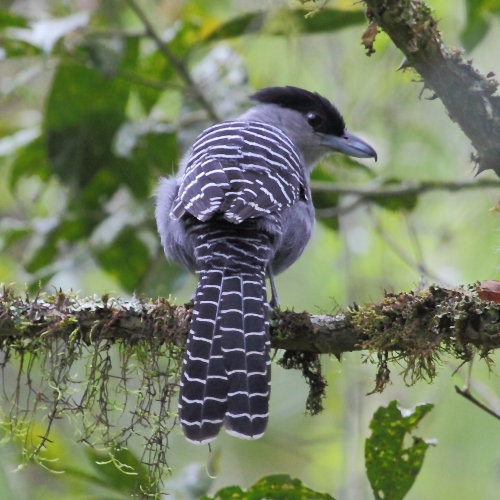
Sclater's Antwren
Myrmotherula sclateri
Order: Passeriformes / Family: Thamnophilidae

Wikimedia Commons
About the Sclater's Antwren
Sclater's Antwren, known scientifically as Myrmotherula sclateri, is a small passerine bird belonging to the Thamnophilidae family. This species inhabits the dense understory of the Amazon Rainforest, thriving in a habitat characterized by thick vegetation and high humidity. The Sclater's Antwren is found primarily in the western Amazon Basin, including countries such as Brazil, Peru, and Ecuador. It plays a crucial ecological role as an insectivore, helping to control insect populations and maintain the balance of its ecosystem.
The significance of Sclater's Antwren extends beyond its ecological role. As a species living in one of the planet's most biodiverse regions, it is an indicator of ecosystem health. Changes in its population can signal shifts in environmental conditions, making it a valuable subject for ecological studies. The bird’s presence contributes to the rich tapestry of life that defines the Amazon and highlights the interconnectedness of species within this vast biome.
In terms of behavior, Sclater's Antwren exhibits distinct seasonal patterns. During the breeding season, which typically coincides with the rainy season, the birds become more vocal and territorial. They establish and defend breeding territories, showcasing their adaptability to the changing environmental conditions. Outside the breeding season, Sclater's Antwren may join mixed-species foraging flocks, taking advantage of the increased foraging opportunities provided by these groups.
The Sclater's Antwren's ecological role in controlling insect populations is significant, as it aids in maintaining the delicate balance of the rainforest ecosystem. Its adaptations to the dense tropical understory demonstrate the complexity and specialization of Amazonian bird species. The antwren's reliance on specific habitat conditions underscores the importance of rainforest conservation efforts, as habitat degradation could have profound effects on its population and the broader ecosystem.
The Sclater's Antwren belongs to the family Thamnophilidae, within the order Passeriformes. These birds typically live 3-5 years, with max recorded at 7 years.
How to Identify a Sclater's Antwren
The Sclater's Antwren is a small bird, measuring about 9 to 10 centimeters in length. Adult males typically display a striking plumage with a predominantly gray body and contrasting black-and-white wing bars, which serve as key identifiers in the field. Their underparts are lighter, often appearing whitish, providing a stark contrast to their darker upperparts. Females, on the other hand, exhibit a buffy wash across their underparts and lack the bold wing bars found in males, making sexual dimorphism a helpful trait for identification.
Juvenile Sclater's Antwrens resemble females but are generally duller, with a more uniform coloration. This lack of bold markings makes them harder to distinguish at a distance, necessitating careful observation for accurate identification. One of the main challenges in identifying Sclater's Antwren is distinguishing it from similar species within the Myrmotherula genus, such as the White-flanked Antwren. However, the latter typically displays more pronounced white underparts and different vocalizations.
In terms of behavior and posture, Sclater's Antwren often perches low in the understory, moving nimbly through dense foliage in search of insects. Its flight is quick and fleeting, characterized by rapid wing beats. Observers will often recognize it by its behavior and habitat preference rather than its silhouette, as it rarely ventures into open spaces.
Having trouble telling birds apart? Upload a photo to our bird identification tool for an instant species match.
Sclater's Antwren Habitat and Range
Preferred Habitat
Sclater's Antwren inhabits the dense understory of tropical rainforests, with a strong preference for the Amazon Basin's humid lowland forests. These birds are predominantly found at elevations ranging from sea level up to approximately 500 meters. They favor habitats with thick undergrowth and abundant leaf litter, where they can forage effectively.
The species demonstrates little seasonal habitat shift, maintaining a year-round presence in these forested areas. Unlike some other species, Sclater's Antwren is not typically found in urban or heavily disturbed environments, indicating its reliance on pristine or minimally disturbed habitats. This preference underscores the importance of conserving mature rainforest habitats to support the species' survival.
Sclater's Antwren's habitat preference reflects its adaptation to life in complex ecological niches. By inhabiting environments with dense foliage and limited light penetration, these birds capitalize on insect availability and reduce competition from other insectivores that prefer more open or varied habitats.
Geographic Range
The geographical range of Sclater's Antwren is primarily concentrated in the western Amazon Basin. It is native to regions in northern Brazil, eastern Peru, and southern Ecuador. This species does not exhibit long-distance migration, as it is a resident bird that maintains a stable presence within its range throughout the year.
In terms of population density, Sclater's Antwren is often found in regions with extensive and contiguous rainforest cover, where it benefits from the abundant resources and suitable habitat conditions. The species thrives in areas where the rainforest remains relatively undisturbed by human activity, as habitat degradation can significantly impact its population levels.
While the Sclater's Antwren's range is relatively concentrated, its presence across multiple countries highlights the importance of transnational conservation efforts. Protecting cross-border habitats ensures the survival of this species and maintains the ecological integrity of the Amazon Basin as a whole.
Want to know which birds visit your area? Browse our backyard birds by location guides for region-specific species lists.
What Does the Sclater's Antwren Eat?
Sclater's Antwren primarily feeds on insects, which constitute the bulk of its diet. The bird actively forages in the dense understory, using its agile movements to catch prey hidden within foliage and leaf litter. Common prey items include small beetles, spiders, and caterpillars. The antwren's diet may vary slightly with seasonal changes in insect availability, but its reliance on invertebrates remains consistent throughout the year.
This bird employs a foraging technique known as 'gleaning,' where it picks off insects from leaves and branches. Sclater's Antwren is known for its rapid, precise movements as it navigates through thick vegetation, often hanging upside down to reach insects in hard-to-access areas.
The antwren's feeding schedule predominantly occurs during daylight hours, with peak activity in the early morning and late afternoon. This pattern aligns with the behavior of many insectivorous birds, maximizing foraging success during periods of high insect activity in the cooler parts of the day.
Sclater's Antwren Behavior and Social Structure
Sclater's Antwren exhibits a complex social structure, often observed in pairs or small family groups. During the breeding season, which typically aligns with the rainy season, males establish and defend territories through vocal displays and physical posturing. These territories are crucial for successful mating, as they provide access to resources necessary for raising young.
The antwren's courtship displays involve a combination of vocalizations and subtle physical movements. Males may perform short flights or perch prominently to attract females, showcasing their fitness and territorial ownership. Once paired, these birds engage in cooperative behaviors, with both partners participating in foraging and territory defense.
Outside the breeding season, Sclater's Antwren may join mixed-species flocks. These flocks enhance foraging success and provide protection against predators through increased vigilance. In response to threats, such as raptors or snakes, the antwrens emit alarm calls and engage in evasive maneuvers, retreating into dense cover where they are less visible.
Daily activity patterns of Sclater's Antwren involve early morning and late afternoon foraging, taking advantage of optimal light conditions and insect activity. Their activity decreases during the hottest part of the day, when they may seek shade and rest within the cool understory.
Sclater's Antwren Nesting and Reproduction
Sclater's Antwren constructs cup-shaped nests using a variety of materials gathered from the forest floor. These nests are typically located in low shrubs or saplings, well-concealed within the dense understory to protect them from predators. The choice of nesting sites reflects the species' reliance on the camouflage provided by the thick foliage.
The clutch size usually consists of two to three eggs. Both parents share responsibilities during the incubation period, which lasts approximately 14 to 16 days. The cooperation continues after hatching, with both male and female participating in feeding and caring for the chicks.
Fledging occurs around 10 to 12 days after hatching, though the young remain dependent on their parents for additional weeks as they learn essential survival skills. Sclater's Antwren typically raises one brood per year, aligning their breeding cycle with periods of high food availability during the rainy season.
Parental roles in Sclater's Antwren are equitable, with both sexes involved in nest building, incubation, and chick rearing. This partnership ensures high survival rates for the offspring in the challenging rainforest environment.
Sclater's Antwren Sounds and Vocalizations
Sclater's Antwren is known for its distinctive vocalizations, which play a significant role in communication and territory defense. The primary song of the male is a series of short, rapid notes delivered in a descending sequence. The rhythm is somewhat reminiscent of a bouncing ball, with a clear, crisp quality that carries well through the dense forest.
In addition to their primary song, Sclater's Antwrens emit various call notes used in different contexts. These calls include soft contact notes exchanged between mates and sharper, more urgent alarm calls used to warn of predators. The alarm calls are particularly harsh, serving as an effective deterrent to potential threats.
At dawn, Sclater's Antwren participates in the chorus of forest sounds, contributing its rapid notes to the symphony of the Amazon. These vocalizations help establish territory boundaries and reinforce pair bonds, demonstrating the bird's reliance on acoustic communication in its complex environment.
Interesting Facts About the Sclater's Antwren
- 1Sclater's Antwren, despite being a small bird, plays a significant role in the Amazon's ecosystem by controlling insect populations.
- 2Named after British zoologist Philip Sclater, Sclater's Antwren is one of many species that honor his contributions to ornithology.
- 3With a length of about 10 centimeters, Sclater's Antwren is small enough to navigate the dense understory with ease.
- 4The antwren's distinctive song can be heard echoing through the rainforest, aiding in territory establishment and mate attraction.
- 5Sclater's Antwren’s preference for dense habitats makes it less visible, often identified by its song rather than sight.
- 6This bird's reliance on specific habitats highlights the critical need for rainforest conservation efforts to ensure its survival.
- 7Sclater's Antwren often participates in mixed-species flocks, a strategy that increases foraging efficiency and predator avoidance.
Sclater's Antwren Conservation Status
Sclater's Antwren is currently listed as Least Concern by the IUCN, with populations considered stable. However, the primary threat to this species is habitat loss due to deforestation, which reduces the availability of suitable understory environments. The ongoing expansion of agriculture and logging activities in the Amazon poses a significant risk to the antwren's habitat. Conservation efforts focus on protecting large tracts of rainforest and promoting sustainable land-use practices. Organizations and governments are working to establish protected areas and corridors that ensure the continuity of suitable habitats. Historical population changes indicate resilience, yet continued habitat degradation could alter this trend. Maintaining the health of Sclater's Antwren populations requires international collaboration, given its range across multiple countries. Efforts to curb deforestation and implement conservation policies are essential for preserving the biodiversity of the Amazon and securing the future of this and many other species.