
Short-billed Crombec
Sylvietta philippae
Order: Passeriformes / Family: Macrosphenidae

Wikimedia Commons
About the Short-billed Crombec
The Short-billed Crombec, scientifically known as Sylvietta philippae, is a fascinating and diminutive bird native to the arid and semi-arid landscapes of East Africa. This bird is notably recognized for its remarkably short tail and compact size, both of which contribute to its unique silhouette against the sparse vegetation of its habitat. The species is predominantly found in regions stretching across Somalia, Ethiopia, and northern Kenya, where it thrives in the open savannas and scrublands that provide ample foraging opportunities.
The ecological role of the Short-billed Crombec is significant, particularly in its contribution to insect population control within its ecosystem. By preying on a variety of insects, it helps maintain a balance, thus supporting the health of the flora it inhabits. The bird's presence indicates a well-functioning ecosystem as it requires specific habitat conditions that are often disrupted by human activity and environmental changes.
Seasonal behaviors of the Short-billed Crombec include subtle shifts in foraging strategies and slight alterations in territorial boundaries. While it is not known for long-distance migration, the bird does exhibit some seasonal movement within its range to optimize resource availability. During the breeding season, which coincides with the rainy periods, these birds become more vocal and active, showcasing their territorial nature.
The Short-billed Crombec has remained a subject of interest for ornithologists and bird enthusiasts alike, primarily due to its distinct morphological features and its adaptability to harsh environmental conditions. Its ability to thrive in relatively inhospitable areas underscores its evolutionary success as a species well-suited to the challenges of its native habitats.
The Short-billed Crombec belongs to the family Macrosphenidae, within the order Passeriformes. These birds typically live average lifespan is 5 years, with some individuals living up to 7 years..
How to Identify a Short-billed Crombec
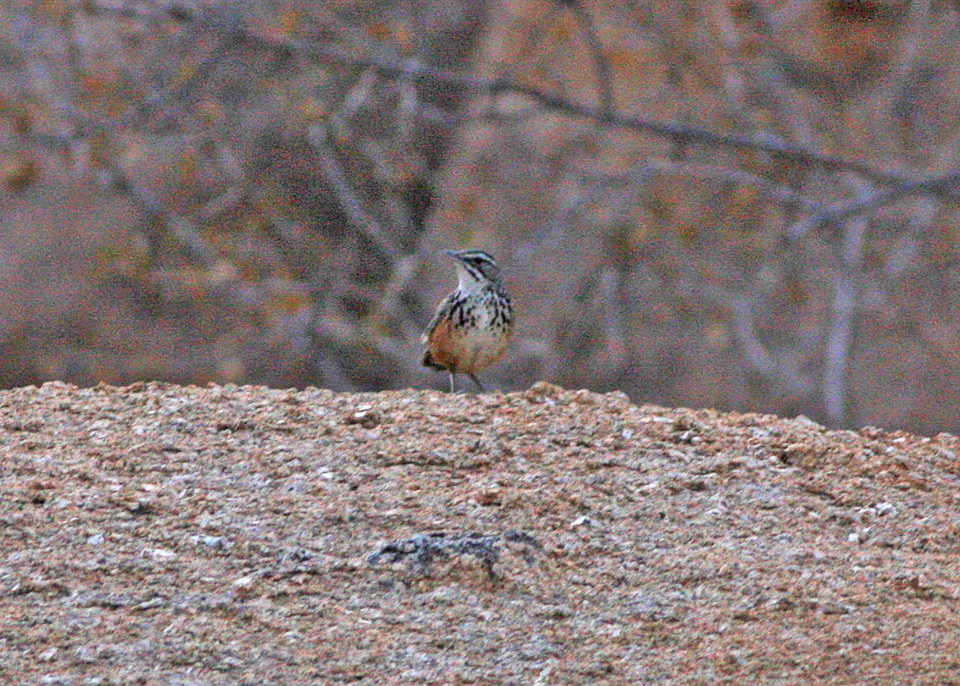
In the field, the Short-billed Crombec is easily identifiable by its compact size and nearly tail-less appearance, which distinguishes it from other sylviid warblers. Adult plumage is predominantly grayish-brown on the upper parts, with lighter underparts that may exhibit a subtle buff wash. Males and females are similar in appearance, making sexual dimorphism minimal and challenging to discern without close scrutiny.
Juvenile crombecs resemble their adult counterparts but may have slightly duller plumage and lack the refined feather patterns seen in mature birds. The short, stout bill is a critical identifying feature, adapted for gleaning insects from foliage rather than probing or pecking at the ground.
The flight silhouette of the Short-billed Crombec is unique due to its truncated tail, which gives it a rounded appearance in flight, unlike many other small birds that have longer tails aiding their maneuverability. Perching posture is typically upright, often on slender branches or twigs, allowing for quick and agile movement through the vegetation.
Confusion with similar species is rare due to the distinct morphological traits of the Short-billed Crombec, though care should be taken when identifying from a distance, as small, active birds can appear similar in silhouette without clear views.
Having trouble telling birds apart? Upload a photo to our bird identification tool for an instant species match.
Short-billed Crombec Habitat and Range
Preferred Habitat
The Short-billed Crombec inhabits arid and semi-arid regions, thriving in open savannas and scrublands that characterize much of East Africa's landscape. It prefers areas with sparse vegetation where it can easily maneuver while foraging. These habitats often consist of acacia and other thorny bushes that provide both food resources and nesting sites.
Elevation for the Short-billed Crombec generally ranges from lowland areas up to around 1500 meters, although they are most commonly found in flat or rolling terrain that offers ample visibility and mobility.
There is little evidence of significant seasonal habitat shifts as the Short-billed Crombec tends to remain within its established territories year-round. However, slight local movements may occur in response to changes in food availability or climatic conditions.
The species is not typically found in urban environments, preferring the more remote and undisturbed areas where human presence is minimal. This preference highlights its reliance on natural habitats for survival and breeding.
Geographic Range
The Short-billed Crombec's range is concentrated in East Africa, specifically across Somalia, Ethiopia, and parts of northern Kenya. Within these regions, it occupies suitable scrub and savanna habitats that support its ecological needs.
The breeding range of the Short-billed Crombec coincides with areas that experience seasonal rains, which stimulate insect activity and provide the necessary resources for raising young. It is not known to undertake long migrations, but local movements within its range are common as it responds to environmental changes and food availability.
Despite its relatively limited geographical range, the Short-billed Crombec is considered locally common where suitable habitats exist. Population density hotspots can be found in areas where vegetation density and insect abundance are optimal for foraging and nesting.
The absence of this species beyond East Africa suggests specialization to its native habitats, particularly the thorny scrub and savanna landscapes that dominate the region.
Want to know which birds visit your area? Browse our backyard birds by location guides for region-specific species lists.
What Does the Short-billed Crombec Eat?
The diet of the Short-billed Crombec primarily consists of insects and other small invertebrates, making it an adept insectivore well-suited to its environment. It exhibits a preference for ants and beetles, which are abundant in its native habitat, but will also consume spiders and small caterpillars when available.
Dietary changes occur seasonally as the availability of prey fluctuates with the onset of rains, which typically heralds an increase in insect activity. During these periods, the Short-billed Crombec becomes more active in foraging, taking advantage of the temporary abundance of food resources.
Foraging techniques of the Short-billed Crombec involve gleaning insects from leaves and branches, a behavior facilitated by its short bill, which allows for precise picking rather than probing. The bird moves quickly through foliage, often hanging upside down to access prey hidden beneath leaves.
Prey size is generally small, reflecting the bird's own diminutive stature, and feeding is conducted primarily during daylight hours when insects are most active, ensuring the bird's energy needs are met efficiently.
Short-billed Crombec Behavior and Social Structure
The Short-billed Crombec exhibits a range of behaviors that are characteristic of its adaptation to arid environments. Social structure is generally solitary or in pairs, with little evidence of large flocking behavior outside the breeding season. Territorial behavior becomes pronounced during the breeding season, with males actively defending their chosen areas through vocalizations and physical displays.
Courtship displays are subtle but involve exchanges of soft calls and mutual preening between mates, reinforcing pair bonds and ensuring cooperation in nesting activities. The species displays some flexibility in terms of territory size, adjusting boundaries in response to environmental pressures and resource availability.
Response to predators includes remaining motionless and relying on camouflage provided by its plumage to avoid detection. In the event of a direct threat, the Short-billed Crombec is capable of rapid flight to seek refuge in dense vegetation.
Daily activity patterns are diurnal, with peak activities occurring in the morning and late afternoon when temperatures are moderate. The bird spends much of its day foraging, interspersed with periods of rest during the hottest part of the day.
Short-billed Crombec Nesting and Reproduction
Nesting for the Short-billed Crombec involves constructing a compact, cup-shaped nest that is strategically placed in dense foliage to provide concealment from predators. The nest is typically built from fine grasses and lined with softer materials like feathers or plant down to ensure comfort and insulation for the eggs and chicks.
Location preferences for nesting sites include shrubs and small trees, often at a height of one to three meters above the ground, offering protection from terrestrial predators and flooding.
Clutch size generally consists of two to three eggs, with incubation carried out primarily by the female. Incubation lasts around 12 to 14 days, after which both parents contribute to feeding the chicks.
The fledging timeline spans approximately two weeks, during which the young birds grow rapidly and begin to explore their surroundings under the watchful eyes of their parents. The species typically raises one brood per year, although in favorable conditions, a second brood may be attempted.
Short-billed Crombec Sounds and Vocalizations
The primary song of the Short-billed Crombec is a series of short, melodic whistles that are delivered in quick succession, creating a rhythmic and pleasant auditory experience. The pitch is moderate, avoiding the extremes of high or low tones, and the quality is clear, making it distinctive among the background sounds of its habitat.
Call notes are short and sharp, often used in communication between mates or as contact calls when foraging. Alarm calls are more strident and rapid, serving as a warning to conspecifics of potential threats.
During the dawn chorus, the Short-billed Crombec participates with increased vocal activity, marking its territory and asserting its presence in the early hours of the day. Comparatively, its song can be likened to a series of flute-like notes that rise and fall in a gentle cadence.
Interesting Facts About the Short-billed Crombec
- 1The Short-billed Crombec's near tail-less appearance is a unique adaptation that aids in its quick movement through dense foliage.
- 2Despite its small size, the Short-billed Crombec can consume prey nearly half its own weight in insects daily.
- 3The bird's distinct song can be heard over 100 meters away, a testament to its vocal prowess despite its diminutive stature.
- 4Short-billed Crombecs often hang upside down while foraging, showcasing their agility and specialized feeding techniques.
- 5This species' reliance on specific habitats makes it an excellent bioindicator of environmental health in arid regions.
- 6The Short-billed Crombec's nesting success is closely tied to the timing of seasonal rains, which dictate food availability.
- 7Unlike many small birds, the Short-billed Crombec is non-migratory, remaining within its established range year-round.
Short-billed Crombec Conservation Status
The International Union for Conservation of Nature (IUCN) currently classifies the Short-billed Crombec as a species of Least Concern, reflecting its stable population trend across its range. Despite this favorable status, the bird faces threats primarily from habitat loss due to agricultural expansion and human settlement encroachment. Conservation efforts focus on protecting the natural habitats that are vital to the species' survival, with particular emphasis on maintaining savanna and scrubland ecosystems. Local conservation initiatives aim to balance human development with the preservation of biodiversity. Historically, the Short-billed Crombec has maintained a relatively stable population, thanks in part to its adaptability and wide range within suitable habitats. Ongoing monitoring is essential to ensure that emerging threats do not lead to population declines in the future.
Other Macrosphenidae Species


Birds Similar to the Short-billed Crombec
These species are often confused with the Short-billed Crombec due to similar appearance or overlapping range.

