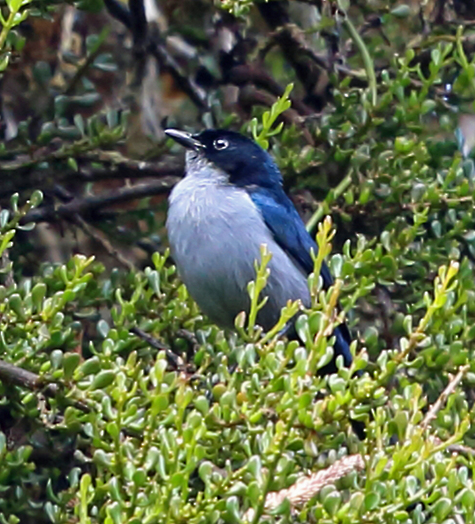
Spectacled Longbill
Oedistoma iliolophus
Order: Passeriformes / Family: Melanocharitidae

Wikimedia Commons
About the Spectacled Longbill
The Spectacled Longbill, scientifically named Oedistoma iliolophus, is a small passerine bird that inhabits the dense tropical forests of New Guinea. This species is part of the Melanocharitidae family, which is characterized by its unique foraging behaviors and adaptations to a nectar- and insect-based diet. The Spectacled Longbill is named for the conspicuous white eye-ring that gives it a spectacled appearance. This feature, along with the bird's slender and elongated bill, helps in distinguishing it from other similar species.
Ecologically, the Spectacled Longbill plays a vital role in the pollination of various plant species within its range. Its feeding habits, which include sipping nectar from flowers, inadvertently aid in the transfer of pollen. This ecological service is crucial for maintaining the health and diversity of the forest ecosystems they inhabit. The bird is often found in the mid to upper canopy layers of the forest, where it can easily access flowering trees and shrubs.
Behaviorally, the Spectacled Longbill is a relatively elusive species. It tends to remain within the dense cover of the forest, making it a challenge to observe in the wild. However, during the breeding season, which typically occurs during the region's wet season, they become more vocal and active. The increased activity during this period is likely related to courtship and territorial behavior, as males seek to attract mates and establish breeding territories. The Spectacled Longbill's calls, though not particularly loud, can be heard echoing through the forest, especially during the early morning hours.
The Spectacled Longbill's presence is an indicator of healthy forest ecosystems, as it relies on a diverse array of plant species for sustenance. Conservation efforts aimed at preserving tropical forests in New Guinea are essential for the continued survival of this and many other species that are closely tied to these habitats. Protecting these forests not only safeguards the Spectacled Longbill but also ensures the preservation of biodiversity within one of the world's most ecologically rich regions.
The Spectacled Longbill belongs to the family Melanocharitidae, within the order Passeriformes. These birds typically live average 4-6 years, with a maximum recorded of 8 years..
How to Identify a Spectacled Longbill
The Spectacled Longbill is a small bird, measuring approximately 10 cm in length. Its most distinctive feature is the prominent white eye-ring, which contrasts sharply with its otherwise dark plumage. The upperparts of the Spectacled Longbill are a muted olive-brown, providing excellent camouflage against the backdrop of forest foliage. The underparts are lighter, with a subtle yellowish hue that becomes more pronounced in certain lights.
There are no major visual differences between males and females, making sexing in the field a challenge. However, during the breeding season, males may exhibit slightly more vibrant plumage due to increased hormonal activity. Juveniles resemble adults but tend to have duller overall coloration and a less pronounced eye-ring.
In flight, the Spectacled Longbill's silhouette is characterized by a slender body and long, pointed wings. Its flight is typically rapid and direct, often accompanied by quick, shallow wingbeats. When perched, the bird maintains an upright posture, often on a horizontal branch, which allows it to scan for floral resources or potential predators. Its call, although not loud, is a series of soft, melodious notes that can be distinguished from the harsher calls of other forest birds.
Having trouble telling birds apart? Upload a photo to our bird identification tool for an instant species match.
Spectacled Longbill Habitat and Range
Preferred Habitat
The Spectacled Longbill inhabits the lowland and montane rainforests of New Guinea, often found at elevations ranging from sea level up to 2000 meters. It prefers areas with dense understory and abundant flowering plants, which provide both food and cover. These birds are primarily found in primary forests, which offer a complex structure and a diverse array of plant species.
Seasonal habitat shifts are minimal for the Spectacled Longbill, as they are non-migratory and tend to remain within their established territories year-round. Their presence is largely limited to rural and remote forested areas, as they are not well adapted to urban environments. Conservation of these habitats is crucial for their survival, as deforestation poses a significant threat to their populations.
In areas where secondary forests are regenerating, the Spectacled Longbill can occasionally be found, particularly if there is a sufficient density of flowering plants. However, they are generally less abundant in such habitats compared to pristine primary forests.
Geographic Range
The geographic range of the Spectacled Longbill is primarily confined to the island of New Guinea, which includes both Papua New Guinea and the Indonesian province of Papua. Within this range, the bird is found in suitable habitats across both the northern and southern lowland regions, as well as the central highlands.
The Spectacled Longbill does not undertake significant migratory movements, instead remaining within its established territory throughout the year. This sedentary lifestyle is facilitated by the consistent availability of food resources within the tropical forests they inhabit. Population densities are generally higher in areas where flowering plant densities are also high, as these provide the primary food sources for the species.
While they are not migratory, localized movements may occur in response to changes in food availability, such as the flowering cycles of key plant species. These movements are typically short-range and do not involve long-distance travel or crossing major geographic barriers.
Want to know which birds visit your area? Browse our backyard birds by location guides for region-specific species lists.
What Does the Spectacled Longbill Eat?
The diet of the Spectacled Longbill primarily consists of nectar and small insects. This diet reflects their ecological role as both pollinators and insectivores, contributing to the health of their forest habitats. The long, slender bill of the Spectacled Longbill is perfectly adapted for probing deep into flowers to extract nectar, while also allowing them to capture small insects lurking among the petals.
Seasonal diet changes are not pronounced, as the tropical climate of New Guinea provides a relatively stable food source year-round. However, slight variations may occur in response to the flowering patterns of key plant species. During peak flowering periods, nectar consumption may increase, while during leaner times, they may rely more heavily on insects.
Foraging typically occurs during the cooler parts of the day, such as early morning and late afternoon. The Spectacled Longbill employs a technique known as "hover-feeding," where they suspend themselves in front of flowers to feed, minimizing contact with foliage that might alert predators. This efficient foraging strategy allows them to exploit a variety of floral resources across their range.
Spectacled Longbill Behavior and Social Structure
The Spectacled Longbill exhibits a range of interesting behaviors that are both social and solitary. These birds are generally solitary or found in pairs, particularly outside the breeding season. During the breeding season, however, their behavior becomes more territorial, with males often engaging in vocal displays and chasing intruders from their territory.
Courtship displays involve a series of aerial maneuvers and vocalizations designed to attract females. These displays are often accompanied by a visible increase in activity as males patrol their territories more frequently. Once a mate is secured, pairs remain together throughout the breeding cycle, collaborating in nest building and chick rearing.
The Spectacled Longbill is diurnal, with daily activities centered around foraging and territory defense. They typically begin their day just after dawn, engaging in foraging and social interactions throughout the morning. As temperatures rise, activity levels may decrease, with birds retreating to shaded areas during the hottest part of the day.
In terms of predator response, the Spectacled Longbill relies heavily on its cryptic coloration and the dense forest canopy to avoid detection. When threatened, these birds will often freeze in place, relying on their camouflage to blend into the background.
Spectacled Longbill Nesting and Reproduction
The nesting habits of the Spectacled Longbill are adapted to the dense forest environments they inhabit. Nests are typically constructed in the mid-canopy layer, often situated on a horizontal branch or within a fork of a tree. The nest itself is a small cup made from fine plant fibers, moss, and sometimes spider silk for added stability.
Clutch size generally consists of two to three eggs, with both parents sharing the responsibilities of incubation and feeding. The incubation period lasts approximately 14 to 16 days, during which time the parents take turns sitting on the nest to maintain the necessary temperature for egg development.
Once hatched, the chicks remain in the nest for about 18 to 20 days before fledging. During this time, both parents actively feed the chicks, providing a diet rich in protein from insects to support rapid growth. The number of broods per year is typically limited to one, given the energy demands of raising young in a tropical forest environment.
Parental investment is significant, with both male and female Spectacled Longbills participating in feeding and protecting the young until they are independent. After fledging, the young may remain within the parents' territory for several weeks before dispersing to establish their own territories.
Spectacled Longbill Sounds and Vocalizations
The vocalizations of the Spectacled Longbill are subtle yet distinctive. The primary song is a series of soft, melodic notes that are repeated in a rhythmic pattern. This song is typically delivered from a concealed perch within the forest canopy, making it more often heard than seen.
In addition to their song, these birds produce a variety of call notes used for communication between mates and signaling alarm. The call notes are generally short, high-pitched, and somewhat buzzy, which helps them cut through the ambient noise of the forest.
Alarm calls are sharper and more urgent, serving to alert both mates and neighboring birds to potential threats. During the dawn chorus, the Spectacled Longbill's song can be heard intermingled with the calls of other forest species, creating a rich tapestry of sound that marks the start of the day.
Their vocal repertoire may not be as extensive or varied as some songbirds, but it is well-suited to their ecological niche and lifestyle, allowing them to communicate effectively within the dense forest environment.
Interesting Facts About the Spectacled Longbill
- 1The Spectacled Longbill's elongated bill is not only for feeding but also helps in reaching nectar in deep flowers, showcasing its specialized ecological niche.
- 2Unlike many other nectar feeders, the Spectacled Longbill can hover like a hummingbird, allowing it to feed from flowers without landing.
- 3The species is a vital pollinator for certain plant species, highlighting its importance in maintaining the biodiversity of New Guinea's forests.
- 4Despite its small size, the Spectacled Longbill has a surprisingly loud song that can be heard over considerable distances in its forest habitat.
- 5The Spectacled Longbill remains a largely mysterious species, with much of its life cycle and behavioral ecology still under study by ornithologists.
Spectacled Longbill Conservation Status
The Spectacled Longbill is currently classified as a species of Least Concern by the IUCN, indicating a stable population trend. Despite their relatively secure status, they face several conservation challenges, primarily due to habitat loss and degradation. Deforestation for logging and agricultural expansion is the most significant threat to their habitat. As large areas of tropical forest are cleared or fragmented, the availability of suitable habitat for the Spectacled Longbill diminishes. This habitat loss not only reduces their living space but also affects the availability of food resources. Conservation efforts focus on protecting large tracts of intact forest, which are crucial for maintaining healthy populations of the Spectacled Longbill and other forest-dependent species. Initiatives aimed at promoting sustainable land-use practices and establishing protected areas are vital components of these conservation strategies. Historically, the Spectacled Longbill population has remained relatively stable due to the vast extent of its habitat in New Guinea. However, ongoing monitoring and conservation actions are necessary to ensure that this stability is maintained in the face of increasing human pressures.
Other Melanocharitidae Species


Birds Similar to the Spectacled Longbill
These species are often confused with the Spectacled Longbill due to similar appearance or overlapping range.