
Spot-bellied Bobwhite
Colinus leucopogon
Order: Galliformes / Family: Odontophoridae

Wikimedia Commons
About the Spot-bellied Bobwhite
The Spot-bellied Bobwhite (Colinus leucopogon) serves as a fascinating subject of study among ornithologists and bird enthusiasts due to its unique adaptations and ecological presence. This bird is a member of the Odontophoridae family, a group known for their terrestrial habits and seed-eating prowess. Inhabiting regions from southern Mexico through Guatemala, Honduras, and into Nicaragua, this species thrives in warm climates. The Spot-bellied Bobwhite is particularly abundant in open woodlands and scrublands, favoring areas with a mix of grasses and low shrubs that offer ample cover and foraging opportunities. Its role in the ecosystem is significant, as it aids in seed dispersal and provides a food source for predators.
In terms of ecological significance, the Spot-bellied Bobwhite contributes to the stability of its habitat by controlling insect populations and dispersing plant seeds. These birds are also important indicators of ecosystem health, as their presence often correlates with a well-maintained environment. The Spot-bellied Bobwhite has a particular affinity for areas where agriculture and natural landscapes intersect, demonstrating its adaptability to human-altered environments. Despite its preference for specific habitats, this bird can occasionally be found in more open, grassland-type areas, particularly during the breeding season when males call out their distinctive whistling songs to attract mates.
Seasonally, Spot-bellied Bobwhites exhibit a degree of mobility, shifting slightly in elevation or habitat preference in response to climatic conditions. During the dry season, they often remain in areas with higher humidity levels or near water sources, ensuring access to their primary dietary constituents. As a non-migratory bird, it remains within a relatively confined geographic range but adjusts its movements according to resource availability. The Spot-bellied Bobwhite’s adaptability to varying seasonal conditions underscores its resilience, yet also highlights the importance of maintaining diverse habitats for its continued survival.
The Spot-bellied Bobwhite belongs to the family Odontophoridae, within the order Galliformes. These birds typically live average 3-4 years with a maximum recorded of 6 years.
How to Identify a Spot-bellied Bobwhite
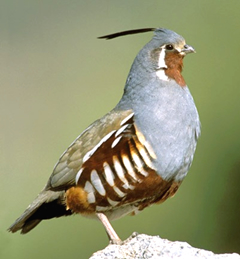
Spot-bellied Bobwhites are easily identified by their distinctive plumage. Adult males showcase a striking appearance with a white throat and a black border that extends to the head, contrasting sharply with the intricately spotted bellies that give the bird its name. The upperparts are brown with fine mottling, providing effective camouflage amidst their natural habitat. In comparison, females possess a more subdued coloration, with a buff throat and less pronounced head markings, making them less conspicuous. Juveniles resemble females but feature even more muted tones, lacking the sharp contrasts seen in adults.
Confusion with other species can occur but is mitigated by the Spot-bellied Bobwhite's unique combination of features. While similar to other New World quails, the distinct spotting and the color pattern of the throat and face are reliable markers. In flight, the bird's short, rounded wings and rapid wingbeats are typical of quails, but its spotted underparts can often be glimpsed, aiding in identification. When perched, the Spot-bellied Bobwhite maintains a low profile, often crouching close to the ground with tail slightly elevated, a posture that enhances its camouflage among grasses and leaves.
The bird's vocalizations also serve as an identification cue. The males emit a clear, whistling call that is characteristic of the species and can be used to distinguish it from other quail species in the region. These acoustic signals, combined with visual cues, allow birders to confidently identify Spot-bellied Bobwhites in the field.
Having trouble telling birds apart? Upload a photo to our bird identification tool for an instant species match.
Spot-bellied Bobwhite Habitat and Range
Preferred Habitat
Spot-bellied Bobwhites inhabit a range of environments, predominantly favoring open woodlands, scrubby fields, and the edges of forests. These habitats provide a combination of cover and foraging grounds necessary for their survival. In regions like Chiapas in Mexico and throughout Guatemala and Honduras, they are commonly found at elevations ranging from sea level to about 1,500 meters. The presence of dense underbrush interspersed with open areas is ideal, as it offers protection from predators while allowing access to seeds and insects.
During the breeding season, Spot-bellied Bobwhites may move towards slightly denser woodlands to take advantage of the increased availability of insects and to find suitable nesting sites. They typically avoid urban areas, preferring rural landscapes and agricultural fields where human disturbance is minimal. The bird's adaptability to different types of vegetation within its preferred habitat range is a testament to its ecological versatility.
Despite their adaptability, these quails do not favor extremely dry or barren areas, as these environments offer limited food resources and insufficient cover. Seasonal changes may influence their habitat choices, prompting them to seek out areas with more stable food supplies and adequate moisture during drier periods.
Geographic Range
The Spot-bellied Bobwhite's range is relatively limited compared to other quail species. It primarily resides in the tropical and subtropical regions of Central America, with established populations in southern Mexico, particularly the states of Chiapas and Tabasco. Its range extends through Guatemala and Honduras, reaching into parts of Nicaragua. The bird is non-migratory, remaining within these regions year-round, although it may exhibit local movements in response to seasonal changes in food and habitat conditions.
In terms of density, the Spot-bellied Bobwhite is more localized rather than widespread, favoring specific environments where its habitat preferences are met. This bird is more commonly observed in areas where open woodlands and agricultural lands converge, as these provide optimal conditions for breeding and foraging. Within its range, it occupies a specific ecological niche, contributing to local biodiversity.
Understanding the range of the Spot-bellied Bobwhite is crucial for conservation efforts, particularly in areas where habitat destruction could threaten local populations. While not considered migratory, habitat fragmentation can impede their natural movements and access to resources, making habitat preservation essential for their continued survival.
Want to know which birds visit your area? Browse our backyard birds by location guides for region-specific species lists.
What Does the Spot-bellied Bobwhite Eat?
The Spot-bellied Bobwhite primarily feeds on seeds, which make up the bulk of its diet. Grasses, weeds, and various other ground-level vegetation provide a plentiful supply of seeds, especially in the agricultural and semi-natural landscapes it inhabits. During the breeding season, its diet becomes more varied, incorporating a higher proportion of insects and other invertebrates. This dietary shift is crucial as it provides additional protein necessary for egg production and chick growth.
Foraging occurs predominantly on the ground, where the bird scratches and pecks at the soil to uncover food. This behavior is typical of quails and allows them to efficiently exploit their environment. The birds feed throughout the day, with peaks in activity during the cooler morning and late afternoon hours. Spot-bellied Bobwhites are opportunistic feeders, adjusting their diet based on availability, which demonstrates their adaptability to seasonal and environmental changes.
In regions where human activity is more pronounced, these quails sometimes exploit crops, feeding on grains such as corn and sorghum. This interaction can lead to conflicts with agricultural interests, but it also illustrates the bird's ability to adapt to modified landscapes. Ensuring a diverse habitat with ample natural food sources can mitigate such conflicts and support healthy bobwhite populations.
Spot-bellied Bobwhite Behavior and Social Structure
Spot-bellied Bobwhites exhibit a range of intriguing behaviors that reflect both their adaptability and social nature. These birds are typically found in small coveys, consisting of a family group or a few individuals, which provides safety in numbers and facilitates social interactions. The covey structure is relatively loose, allowing members to separate temporarily while foraging yet regroup for roosting and protection against predators.
Territorial behavior becomes more pronounced during the breeding season when males actively defend their territories through vocalizations and displays, which serve to attract mates and deter rivals. Males are known for their distinctive whistling calls, which can be heard over considerable distances and are a key component of their courtship ritual. Physical displays, though less common, include puffing up feathers to appear larger and more intimidating.
The Spot-bellied Bobwhite exhibits a crepuscular activity pattern, being most active during dawn and dusk. This pattern helps them avoid the heat of midday and reduces exposure to daytime predators. Despite their cautious nature, these birds can exhibit boldness when threatened, using short, rapid flights to escape danger, followed by a return to dense cover to remain hidden. Their ability to remain still and silent in the face of danger is a crucial survival tactic.
Spot-bellied Bobwhite Nesting and Reproduction
Spot-bellied Bobwhites construct nests on the ground, typically hidden among dense vegetation to provide concealment from predators. The nest itself is a shallow depression lined with grass and leaves, offering a simple yet effective structure for protecting eggs. Preferred nesting sites are often located near the edges of woodlands or within fields where cover is sufficient.
The female primarily undertakes the task of nest building, though both parents are involved in rearing the young. A typical clutch consists of 8 to 14 eggs, which are creamy white and can vary slightly in color. The incubation period lasts approximately 23 to 24 days, during which the female remains on the nest for extended periods, relying on her cryptic plumage for camouflage.
Once hatched, the chicks are precocial, leaving the nest shortly after hatching to follow their parents in search of food. Both parents play an active role in guiding and protecting the young, teaching them essential survival skills. Fledging occurs within two weeks, though the family group often remains together for several months, allowing the young to develop fully before becoming independent.
Spot-bellied Bobwhite Sounds and Vocalizations
The primary song of the Spot-bellied Bobwhite is a clear, whistled 'bob-white' or 'bob-bob-white,' which carries across fields and woodlands. This call consists of a two or three-note sequence with a rising inflection, typically delivered by males during the breeding season. The sound is melodious and serves both to attract mates and establish territorial boundaries.
In addition to their primary song, Spot-bellied Bobwhites produce a variety of call notes, including soft clucks and purrs used for communication within coveys. These calls help maintain cohesion among group members, especially when foraging in dense cover where visual contact is limited.
Alarm calls are sharp and urgent, designed to alert other birds to the presence of predators. The dawn chorus, a daily performance where males engage in singing at the break of day, is particularly vibrant during the breeding season, enhancing the acoustic landscape of their habitat.
Interesting Facts About the Spot-bellied Bobwhite
- 1The Spot-bellied Bobwhite can produce up to three broods in a single breeding season, maximizing reproductive success.
- 2Despite their small size, Spot-bellied Bobwhites can fly up to 40 mph in short bursts when startled.
- 3The intricate patterns on the Spot-bellied Bobwhite's plumage provide excellent camouflage against predators.
- 4Spot-bellied Bobwhites consume a diet consisting of approximately 70% seeds, showcasing their role as primary seed dispersers.
- 5In their social structures, coveys can consist of up to 20 individuals, though smaller groups are more common.
- 6Spot-bellied Bobwhites are capable of surviving in diverse habitats, from humid lowlands to dry highland areas.
- 7Their whistling calls can be heard from over 200 meters away, making them a distinctive presence in their habitat.
Spot-bellied Bobwhite Conservation Status
According to the IUCN Red List, the Spot-bellied Bobwhite is currently classified as Least Concern, reflecting a stable population trend. However, localized threats could pose challenges to its long-term conservation status. Habitat loss due to agricultural expansion and deforestation are primary threats, potentially leading to population declines in affected areas. Conservation efforts focus on habitat preservation and management, ensuring that suitable environments remain intact to support healthy populations. In some regions, the establishment of protected areas has proven effective in safeguarding critical habitats. Historical data suggest the bird has maintained a relatively stable presence across its range, though continued monitoring is essential to detect any emerging threats. Engagement with local communities plays a pivotal role in conservation strategies, promoting sustainable land-use practices that benefit both wildlife and human populations. By fostering awareness and encouraging stewardship, these efforts aim to secure a future for the Spot-bellied Bobwhite and the ecosystems it inhabits.
Other Odontophoridae Species


Birds Similar to the Spot-bellied Bobwhite
These species are often confused with the Spot-bellied Bobwhite due to similar appearance or overlapping range.