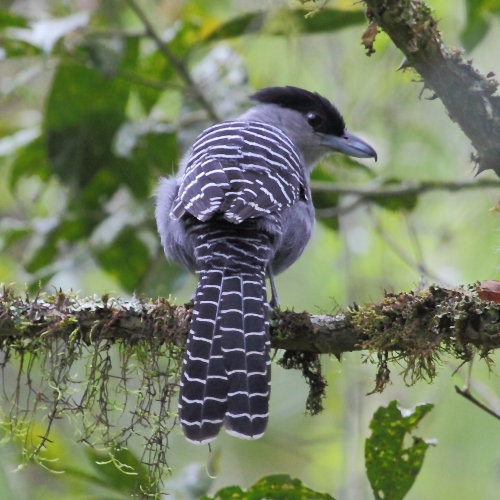
Spot-breasted Antvireo
Dysithamnus stictothorax
Order: Passeriformes / Family: Thamnophilidae

Wikimedia Commons
About the Spot-breasted Antvireo
The Spot-breasted Antvireo (Dysithamnus stictothorax) is a small passerine bird belonging to the family Thamnophilidae. This species is endemic to the Atlantic Forests of southeastern Brazil, specifically within the states of São Paulo, Rio de Janeiro, and Espírito Santo. These regions boast a rich biodiversity, providing the ideal habitat with their humid, dense forests. As an insectivorous bird, the Spot-breasted Antvireo plays a crucial role in controlling insect populations, thus maintaining the ecological balance within its habitat.
This bird is significant not only due to its ecological role but also because it acts as an indicator of forest health. Its presence signifies relatively undisturbed forest environments, as it prefers dense undergrowth where it can forage efficiently. The Spot-breasted Antvireo is a non-migratory species, residing year-round within its limited range. During the breeding season, which coincides with the wet season from September to February, it becomes more vocal and territorial. Outside of this period, it remains relatively silent and elusive, blending into the forest understory away from human activity.
The Spot-breasted Antvireo engages in cooperative breeding, a behavior not frequently observed in many bird species. This strategy involves multiple individuals collaborating in the raising of young, enhancing their survival rates. Their nesting habits and social structures are adapted to the dense forest environments they inhabit, illustrating a high degree of specialization in response to their ecological niche. Conservation efforts are paramount for the Spot-breasted Antvireo, as the Atlantic Forest continues to face severe deforestation and habitat fragmentation, threatening the survival of this charming bird and its ecosystem.
The Spot-breasted Antvireo belongs to the family Thamnophilidae, within the order Passeriformes. These birds typically live average 5-8 years, with some living up to 10 years..
How to Identify a Spot-breasted Antvireo
Adult Spot-breasted Antvireos are small, measuring approximately 13 cm in length, with a predominantly gray plumage that allows them to blend seamlessly into the forest understory. The most distinguishing feature of this species is the spotted breast, which consists of small, white spots against a dark, slate-gray background. Males and females share similar plumage, although males typically have more pronounced spotting. Juveniles, in contrast, display a more subdued appearance, with less distinct spotting and a slightly browner hue.
In the field, the Spot-breasted Antvireo can be confused with other antvireos, such as the Plain Antvireo, due to similar size and coloration. However, the distinctive breast pattern of the Spot-breasted Antvireo serves as a reliable field mark. The bird's flight silhouette is compact and rounded, with rapid wing beats as it moves through the dense forest.
When perched, the Spot-breasted Antvireo often maintains a horizontal posture with its tail slightly cocked, a behavior typical of the Thamnophilidae family. This posture, coupled with its subtle but distinct vocalizations, aids in its identification despite its secretive nature. Observers should look for its characteristic flitting movements through the understory, where it often forages in mixed-species flocks.
Having trouble telling birds apart? Upload a photo to our bird identification tool for an instant species match.
Spot-breasted Antvireo Habitat and Range
Preferred Habitat
The Spot-breasted Antvireo inhabits the lush, humid forests of southeastern Brazil's Atlantic Forest, a biodiversity hotspot known for its rich array of flora and fauna. These birds are typically found at elevations ranging from sea level up to about 1,000 meters. They thrive in the dense undergrowth of primary and well-preserved secondary forests, where they can find ample food and nesting opportunities.
This species shows a strong preference for forested environments and is rarely found in urban or heavily disturbed areas. During the breeding season, their habitat choice remains consistent, as they require the dense foliage for nesting and protection. Spot-breasted Antvireos are residents of their forest territories throughout the year and do not exhibit significant seasonal shifts in habitat preference.
The ongoing deforestation and fragmentation of the Atlantic Forest pose a significant threat to their habitat, making conservation efforts crucial for the preservation of these environments. By protecting their natural habitat, efforts can also safeguard the numerous other species that coexist within these rich ecosystems.
Geographic Range
The Spot-breasted Antvireo's range is confined to the southeastern region of Brazil, concentrated within the Atlantic Forest biome. This includes the states of São Paulo, Rio de Janeiro, and Espírito Santo, where the bird is a year-round resident. Unlike some migratory birds, the Spot-breasted Antvireo does not travel long distances, remaining within its established range throughout the year.
Population density is highest in areas with well-preserved forest cover. The bird's presence often mirrors the health of these forests, as it requires dense understory vegetation for foraging and nesting. Hotspots for this species include protected areas such as Serra do Mar State Park and Tijuca National Park, where conservation measures have helped maintain suitable habitats.
The restricted range of the Spot-breasted Antvireo makes it particularly vulnerable to habitat loss. With continued deforestation and urban expansion in southeastern Brazil, the bird's habitat is increasingly fragmented, necessitating targeted conservation actions to ensure its survival.
Want to know which birds visit your area? Browse our backyard birds by location guides for region-specific species lists.
What Does the Spot-breasted Antvireo Eat?
The Spot-breasted Antvireo primarily feeds on insects, making it a vital component of the forest's ecological balance. Its diet consists of small arthropods such as ants, beetles, caterpillars, and spiders, which it gleans from the foliage and branches of the forest understory. This bird employs a methodical foraging technique, often seen flitting through the lower and middle forest levels in search of prey.
During the breeding season, the Spot-breasted Antvireo may increase its foraging efforts to meet the nutritional demands of chick-rearing. While its primary diet remains consistent throughout the year, seasonal changes in insect abundance can influence its food choices. The bird's adeptness at navigating dense vegetation allows it to exploit a variety of microhabitats within its forest environment.
In addition to insects, the Spot-breasted Antvireo occasionally consumes small fruits and seeds, particularly when insect prey is scarce. This dietary flexibility aids its survival in varying environmental conditions, providing a buffer against seasonal food shortages. The bird's foraging schedule is mostly diurnal, with peak activity occurring during the cooler morning and late afternoon hours.
Spot-breasted Antvireo Behavior and Social Structure
The Spot-breasted Antvireo exhibits fascinating social and territorial behaviors, reflective of its adaptation to the dense forest environment. These birds are typically seen in pairs or small family groups, often participating in mixed-species flocks with other insectivorous birds. This flocking behavior aids in predator detection and enhances foraging efficiency.
Territoriality is pronounced during the breeding season, as pairs establish and defend a specific area against intruders. Males are particularly vocal at this time, using their calls to assert dominance and ward off rivals. Courtship displays are subtle, involving mutual preening and coordinated movements through their territory.
The Spot-breasted Antvireo is primarily active during daylight hours, with peak activity in the early morning and late afternoon. Its response to predators is characterized by a combination of alarm calls and strategic retreat into dense foliage, where it remains motionless and silent until the threat passes. This behavior minimizes detection and enhances survival in its predatory-rich environment.
Throughout the year, the Spot-breasted Antvireo remains closely tied to its territory, rarely venturing far from its established range. This sedentary lifestyle underscores the importance of habitat preservation and continuity for the species' long-term survival.
Spot-breasted Antvireo Nesting and Reproduction
The Spot-breasted Antvireo constructs a cup-shaped nest using a variety of natural materials, including twigs, leaves, moss, and spider silk. These nests are expertly camouflaged within the dense undergrowth of the forest, typically positioned at a low height of 1 to 3 meters above the ground. The choice of location provides protection from predators and environmental elements.
Breeding occurs during the wet season, from September to February, when food resources are abundant. The female lays a clutch of two to three eggs, which she incubates with assistance from her mate and occasionally other group members. The incubation period lasts about 14 to 16 days, during which the adults remain vigilant in guarding the nest.
Upon hatching, both parents share the responsibility of feeding and caring for the chicks. The young fledge approximately 12 to 15 days after hatching but remain dependent on the adults for several weeks. During this time, fledglings learn essential survival skills, such as foraging and recognizing potential threats. The Spot-breasted Antvireo typically raises one brood per year, although favorable conditions may allow for a second brood.
Spot-breasted Antvireo Sounds and Vocalizations
The Spot-breasted Antvireo's vocal repertoire includes a distinctive song, characterized by a series of sharp, staccato notes delivered in rapid succession. This song serves as a territorial call, especially prevalent during the breeding season. The pitch is relatively high, with a clear, ringing quality that carries well through the forest understory.
In addition to its primary song, the Spot-breasted Antvireo emits a variety of call notes. These include short, quick chips used for communication between pair members and more urgent alarm calls that alert others to potential danger. While not a prominent participant in the dawn chorus, its vocalizations can be heard sporadically throughout the day.
The bird's calls are reminiscent of other forest-dwelling antbirds, yet they possess a unique tonal quality that can aid in identification. Listening for these distinct sounds is often the best way to detect this otherwise inconspicuous bird in its densely vegetated habitat.
Interesting Facts About the Spot-breasted Antvireo
- 1The Spot-breasted Antvireo is known for cooperative breeding, a rare trait among birds, enhancing chick survival.
- 2Despite its limited range, the Spot-breasted Antvireo plays a crucial role in controlling insect populations in its habitat.
- 3This bird's habitat, the Atlantic Forest, is one of the most diverse and endangered ecosystems in the world.
- 4Spot-breasted Antvireos often join mixed-species flocks, improving foraging success and predator detection.
- 5The Atlantic Forest, home to the Spot-breasted Antvireo, contains thousands of plant species, many found nowhere else.
- 6The bird's presence often indicates a healthy forest ecosystem, as it thrives in undisturbed areas with dense undergrowth.
- 7Spot-breasted Antvireos are non-migratory, spending their entire lives within the lush Atlantic Forest of Brazil.
Spot-breasted Antvireo Conservation Status
The Spot-breasted Antvireo is currently listed as Near Threatened on the IUCN Red List, with its population trend showing a decline. The primary threat to this species is habitat loss due to deforestation, urbanization, and agricultural expansion in the Atlantic Forest region. This ongoing habitat fragmentation significantly impacts its population by reducing available nesting and foraging areas. Conservation efforts focus on habitat preservation and restoration, with several protected areas established to safeguard remaining forest tracts. These initiatives are crucial for maintaining biodiversity and ensuring the survival of the Spot-breasted Antvireo and other endemic species. Historical population changes reflect the broader trend of biodiversity loss in the Atlantic Forest, underscoring the need for continued conservation action. Collaborative efforts between government agencies, non-governmental organizations, and local communities aim to promote sustainable land use practices and raise awareness of the importance of preserving these unique ecosystems. Continued monitoring and research are essential to assess the effectiveness of these measures and adapt strategies as needed.