
Spotted Wood-Quail
Odontophorus guttatus
Order: Galliformes / Family: Odontophoridae

Wikimedia Commons
About the Spotted Wood-Quail
The Spotted Wood-Quail (Odontophorus guttatus) is a robust, ground-dwelling bird that occupies the humid forest floors of Central America. Predominantly found in the cloud forests, these birds are known for their strikingly spotted appearance, which provides excellent camouflage amidst the dense foliage. The Spotted Wood-Quail plays a crucial role in the ecosystem as both a seed disperser and a prey species within its habitat. Renowned for their elusive nature, these birds prefer the cover of dense underbrush, making them a challenging species to observe in the wild. They contribute significantly to the ecological balance by participating in seed dispersal, which aids in forest regeneration. The species exhibits unique seasonal behaviors, including variations in vocalization during the breeding season. This vocal activity increases communication between mates and strengthens territorial bonds. Primarily found in regions such as the highlands of Costa Rica and Panama, the Spotted Wood-Quail is an integral part of the montane forest communities. Their ecological role extends to acting as an indicator species for the health of their habitat, as they are sensitive to environmental changes. During different seasons, their feeding habits and social structures may shift slightly, reflecting the dynamic nature of their ecosystem. As a result, the Spotted Wood-Quail is not only a bird of interest to ornithologists but also to conservationists focused on preserving the biodiversity of Central America's montane forests.
The Spotted Wood-Quail belongs to the family Odontophoridae, within the order Galliformes. These birds typically live typically between 6-8 years with a maximum recorded of 11 years..
How to Identify a Spotted Wood-Quail
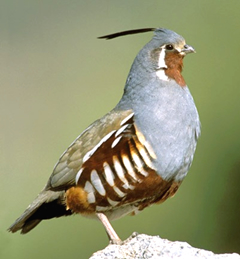
The Spotted Wood-Quail is easily recognized by its medium size and intricately patterned plumage. Adults display a rich brown coloration, accented with white spots across their wings and back, giving them their common name. The face features a dark mask contrasted with a lighter throat, while their eyes are a striking red. Juveniles tend to have a duller plumage with fewer spots, aiding in their concealment on the forest floor. Males and females appear similar, though males may have slightly brighter coloration. When observed in flight, the Spotted Wood-Quail shows a rapid wingbeat and short, rounded wings typical of ground-dwelling birds. Their posture while foraging is characterized by a crouched stance, which helps them remain hidden in the underbrush. Their resemblance to other Odontophorus species can cause confusion; however, the specific pattern and coloration of their plumage are key differentiators.
Having trouble telling birds apart? Upload a photo to our bird identification tool for an instant species match.
Spotted Wood-Quail Habitat and Range
Preferred Habitat
The Spotted Wood-Quail predominantly inhabits dense, humid forest environments, particularly favoring cloud forests and subtropical rainforests. These habitats, located at elevations ranging from 900 to 3000 meters, provide ample cover and food resources. In countries like Costa Rica and Panama, these birds are more commonly found in protected areas such as national parks and biological reserves. During the dry season, they may venture slightly lower in elevation to seek out more accessible water sources, though they generally avoid urban areas, preferring the undisturbed tranquility of the forest.
Geographic Range
The Spotted Wood-Quail's range extends through the mountainous regions of Central America, from southern Mexico down through Costa Rica and into western Panama. They are non-migratory and maintain fairly stable territories year-round. The highest population densities occur in areas like the Talamanca Range and the Central Mountain Range of Costa Rica. Due to their preference for specific high-elevation habitats, these birds are not widely distributed across broader geographic ranges but are instead concentrated in suitable montane environments.
Want to know which birds visit your area? Browse our backyard birds by location guides for region-specific species lists.
What Does the Spotted Wood-Quail Eat?
The diet of the Spotted Wood-Quail consists primarily of seeds, fruits, and small invertebrates found on the forest floor. Their foraging technique involves scratching at the leaf litter with their strong feet to uncover hidden food sources. Seasonal diet changes occur as they take advantage of fruiting trees and insect abundance during the wet season. They primarily feed in the early morning and late afternoon, taking advantage of the cooler temperatures and lower light. Their diet's diversity plays a crucial role in seed dispersal, contributing to forest health.
Spotted Wood-Quail Behavior and Social Structure
Spotted Wood-Quails exhibit a highly social structure, often forming small family groups or coveys. These groups maintain distinct territories, which they defend vigorously through vocal displays and physical posturing. During courtship, males engage in elaborate displays, including vocalizations and visual exhibitions to attract females. The Spotted Wood-Quail is primarily terrestrial, spending much of its time foraging on the ground. They are most active during dawn and dusk, with midday heat driving them to rest in the shelter of vegetation. When threatened by predators, these birds employ a freeze response or burst into short, rapid flights to escape.
Spotted Wood-Quail Nesting and Reproduction
The nesting habits of the Spotted Wood-Quail involve creating a simple nest on the ground, typically well-hidden under dense foliage or a fallen log. They construct these nests using leaves, grasses, and twigs to form a shallow cup. Clutch sizes generally range from 4 to 6 eggs, which both parents incubate over a period of about 22 to 24 days. After hatching, the chicks are precocial and leave the nest almost immediately, guided by both parents in foraging and protection. The species usually raises one brood per year.
Spotted Wood-Quail Sounds and Vocalizations
The primary song of the Spotted Wood-Quail is a series of clear, whistled notes that rise and fall in pitch, often described as hauntingly melodious. This call is typically used for communication between mates and territory defense. Alarm calls consist of sharp, staccato notes that signal danger to the rest of the group. During the early morning, especially in the breeding season, their calls contribute to the dawn chorus, echoing through the forest and adding to the natural symphony.
Interesting Facts About the Spotted Wood-Quail
- 1The Spotted Wood-Quail is one of the few quail species adapted to life in humid montane forests, showcasing its unique ecological niche.
- 2Unlike many birds, the Spotted Wood-Quail's chicks are precocial, meaning they can walk and feed themselves shortly after hatching.
- 3The Spotted Wood-Quail's distinctive call can carry over long distances, making it easier to detect vocally than visually.
- 4These birds are known to form family groups, a behavior that enhances their ability to defend against predators.
- 5They play a critical role in their ecosystem by dispersing seeds, which helps maintain the forest's biodiversity.
- 6Due to their elusive nature and preference for dense cover, the Spotted Wood-Quail is often more heard than seen in the wild.
- 7Their strong legs and ability to scratch at the forest floor allow them to uncover hidden invertebrates and seeds.
Spotted Wood-Quail Conservation Status
The Spotted Wood-Quail is currently listed as Least Concern by the IUCN, with population trends considered stable. However, habitat destruction due to deforestation poses a significant threat, leading to localized declines. Conservation efforts focus on habitat protection and the establishment of reserves and national parks. Historically, populations have fluctuated with changes in land use, highlighting the importance of ongoing conservation strategies to ensure the survival of this species in its native range.
Other Odontophoridae Species


Birds Similar to the Spotted Wood-Quail
These species are often confused with the Spotted Wood-Quail due to similar appearance or overlapping range.
