
Stone Partridge
Ptilopachus petrosus
Order: Galliformes / Family: Odontophoridae

Wikimedia Commons
About the Stone Partridge
The Stone Partridge, scientifically known as Ptilopachus petrosus, is a small, ground-dwelling bird that belongs to the family Odontophoridae. This bird is primarily found throughout sub-Saharan Africa, where it occupies rocky hillsides and savannas. Its preference for such rugged terrains makes it an interesting subject of study for ornithologists and bird enthusiasts alike. The Stone Partridge plays a significant role in its ecosystem by helping control insect populations and dispersing seeds through its foraging activities. Found in countries like Nigeria, Cameroon, and the Central African Republic, the Stone Partridge thrives in areas where rocky outcrops and sparse vegetation provide ample cover from predators. These birds are non-migratory, maintaining their territories year-round, which makes them a stable presence in their preferred habitats. Their camouflage capabilities are remarkable, enabling them to blend seamlessly with their surroundings. Although the Stone Partridge is not considered endangered, it faces threats from habitat destruction and human encroachment. Conservation efforts focus on preserving the natural habitats that these birds require for their survival. The Stone Partridge's ecological role extends beyond mere survival; it contributes to the biodiversity of the regions it inhabits. By participating in seed dispersal and insect regulation, the Stone Partridge helps maintain a balanced ecosystem. During the breeding season, these birds engage in intricate courtship displays. Their seasonal behaviors include forming monogamous pairs, and both parents typically participate in rearing the young. Understanding the Stone Partridge's behaviors and ecological significance can aid in formulating effective conservation strategies.
The Stone Partridge belongs to the family Odontophoridae, within the order Galliformes. These birds typically live average 5-8 years in the wild..
How to Identify a Stone Partridge
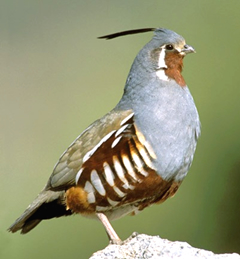
The Stone Partridge is recognized by its cryptically colored plumage, which allows it to blend into the rocky environments it frequents. Adult Stone Partridges exhibit a mottled brown and gray coloration, with subtle white spots that mimic the appearance of stones and pebbles. This pattern provides effective camouflage against predators. Juvenile Stone Partridges resemble adults but have a slightly duller coloration, with less distinct markings. There is minimal sexual dimorphism in this species, with males and females appearing similar in plumage and size. However, males may possess slightly more vibrant markings during the breeding season. When in flight, the Stone Partridge displays a rapid, whirring wingbeat pattern, which can be a useful identification feature. On the ground, the bird's posture is upright, with a tendency to freeze when threatened, relying on its plumage to avoid detection. Similar species, such as the Crested Francolin, can be confused with the Stone Partridge but are generally larger and have more pronounced crests. The Stone Partridge's smaller size, around 25cm in length, and its distinctive call set it apart from these relatives.
Having trouble telling birds apart? Upload a photo to our bird identification tool for an instant species match.
Stone Partridge Habitat and Range
Preferred Habitat
The Stone Partridge inhabits rocky hillsides, savannas, and scrublands throughout sub-Saharan Africa. It shows a particular affinity for areas with abundant rock cover, which provides protection and nesting sites. The elevation range for this species typically spans from lowland savannas up to mid-elevations of around 1800 meters. Unlike some bird species, the Stone Partridge does not display significant seasonal habitat shifts, maintaining its presence in these rocky terrains year-round. While it occasionally ventures into more open areas to forage, it primarily remains in rural settings, avoiding heavily urbanized regions.
Geographic Range
The range of the Stone Partridge extends across several countries in sub-Saharan Africa, including Nigeria, Cameroon, and the Central African Republic. It is a resident breeder in these regions, with no known long-distance migrations. The bird is most commonly found in areas with suitable rocky habitats and is relatively widespread within its range. Population density hotspots occur in regions with abundant rocky outcrops and sparse vegetation. Despite its wide range, localized populations can vary in density depending on habitat quality and human disturbance levels. Some isolated populations exist in eastern Africa, such as in Ethiopia and Kenya.
Want to know which birds visit your area? Browse our backyard birds by location guides for region-specific species lists.
What Does the Stone Partridge Eat?
The diet of the Stone Partridge primarily consists of insects, seeds, and small fruits. Insects such as ants, beetles, and termites form a substantial part of its diet, especially during the rainy season when these prey are abundant. The bird's foraging technique involves scratching at the ground and turning over stones to uncover hidden food sources. Seeds from grasses and shrubs complement its insectivorous diet, particularly in the dry season when insect availability decreases. The Stone Partridge also consumes small fruits, which provide essential nutrients and aid in hydration during drier periods. Feeding occurs primarily during the early morning and late afternoon to avoid the midday heat.
Stone Partridge Behavior and Social Structure
The Stone Partridge exhibits a complex array of behaviors that reflect its adaptability to its rocky habitat. It is primarily a ground-dwelling bird, forming small family groups or pairs rather than large flocks. These groups maintain territories, which they defend through vocalizations and displays. Territorial behavior intensifies during the breeding season, with males performing calls and displays to attract mates. Courtship involves a series of low bows and vocalizations, culminating in the formation of monogamous pairs. The Stone Partridge is most active during the cooler parts of the day, foraging in the early mornings and late afternoons. When faced with predators, its first line of defense is to remain motionless, relying on its cryptic plumage for concealment. If threatened, it can take to flight with a short burst of rapid wing beats. This species is known for its resilience and adaptability, thriving in environments that might seem inhospitable to other bird species.
Stone Partridge Nesting and Reproduction
The Stone Partridge constructs its nest on the ground, often sheltered by rocks or dense vegetation. Nests are simple scrapes lined with grass and leaves, providing a basic but effective structure for egg incubation. Clutch size typically ranges from 4 to 8 eggs, with both parents involved in incubation. The incubation period lasts approximately 18 to 21 days, after which the chicks hatch fully developed and ready to follow their parents. Fledging occurs relatively quickly, with chicks capable of independent foraging within a few weeks. Both parents share the responsibility of chick-rearing, ensuring high survival rates. The Stone Partridge usually raises one, occasionally two, broods per year, depending on environmental conditions.
Stone Partridge Sounds and Vocalizations
The vocalizations of the Stone Partridge are distinctive and serve multiple functions, from territory defense to mate attraction. Their primary song consists of a series of melodious whistles, delivered in a rhythmic pattern. The pitch remains consistent, with a clear and resonant quality that can carry over long distances. Call notes include sharp, staccato sounds used for communication within family groups. Alarm calls are more abrupt and harsh, designed to alert fellow partridges to potential threats. During the early morning and late afternoon, their calls contribute to the avian chorus, providing a soundtrack to their rocky habitats.
Interesting Facts About the Stone Partridge
- 1The Stone Partridge can remain perfectly still for extended periods, relying on its plumage to avoid predators.
- 2This bird's call can be heard up to 500 meters away, a testament to its vocal strength.
- 3Stone Partridges often form lifelong pair bonds, demonstrating strong monogamous tendencies.
- 4The bird's ability to thrive in rocky, arid environments showcases its remarkable adaptability.
- 5Stone Partridges participate in cooperative parenting, with both parents actively involved in chick-rearing.
- 6Despite their small size, Stone Partridges are capable of short but rapid flights to escape predators.
- 7Their diet includes a significant proportion of insects, making them valuable for pest control in their habitats.
Stone Partridge Conservation Status
The International Union for Conservation of Nature (IUCN) lists the Stone Partridge as a species of Least Concern, indicating a stable population overall. However, localized declines may occur due to habitat loss from agricultural expansion and human settlement. Conservation efforts focus on habitat preservation and mitigating human encroachment in key areas. Historical population changes have been minimal, attributed to the bird's adaptability and the relative inaccessibility of its preferred habitats. Continued monitoring and habitat protection remain crucial to ensure the species' long-term viability.
Other Odontophoridae Species


Birds Similar to the Stone Partridge
These species are often confused with the Stone Partridge due to similar appearance or overlapping range.
