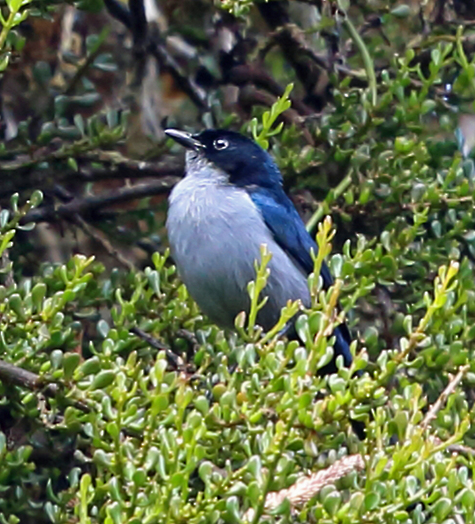
Streaked Berrypecker
Melanocharis striativentris
Order: Passeriformes / Family: Melanocharitidae

Wikimedia Commons
About the Streaked Berrypecker
The Streaked Berrypecker, Melanocharis striativentris, is a medium-sized passerine bird endemic to the highland forests of New Guinea. This species is a member of the Melanocharitidae family, which is known for its specialized diet and unique ecological role. The Streaked Berrypecker thrives in montane forest ecosystems, where it contributes to seed dispersal through its frugivorous feeding habits. These birds are crucial for maintaining the health and diversity of their native forests, as they aid in the propagation of various plant species. Found primarily in the Central Highlands and the Owen Stanley Range, the Streaked Berrypecker inhabits altitudes typically between 1,500 and 3,000 meters. The forests in these regions provide a rich array of fruiting trees and shrubs, which form the core of the berrypecker's diet. The species does not exhibit significant seasonal migratory behavior, remaining largely within its montane forest habitat year-round. During the breeding season, the Streaked Berrypecker becomes particularly active, engaging in elaborate courtship displays that involve both vocalizations and physical posturing. These behaviors are not only vital for mate selection but also play a role in the establishment of breeding territories. The ecological significance of the Streaked Berrypecker extends beyond its role as a seed disperser. By consuming a wide variety of fruits, the bird helps to control plant populations, preventing any single species from dominating the forest understory. This activity supports the overall biodiversity of the forest ecosystem, making the Streaked Berrypecker an integral component of its environment. Despite its localized range, the bird exhibits a stable population trend, thanks to its adaptability to various forest conditions and its ability to subsist on a diverse array of food sources.
The Streaked Berrypecker belongs to the family Melanocharitidae, within the order Passeriformes. These birds typically live average 5 years, with a maximum recorded of 8 years..
How to Identify a Streaked Berrypecker
The Streaked Berrypecker is easily recognized by its distinctive plumage, characterized by streaked underparts and a contrasting back. Adults display a striking combination of olive-brown upperparts with prominent streaks running vertically along their white underparts. This streaking is more pronounced in males than in females, giving the males a more vibrant and conspicuous appearance. Juvenile Streaked Berrypeckers bear a resemblance to adults but tend to have duller plumage and less pronounced streaking. Unlike many passerines, there is no significant size difference between the sexes, with both males and females measuring around 17 centimeters in length. In flight, the Streaked Berrypecker exhibits a steady, direct flight pattern, characterized by rapid wingbeats. When perching, it often adopts an upright posture, frequently observed on branches laden with fruit. Confusion with other species is uncommon due to its distinctive streaked appearance, though novice birders might mistake it for other frugivorous birds in the region. However, the unique combination of plumage patterns and its specific habitat preferences generally aids in correct identification.
Having trouble telling birds apart? Upload a photo to our bird identification tool for an instant species match.
Streaked Berrypecker Habitat and Range
Preferred Habitat
The Streaked Berrypecker is primarily associated with montane forests in New Guinea, thriving at elevations ranging from 1,500 to 3,000 meters. These forests provide a complex structure of canopy and understory layers, offering ample foraging opportunities. The bird favors areas with abundant fruiting trees and shrubs, which supply both food and nesting sites. Unlike some bird species that require pristine habitats, the Streaked Berrypecker can tolerate slightly disturbed areas, as long as fruit resources remain plentiful. Seasonal habitat shifts are minimal, with the bird largely remaining within the montane forest belt throughout the year. Urban presence is rare, as the Streaked Berrypecker prefers the dense, secluded environments of its native forest habitat over open or developed areas.
Geographic Range
The Streaked Berrypecker is endemic to New Guinea, with its range concentrated in the island's central mountainous regions. It is most commonly found in the Central Highlands, extending from the Vogelkop Peninsula in the west to the Owen Stanley Range in the east. Unlike many migratory species, the Streaked Berrypecker is largely sedentary, residing within its montane forest habitat year-round. Breeding and non-breeding ranges overlap significantly, due to the bird's limited dispersal tendencies. Population densities are highest in areas with abundant fruit resources, particularly in regions with a high diversity of fruiting plant species. The species does not typically venture beyond the montane forest zones, ensuring a relatively stable and localized distribution.
Want to know which birds visit your area? Browse our backyard birds by location guides for region-specific species lists.
What Does the Streaked Berrypecker Eat?
The diet of the Streaked Berrypecker predominantly consists of a variety of fruits and berries, reflecting its frugivorous nature. Primary food sources include the fruits of native trees and shrubs such as figs and mistletoe, which provide essential nutrients and energy. During certain seasons, the bird may supplement its diet with insects and small invertebrates, particularly when fruit availability is low. This dietary flexibility allows the Streaked Berrypecker to thrive in fluctuating environmental conditions. Foraging occurs both in the canopy and the understory, where the bird uses its agility to navigate dense foliage. By plucking fruits directly from branches, the bird plays a vital role in seed dispersal, inadvertently contributing to forest regeneration. Feeding activity peaks during the early morning and late afternoon, coinciding with optimal temperatures and fruit availability.
Streaked Berrypecker Behavior and Social Structure
The Streaked Berrypecker exhibits a variety of intriguing behaviors, particularly during the breeding season. Socially, these birds are generally solitary or found in pairs, though they may occasionally join mixed-species feeding flocks. Territorial during breeding periods, males engage in vocal displays and physical confrontations to defend nesting sites. Courtship involves a series of displays, with males showcasing their plumage and performing acrobatic flights to attract females. Flocking patterns shift outside the breeding season, when the berrypecker may congregate with other frugivores to exploit abundant food resources. In response to predators, the Streaked Berrypecker relies on cryptic plumage and evasive flight maneuvers to escape detection. Daily activity patterns are diurnal, with peak activity occurring in the cooler hours of morning and late afternoon. During these times, the bird actively forages, engages in territorial displays, and participates in social interactions.
Streaked Berrypecker Nesting and Reproduction
Nesting behavior in the Streaked Berrypecker involves constructing cup-shaped nests, typically situated in the forks of trees or dense shrubbery. The nests are crafted from a combination of fine twigs, grasses, and moss, providing a secure and camouflaged environment for the eggs. Nest location preferences lean towards secluded areas within montane forests, where the risk of predation is reduced. The typical clutch consists of two to three eggs, which both parents incubate over a period of approximately two weeks. Once hatched, the fledglings are fed a diet rich in regurgitated fruit by both parents, ensuring rapid growth and development. The fledging timeline spans around three weeks, after which the young birds gradually gain independence. The species typically raises one to two broods per year, depending on environmental conditions and food availability.
Streaked Berrypecker Sounds and Vocalizations
The Streaked Berrypecker's vocalizations include a distinctive series of melodic whistles and chirps. Its primary song features a rhythmic sequence of clear, flute-like notes delivered at a moderate pitch. These songs serve both territorial and mate-attraction purposes, often repeated at dawn and dusk. Call notes consist of short, sharp chirps used for communication between mates and signaling alarm. Alarm calls are harsher, with a more urgent tone, alerting nearby birds to potential threats. During the dawn chorus, the Streaked Berrypecker's song blends with the calls of other forest birds, creating a vibrant acoustic backdrop.
Interesting Facts About the Streaked Berrypecker
- 1The Streaked Berrypecker can consume up to 50% of its body weight in fruit each day, aiding seed dispersal.
- 2Unlike many passerines, the Streaked Berrypecker does not migrate, remaining in its montane habitat year-round.
- 3This species contributes to forest regeneration by dispersing seeds from a wide variety of fruiting plants.
- 4The Streaked Berrypecker's nests are often located over 10 meters above ground, reducing predation risk.
- 5While primarily frugivorous, the Streaked Berrypecker supplements its diet with insects during the dry season.
- 6The species showcases a unique courtship display involving elaborate flights and vocalizations.
- 7Streaked Berrypecker populations remain stable due to their adaptability to different forest conditions.
Streaked Berrypecker Conservation Status
The IUCN currently lists the Streaked Berrypecker as a species of Least Concern, with a stable population trend. Despite its limited geographic range, the bird benefits from the relative stability of its montane forest habitat. Primary threats include habitat degradation due to logging and agricultural expansion, although the bird's adaptability to different forest conditions mitigates these impacts. Conservation efforts focus on preserving and restoring forest habitats, particularly in areas identified as biodiversity hotspots. Historical population changes are minimal, as the species has maintained a consistent presence within its native range over time.
Other Melanocharitidae Species


Birds Similar to the Streaked Berrypecker
These species are often confused with the Streaked Berrypecker due to similar appearance or overlapping range.