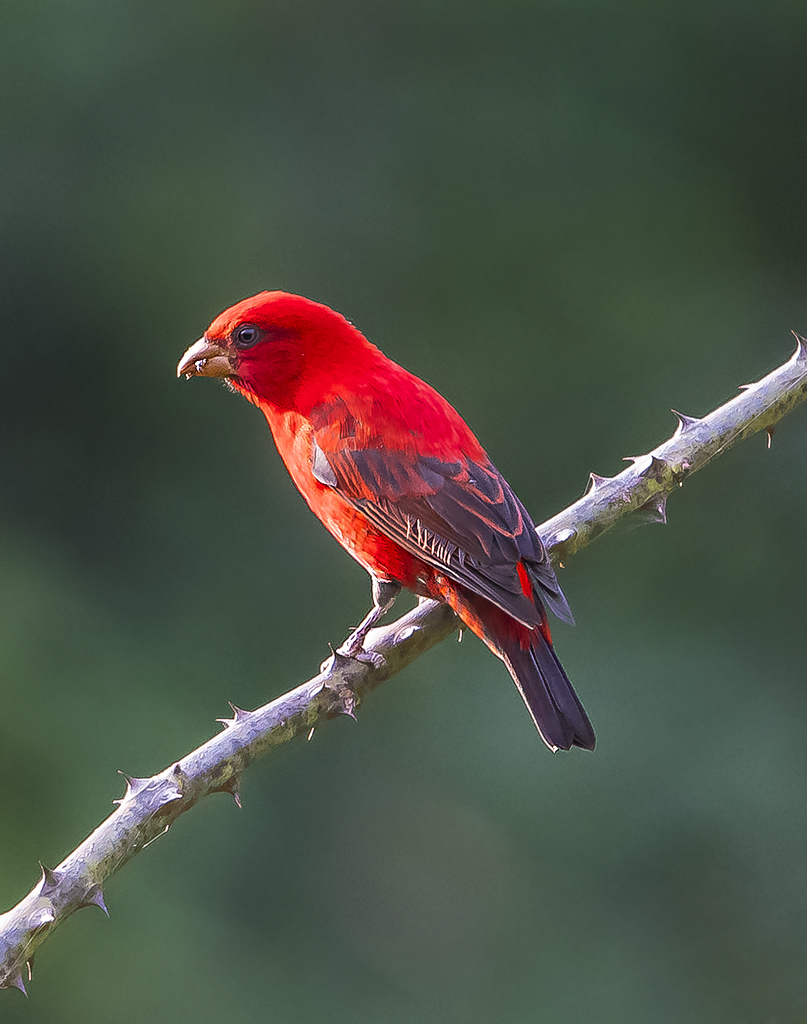
Streaked Rosefinch
Carpodacus rubicilloides
Order: Passeriformes / Family: Fringillidae

Wikimedia Commons
About the Streaked Rosefinch
The Streaked Rosefinch (Carpodacus rubicilloides) is a striking bird species belonging to the family Fringillidae and order Passeriformes. This medium-sized songbird is most commonly observed in the high-altitude regions of Asia, notably across the Himalayas, where it thrives in mountainous terrains. Its significance in the ecosystem primarily revolves around its role as a seed disperser, contributing to the propagation of alpine flora. The Streaked Rosefinch is also an indicator of ecological health in its habitat, with its presence signifying a well-balanced environment rich in the resources it requires to flourish.
The bird demonstrates a stark sexual dimorphism, with males sporting a striking rose-red hue across their plumage, while females exhibit more subdued brown tones with streaking. This coloration not only assists in mate attraction during the breeding season but also plays a role in camouflage and predator avoidance. The Streaked Rosefinch's ecological role extends into its interactions with other species, as it competes for food resources with similar alpine dwellers, impacting the local avian community dynamics.
The species shows remarkable adaptability to seasonal changes, often moving to lower elevations during colder months. This altitudinal migration allows it to exploit different ecological niches, thus maintaining its role in seed dispersal across various environments. Despite its adaptability, the Streaked Rosefinch faces challenges due to habitat degradation and climate change, which threaten its high-altitude habitats. Conservation efforts are crucial to ensure the survival of this vibrant species, maintaining its crucial ecological role and the biodiversity of the regions it inhabits.
The Streaked Rosefinch belongs to the family Fringillidae, within the order Passeriformes. These birds typically live average 5-7 years, with a maximum recorded of 9 years..
How to Identify a Streaked Rosefinch
In the field, the Streaked Rosefinch is readily identifiable by its vibrant plumage, particularly in males, which display a bright rose-red coloration that covers most of the body, including the head, breast, and back. This vivid hue is complemented by darker streaks, providing the bird with its distinguishing name. Females and juveniles, however, exhibit a more subdued appearance with brownish feathers and prominent streaking across the body, offering excellent camouflage against the alpine terrain.
Males and females can be further differentiated by their size and coloration. Males are slightly larger, a common trait in sexually dimorphic species, and their bright coloration aids in attracting females during the breeding season. The juveniles resemble females but with a slightly duller tone, making them less conspicuous to predators. Unlike many other finches, the Streaked Rosefinch lacks any significant color variation across its range, which simplifies identification.
In flight, the Streaked Rosefinch maintains a compact silhouette typical of finches, with rapid wing beats and short, bounding flights. When perched, these birds often adopt an upright posture, showcasing their streaked plumage to full effect. Their robust, conical beak is well-suited for their seed-heavy diet, and this feature can be a useful identification mark when observing them at feeding sites.
Having trouble telling birds apart? Upload a photo to our bird identification tool for an instant species match.
Streaked Rosefinch Habitat and Range
Preferred Habitat
The Streaked Rosefinch primarily inhabits mountainous regions across Asia, favoring elevations ranging from 3,000 to 4,500 meters. Its preferred habitats include alpine meadows, shrubby areas, and open forests, where it finds ample food resources and nesting sites. In these high-altitude environments, the bird thrives in the varied microhabitats available, from rocky outcrops to dense shrubs. During winter, it may descend to lower altitudes, around 2,000 meters, in search of milder climates and accessible food sources.
The presence of the Streaked Rosefinch in both urban and rural settings is minimal, as it tends to avoid heavily populated areas. Instead, it primarily resides in remote regions where human impact is limited, allowing it to maintain its natural behaviors and ecological roles. Seasonal habitat shifts are evident as the bird moves in response to climatic conditions, ensuring survival through harsh winters by relocating to areas where food remains abundant.
Geographic Range
The Streaked Rosefinch's range predominantly covers the mountainous regions of central and southern Asia. It breeds in the high-altitude areas of the Himalayas, spanning countries such as Nepal, Bhutan, and northern India. During the breeding season, the bird establishes territories at elevations between 3,000 and 4,500 meters, where it finds suitable nesting sites and abundant food resources.
As temperatures drop and snow covers their breeding grounds, these birds exhibit altitudinal migration, moving to lower elevations in search of more hospitable conditions. This wintering range often includes the foothills of the Himalayas, where they can find food and shelter at altitudes as low as 2,000 meters. While the Streaked Rosefinch is not considered migratory in the traditional sense, its movement patterns are dictated by the harsh alpine climate, necessitating these seasonal migrations to sustain its populations.
Population density hotspots are typically found in regions with vast expanses of suitable habitats, such as the eastern Himalayas. Here, the abundance of food and nesting sites supports dense populations, providing birdwatchers with prime opportunities to observe these striking finches in their natural environment.
Want to know which birds visit your area? Browse our backyard birds by location guides for region-specific species lists.
What Does the Streaked Rosefinch Eat?
The diet of the Streaked Rosefinch is primarily composed of seeds, which it skillfully extracts using its robust, conical beak. This dietary preference aligns with their ecological role as seed dispersers, aiding in the propagation of various alpine plant species. During the breeding season, seeds form the bulk of their diet, with the bird favoring those from grasses and shrubs native to their high-altitude habitats.
In addition to seeds, the Streaked Rosefinch supplements its diet with small insects and other invertebrates, particularly during the spring and summer months when these food sources are abundant. This dietary shift is crucial during the breeding season, as the increased protein intake supports the growth and development of their young. The birds often forage in flocks, a behavior that enhances their feeding efficiency and provides some protection against predators.
Foraging typically occurs during the early morning and late afternoon, allowing the birds to take advantage of cooler temperatures and reduced competition from other species. The Streaked Rosefinch demonstrates a keen ability to exploit available food resources, adapting its foraging techniques to the seasonal variations in its environment.
Streaked Rosefinch Behavior and Social Structure
Streaked Rosefinches exhibit a fascinating array of behaviors that reveal their social and ecological dynamics. During the breeding season, males establish territories and engage in elaborate courtship displays to attract females. These displays often involve singing and physical postures that highlight their vibrant plumage. Males become highly territorial, defending their breeding grounds from rivals with vigor.
Outside the breeding season, the Streaked Rosefinch becomes more gregarious, often forming loose flocks that forage together. This flocking behavior provides safety in numbers, reducing the risk of predation and increasing foraging efficiency. The species displays a diurnal activity pattern, with peak activities occurring during the cooler parts of the day, such as early morning and late afternoon.
In response to predators, these finches rely on their agility and coloration for camouflage. They often take cover in dense vegetation or rocky crevices, using their streaked plumage to blend into the surroundings. Their call notes, while not as melodious as their songs, serve as an alarm system, alerting nearby individuals to potential threats. The combination of social structure, territoriality, and adaptive behaviors ensures the Streaked Rosefinch's survival in the challenging environments it inhabits.
Streaked Rosefinch Nesting and Reproduction
Streaked Rosefinches demonstrate specific preferences in their nesting habits, often selecting sheltered locations in alpine environments. They construct cup-shaped nests using a variety of materials such as grass, twigs, and moss, which provide insulation and camouflage against the rocky and shrubby landscapes they inhabit. The nests are typically situated in bushes or on ledges, offering protection from ground predators and harsh weather conditions.
The typical clutch size for the Streaked Rosefinch ranges from three to five eggs, with the female primarily responsible for incubation. The incubation period lasts approximately two weeks, during which the male plays a supportive role by providing food and protection. Once hatched, the chicks are altricial, requiring extensive parental care. Both parents contribute to feeding the young, bringing a diet rich in seeds and insects to ensure proper growth and development.
Fledging occurs after about two to three weeks, with the young birds gaining independence as they learn foraging skills and flight. The Streaked Rosefinch typically raises one brood per year, although favorable conditions may allow for a second. This reproductive strategy aligns with the brief alpine summer, maximizing the chances of offspring survival.
Streaked Rosefinch Sounds and Vocalizations
The vocalizations of the Streaked Rosefinch are a key aspect of its behavior, particularly during the breeding season. The primary song consists of a series of melodious and warbling notes, often delivered from a prominent perch. These songs serve multiple purposes, including territory establishment and mate attraction. The rhythm is fluid, with varying pitch and tempo, creating a captivating auditory display that resonates through the alpine landscapes.
In addition to its primary song, the Streaked Rosefinch produces a variety of call notes, including short, sharp chips and whistles. These calls facilitate communication among individuals, especially within flocks. Alarm calls tend to be harsher and more abrupt, designed to alert others to imminent threats. The bird's dawn chorus is particularly notable, with males engaging in an extended vocal performance that signals the start of the day in their high-altitude habitats.
Interesting Facts About the Streaked Rosefinch
- 1The Streaked Rosefinch is one of the few bird species that thrive at altitudes as high as 4,500 meters, making it a true alpine specialist.
- 2Males use their vibrant rose-red plumage as a primary tool for attracting mates, with brighter males often achieving greater reproductive success.
- 3During winter, the Streaked Rosefinch descends to lower altitudes, showcasing a remarkable adaptation to seasonal environmental changes.
- 4The species plays a crucial ecological role as a seed disperser, helping maintain the biodiversity of alpine ecosystems.
- 5Streaked Rosefinches have been observed forming mixed-species flocks, which can enhance foraging success and predator avoidance.
Streaked Rosefinch Conservation Status
The Streaked Rosefinch currently holds a status of Least Concern according to the IUCN Red List. Its population appears stable, with no immediate threats causing significant declines. However, climate change and habitat degradation pose potential future challenges, particularly as these factors impact the alpine environments the bird depends on. Conservation efforts focus on preserving high-altitude habitats and mitigating the effects of climate change through habitat restoration and protection. Monitoring programs aim to track population trends and habitat changes, ensuring that any negative impacts are addressed promptly. Historically, the Streaked Rosefinch has maintained a relatively stable population, but continued conservation measures are essential to safeguard its future.
Other Fringillidae Species


Birds Similar to the Streaked Rosefinch
These species are often confused with the Streaked Rosefinch due to similar appearance or overlapping range.