
Sunda Forktail
Enicurus velatus
Order: Passeriformes / Family: Muscicapidae

Wikimedia Commons
About the Sunda Forktail
The Sunda Forktail (Enicurus velatus) is a captivating bird species belonging to the family Muscicapidae and order Passeriformes. Native to the lush tropical environments of Southeast Asia, particularly on the islands of Sumatra, Borneo, and Java, this bird thrives in the dense undergrowth of montane forests, where moisture and vegetation are abundant. The Sunda Forktail's presence in these biodiverse regions underscores its ecological significance, as it contributes to the health of the ecosystem by preying on various insects and other small invertebrates. Its preference for forest streams and riverbanks highlights its role in maintaining the delicate balance of riparian habitats.
In terms of behavior, the Sunda Forktail is noted for its active foraging habits, primarily hunting along watercourses where it can catch its prey with precision. This species exhibits a level of adaptability by utilizing different elevations, typically ranging from 300 to 2,000 meters, depending on the availability of suitable habitat. Seasonally, the Sunda Forktail may exhibit altitudinal movements in response to climatic changes and food availability, although it is generally considered a sedentary species.
The ecological role of the Sunda Forktail extends beyond its feeding habits, as it serves as a prey species for larger birds and mammals, thus playing a part in the food web of its native habitats. Its striking appearance and unique behaviors make it a subject of interest for ornithologists and birdwatchers alike, contributing to our understanding of avian diversity in Southeast Asia. The Sunda Forktail's adaptation to specific forested environments also highlights the importance of conserving these habitats, which face threats from deforestation and habitat degradation.
The Sunda Forktail belongs to the family Muscicapidae, within the order Passeriformes. These birds typically live average 5-7 years with a maximum recorded of 10 years..
How to Identify a Sunda Forktail
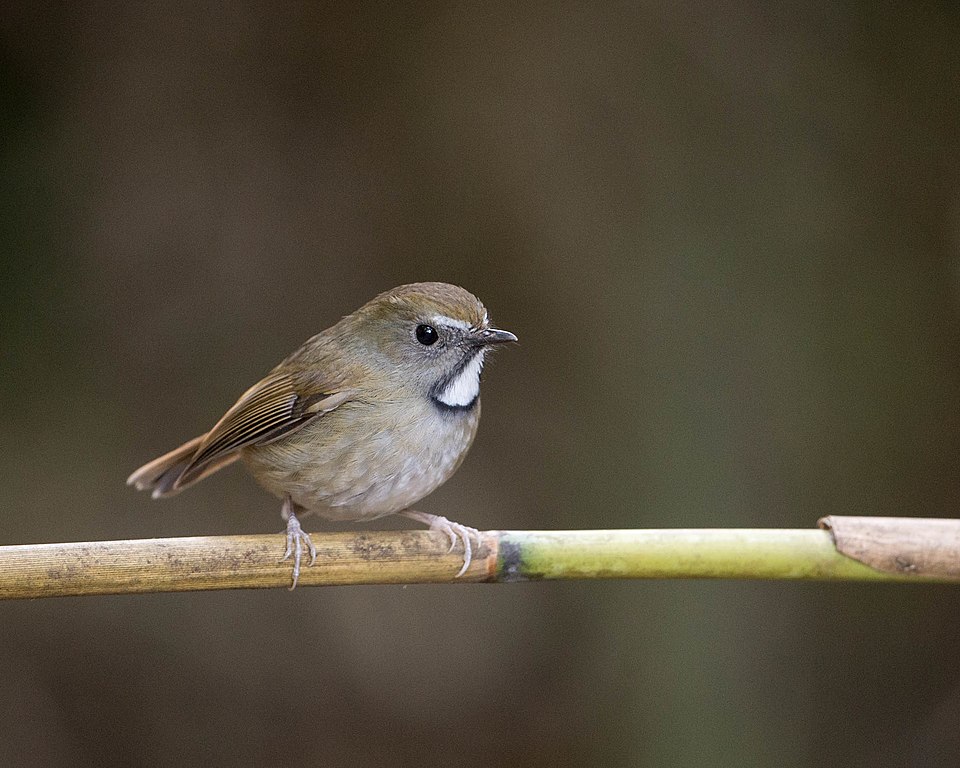
The Sunda Forktail is easily recognized by its striking black and white plumage, with a distinctly forked tail that contributes to its name. Adult birds exhibit a glossy black head, back, and upper breast, which contrast sharply with their white underparts and prominent white wing bars. The tail is long and deeply forked, featuring alternating black and white bands that become more apparent during flight.
Juvenile Sunda Forktails are distinguished by their more muted coloration, with browner upperparts and less defined white markings compared to adults. As they mature, these young birds gradually acquire the distinctive black and white plumage characteristic of the species. There is little sexual dimorphism in this species, with males and females exhibiting similar plumage patterns.
The Sunda Forktail can be confused with other forktail species, such as the White-crowned Forktail, but is distinguished by its lack of a white crown. Its flight silhouette is unique due to the elongated, forked tail and rapid wingbeats, while its perching posture often involves tail flicking, a behavior useful for identification in the field.
Having trouble telling birds apart? Upload a photo to our bird identification tool for an instant species match.
Sunda Forktail Habitat and Range
Preferred Habitat
The Sunda Forktail thrives in humid montane forests and is typically found along forest streams and rivers, where the abundance of insects supports its dietary needs. These birds are most commonly found at elevations ranging from 300 to 2,000 meters, allowing them to exploit a range of forest types from lowland rainforests to cloud forests.
While primarily associated with dense forest environments, the Sunda Forktail occasionally ventures into more open areas, such as forest edges and clearings, particularly when searching for food. However, its reliance on water sources and forest cover limits its presence in urban and heavily altered landscapes.
Seasonal shifts in habitat use have been noted, with the Sunda Forktail moving to lower elevations during colder months or when food becomes scarce in higher regions. Despite these movements, it remains predominantly a forest-dependent species, underscoring the critical need for conserving its natural habitat.
Geographic Range
The Sunda Forktail's range is largely confined to the islands of Southeast Asia, with notable populations on Sumatra, Borneo, and Java. Within these islands, it occupies montane forest areas, where it is most frequently observed near streams and rivers. Unlike some other migratory forktail species, the Sunda Forktail is largely sedentary, with little evidence of long-distance migration.
On Sumatra, it inhabits the Barisan Mountain Range, while on Borneo, it is found in both Malaysian and Indonesian territories, including the Crocker Range and the mountains of Sabah and Sarawak. Java hosts the Sunda Forktail in its central and western highlands.
Population density varies with habitat quality, with higher concentrations in undisturbed forest areas. However, the species' range is increasingly threatened by environmental pressures, including deforestation and land conversion. Conservation efforts focus on protecting these vital forest habitats to ensure the survival of the species.
Want to know which birds visit your area? Browse our backyard birds by location guides for region-specific species lists.
What Does the Sunda Forktail Eat?
The diet of the Sunda Forktail primarily consists of insects and other small invertebrates, which it expertly captures along forest streams and riverbanks. By employing a variety of foraging techniques, including gleaning from foliage and sallying from perches, it efficiently exploits the rich insect life in its habitat.
During the wet season, when insect abundance is high, the Sunda Forktail's diet remains heavily insectivorous, with a preference for aquatic insects such as caddisflies, mayflies, and small beetles. In drier periods, the bird may expand its diet to include terrestrial insects and occasionally small crustaceans.
The Sunda Forktail's feeding schedule aligns with its active periods, primarily during the morning and late afternoon when insect activity peaks. Its foraging behavior is characterized by quick, darting movements and frequent tail flicking, aiding in flushing out hidden prey from the vegetation.
Sunda Forktail Behavior and Social Structure
The Sunda Forktail exhibits distinctive behaviors, including a strong preference for solitary or loosely paired living arrangements. It is highly territorial, especially during the breeding season, when it aggressively defends its chosen stretch of stream or riverbank from intruders.
Courtship displays involve elaborate aerial maneuvers and vocalizations, with males often performing these displays to attract potential mates. Once paired, the bond between mates appears strong, with both partners participating in territory defense and nesting activities.
Daily activity patterns reveal that the Sunda Forktail is most active during the cooler parts of the day, such as dawn and dusk. During these times, it engages in foraging and territorial calls, often patrolling its territory to check for intruders. When threatened by predators, it employs a series of alarm calls and evasive flight patterns to avoid capture.
Sunda Forktail Nesting and Reproduction
The Sunda Forktail constructs its nest near water sources, often on steep banks or among rocks, where it is well-hidden by surrounding vegetation. The nest is a cup-shaped structure made of moss, leaves, and fibers, meticulously assembled by both male and female birds.
Typically, the Sunda Forktail lays a clutch of two to three eggs, which are incubated mainly by the female, although the male may assist occasionally. The incubation period lasts about 14 to 16 days, after which the chicks hatch. Fledging occurs approximately 14 days after hatching, with both parents involved in feeding and caring for the young.
The species usually raises one brood per year, although in favorable conditions, a second brood may occur. The choice of nesting site and careful construction of the nest are critical for protecting the eggs and chicks from harsh weather and predators.
Sunda Forktail Sounds and Vocalizations
The primary song of the Sunda Forktail is a melodious series of whistles and trills, often delivered from a concealed perch near its territory. The rhythm is generally slow and deliberate, with a clear, flute-like quality that carries well through dense forest.
Call notes include sharp, abrupt sounds used to communicate with mates or signal alarm. These alarm calls become more frequent in the presence of potential threats, serving as an effective warning system among territorial pairs.
During the dawn chorus, the Sunda Forktail's song blends with those of other forest birds, contributing to the rich auditory tapestry of its habitat. The song's distinctive quality makes it a useful identifier for birdwatchers seeking to locate this elusive species.
Interesting Facts About the Sunda Forktail
- 1The Sunda Forktail's deeply forked tail is not only aesthetic but aids in agile flight maneuvers.
- 2Unlike many other passerines, the Sunda Forktail often forages by water, showcasing its adaptability.
- 3This bird's tail flicking behavior is a signature move, used to flush out insects from hiding spots.
- 4The Sunda Forktail's song is a melodious whistle that can be heard up to a kilometer away in dense forest.
- 5Though named 'Sunda,' this forktail species is strictly endemic to the islands of Southeast Asia.
- 6Sunda Forktails exhibit strong territorial instincts, defending their chosen stream stretches vigorously.
- 7Despite habitat pressures, the Sunda Forktail has adapted to a range of elevations, from 300 to 2,000 meters.
Sunda Forktail Conservation Status
The Sunda Forktail currently holds a conservation status of Least Concern according to the IUCN, though its population faces pressures from habitat destruction and fragmentation. The primary threats include deforestation for agriculture and logging, which reduce the availability of suitable habitats. Conservation efforts focus on preserving the montane forests where the Sunda Forktail resides. Protected areas on islands like Sumatra and Borneo offer some refuge, though enforcement of conservation laws remains a challenge. Historically, the population has shown resilience, but ongoing habitat degradation necessitates continued conservation action to ensure the species' long-term viability. Efforts include habitat restoration and education programs to raise awareness of the bird's ecological importance.
Other Muscicapidae Species


Birds Similar to the Sunda Forktail
These species are often confused with the Sunda Forktail due to similar appearance or overlapping range.

