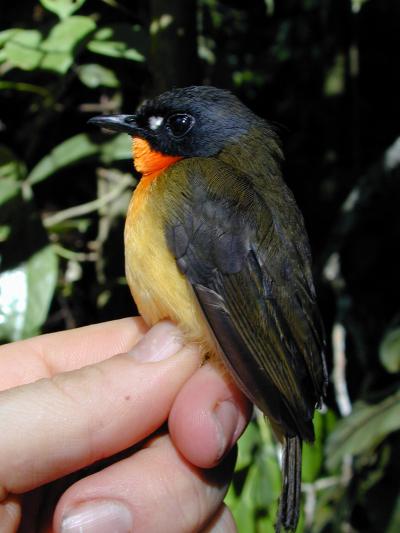
Swynnerton's Robin
Swynnertonia swynnertoni
Order: Passeriformes / Family: Muscicapidae

Wikimedia Commons
About the Swynnerton's Robin
The Swynnerton's Robin, scientifically known as Swynnertonia swynnertoni, is a captivating bird within the Muscicapidae family. This small passerine species inhabits the eastern montane forests of Africa, specifically in regions of Zimbabwe, Mozambique, and Tanzania. The robin thrives in the moist, dense undergrowth of montane and submontane forests, where it plays a crucial ecological role as an insectivore, contributing to pest control and maintaining the ecological balance of its habitat. This bird is notably significant because it is a regional endemic, restricted to the Eastern Highlands of Zimbabwe and adjacent areas in Mozambique, as well as the Udzungwa Mountains in Tanzania. The robin's presence is considered an indicator of forest health, highlighting the importance of conservation efforts in these regions. The Swynnerton's Robin exhibits distinct seasonal behaviors, often moving altitudinally within its montane environment. During the breeding season, which occurs in the wet months from November to March, the robin becomes more vocal and active in lower, denser forest layers, establishing territories and engaging in courtship displays. Outside the breeding season, it may migrate slightly to higher elevations or different forest areas in search of food, though it remains largely resident. This seasonal movement within its habitat is crucial for its survival, allowing the bird to exploit different food resources throughout the year.
The Swynnerton's Robin belongs to the family Muscicapidae, within the order Passeriformes. These birds typically live typically 4-6 years, with a maximum recorded of 8 years..
How to Identify a Swynnerton's Robin
The Swynnerton's Robin is a small, robust bird measuring approximately 14 cm in length. Adults display a striking combination of colors with a bright orange breast that contrasts sharply with their slate-gray head and back. The wings and tail are similarly gray, offering a subtle yet elegant appearance. Notably, there is a narrow white eye-ring that adds to its distinct field marks. Juveniles differ slightly, appearing duller with a more muted orange wash and less pronounced eye-ring until they mature. Males and females are similar in appearance, though females may exhibit slightly paler tones. The Swynnerton's Robin can be confused with the similar-looking White-starred Robin, but the latter has a more pronounced white streaking on the wings and a different vocalization. In flight, the Swynnerton's Robin presents a compact silhouette with a characteristic flicking motion of its tail. When perched, it often adopts an upright posture, favoring low branches where it can deftly dart out to catch insects.
Having trouble telling birds apart? Upload a photo to our bird identification tool for an instant species match.
Swynnerton's Robin Habitat and Range
Preferred Habitat
Swynnerton's Robin resides primarily in montane and submontane forests. It favors areas with dense undergrowth and abundant leaf litter, which are ideal for foraging. Typical habitats include the Eastern Highlands of Zimbabwe, the Chimanimani Mountains in Mozambique, and the Udzungwa Mountains in Tanzania. The robin is typically found at elevations ranging from 1,200 to 2,200 meters. Though primarily a forest dweller, it may occasionally venture into forest edges and adjacent shrublands. Seasonal habitat shifts are minimal, as the bird prefers consistent forest environments year-round, with minor altitudinal movements to optimize foraging opportunities.
Geographic Range
The Swynnerton's Robin's range is limited to the highlands of eastern Zimbabwe, central Mozambique, and southern Tanzania. It breeds and resides largely within these areas, showing a preference for montane forests. The bird does not exhibit long-distance migration, but may move within its range in response to seasonal changes and food availability. The highest population densities occur in the Eastern Highlands of Zimbabwe, particularly within protected areas where its preferred forest habitat remains intact.
Want to know which birds visit your area? Browse our backyard birds by location guides for region-specific species lists.
What Does the Swynnerton's Robin Eat?
The Swynnerton's Robin primarily feeds on a variety of insects and other small invertebrates. Its diet includes beetles, ants, spiders, and caterpillars, which it finds by meticulously searching through leaf litter and probing vegetation. During the wet season, when insects are abundant, the robin may expand its diet to include small fruits and seeds, supplementing its nutritional intake. The robin employs a foraging technique known as 'gleaning,' where it picks off prey items from leaves and branches. It feeds throughout the day, with peak activity occurring during the early morning and late afternoon when insect activity is highest.
Swynnerton's Robin Behavior and Social Structure
Swynnerton's Robin exhibits a solitary or paired social structure, particularly during the breeding season. It is known for its territorial behavior, with pairs actively defending their territory through vocalizations and displays. Courtship involves mutual feeding and the male performing a series of fluttering flights and calls to attract the female. While not highly gregarious, the robin may form loose associations with other insectivorous birds, especially outside the breeding season, taking advantage of the increased foraging efficiency in mixed-species flocks. The robin's response to predators is cautious and involves silent retreats into dense vegetation. Its daily activity patterns include periods of intense foraging interspersed with resting and preening sessions.
Swynnerton's Robin Nesting and Reproduction
The Swynnerton's Robin constructs a cup-shaped nest using dry leaves, twigs, and moss, often lined with finer materials like rootlets and feathers. Nests are typically located low in dense vegetation, such as shrubs or small trees, and are well-concealed from predators. The female lays a clutch of 2 to 3 eggs, which she incubates for approximately 12 to 14 days. Both parents participate in feeding the chicks, which fledge about 14 to 16 days after hatching. The robin may produce one or two broods per year, depending on food availability and environmental conditions.
Swynnerton's Robin Sounds and Vocalizations
The primary song of the Swynnerton's Robin is a melodious series of fluty, whistling notes that vary in pitch and tempo. It is often described as a clear, sweet warble, with phrases that may be repeated several times. Call notes include sharp 'chip' sounds, which serve as contact calls between mates. Alarm calls are more abrupt and harsh, used to warn of nearby predators. The robin participates in a dawn chorus, where its melodious song is particularly prominent and can be heard echoing through the forest habitat.
Interesting Facts About the Swynnerton's Robin
- 1The Swynnerton's Robin was named in honor of Charles Swynnerton, a British naturalist who contributed significantly to African ornithology.
- 2This robin is one of the few bird species endemic to the Eastern Zimbabwe Highlands, highlighting its restricted range.
- 3Unlike most robins, Swynnerton's Robin exhibits little sexual dimorphism, making male and female identification challenging.
- 4The robin's song has been compared to the melodious notes of a flute, making it a favorite among birdwatchers.
- 5Swynnerton's Robin can live up to 10 years in the wild, demonstrating considerable longevity for a small passerine.
- 6The bird's ability to thrive in dense undergrowth makes it a key insect predator in its montane forest ecosystem.
- 7Swynnerton's Robin uses its distinctive white eye-ring to communicate with mates and rivals during the breeding season.
Swynnerton's Robin Conservation Status
Swynnerton's Robin is currently listed as Near Threatened on the IUCN Red List. The primary threats to its population include habitat destruction due to logging, agricultural expansion, and human encroachment. Conservation efforts focus on protecting remaining montane forest habitats and promoting sustainable land-use practices. Historical population declines have been noted with forest clearance, but some populations remain stable within protected areas. Ongoing conservation measures aim to secure its habitat and prevent further declines.
Other Muscicapidae Species
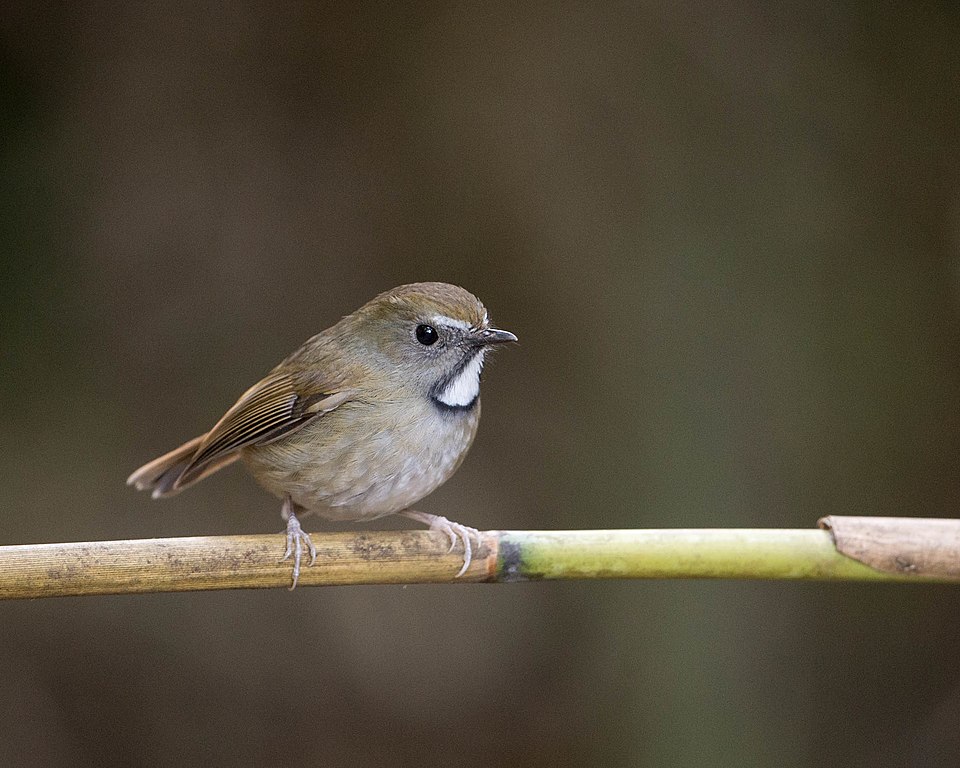


Birds Similar to the Swynnerton's Robin
These species are often confused with the Swynnerton's Robin due to similar appearance or overlapping range.