Tapajos Fire-eye
Pyriglena similis
Order: Passeriformes / Family: Thamnophilidae

Wikimedia Commons
About the Tapajos Fire-eye
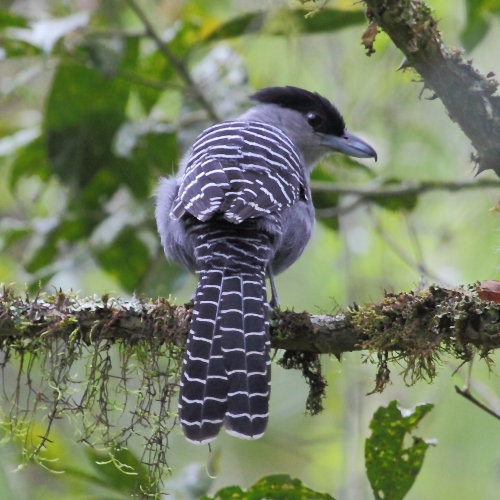
The Tapajos Fire-eye, Pyriglena similis, is a bird of the Thamnophilidae family, notable for its stark black plumage contrasted with fiery red eyes, a feature that gives this species its common name. This bird inhabits the dense undergrowth of lowland forests in Brazil, particularly along the Tapajos River basin in the state of Pará. It thrives in the humid, tropical climates where the forest canopy provides ample cover and a rich supply of insects. The ecological role of the Tapajos Fire-eye is significant in its habitat, serving as both a predator and prey. It controls insect populations while providing sustenance for larger predators. This species is a vital component of its ecosystem, contributing to the biodiversity of the region. During the breeding season, which coincides with the wet season, the Tapajos Fire-eye becomes more vocal and active, establishing territories and searching for mates. Its presence in these areas is indicative of the health of the forest ecosystem, as it requires a pristine environment for nesting and feeding.
The Tapajos Fire-eye belongs to the family Thamnophilidae, within the order Passeriformes. These birds typically live estimated 5-8 years, with limited specific data available..
How to Identify a Tapajos Fire-eye
The Tapajos Fire-eye is best identified by its unmistakable red eyes, which stand out against its uniformly black plumage. Adult males and females look similar, though females may exhibit a slightly browner hue in their feathers. Juvenile birds are often duller, with a more brownish tone that gradually darkens with age. In flight, the Tapajos Fire-eye shows a compact silhouette with broad wings, allowing agile movements through dense forest layers. When perched, it maintains an upright posture, often flicking its tail as it surveys its surroundings. Differentiating this bird from similar species, such as the White-shouldered Fire-eye, involves noting the absence of white markings on the wings. Observers must focus on these details to accurately identify this species in the field.
Having trouble telling birds apart? Upload a photo to our bird identification tool for an instant species match.
Tapajos Fire-eye Habitat and Range
Preferred Habitat
The Tapajos Fire-eye inhabits the lowland rainforests of the Tapajos River basin in Brazil. Preferring areas with dense undergrowth, it is commonly found at elevations below 1,000 meters. These birds are rarely seen in open areas or urban environments, as they rely on the forest's cover for protection and resources. Seasonal habitat shifts are minimal, as the Tapajos Fire-eye is a resident species, not migrating outside its established territories. Its preference for undisturbed forest areas makes it vulnerable to habitat destruction, but it remains relatively stable in well-preserved regions.
Geographic Range
The Tapajos Fire-eye is endemic to Brazil, with its range primarily centered around the Tapajos River basin in the state of Pará. It does not migrate, instead residing year-round in these forests. The bird's range is limited to this specific geographic region, contributing to its uniqueness and highlighting the importance of conserving its natural habitat. Although it is not found in dense populations, certain areas along the river provide hotspots where these birds can be more commonly observed, particularly in protected lands and reserves.
Want to know which birds visit your area? Browse our backyard birds by location guides for region-specific species lists.
What Does the Tapajos Fire-eye Eat?
The Tapajos Fire-eye primarily feeds on insects, including beetles, ants, and caterpillars, which it skillfully extracts from leaf litter and underbrush. Its diet changes slightly with the seasons, as it may consume more arthropods during the wet season when they are more abundant. Using a technique known as 'leaf-gleaning,' the bird moves methodically through foliage, capturing prey with sharp, precise movements. This species is typically diurnal, with peak feeding activity occurring during the cooler hours of the morning and late afternoon. The size of the prey it consumes is generally small to medium, in line with its insectivorous diet.
Tapajos Fire-eye Behavior and Social Structure
The Tapajos Fire-eye exhibits solitary or paired behavior, often seen alone or with a mate rather than in large flocks. It is territorial, particularly during the breeding season, when males become more vocal to defend their territory from rivals. Courtship displays include subtle movements and vocalizations aimed at attracting a mate. In response to predators, the Tapajos Fire-eye relies on the dense forest cover for shelter, often remaining still and silent to avoid detection. Its daily activity patterns are largely influenced by the availability of food and the need for territory maintenance, with increased vocal activity noted at dawn.
Tapajos Fire-eye Nesting and Reproduction
Tapajos Fire-eyes construct their nests low to the ground, often within dense thickets or underbrush. The nests are cup-shaped, made from twigs, leaves, and other plant materials, providing camouflage against predators. The typical clutch size ranges from two to three eggs, with an incubation period of approximately 14 to 16 days. Both parents share the responsibilities of incubation and feeding the young. Fledging occurs about two weeks after hatching, with the chicks remaining dependent on the parents for several weeks. The species usually raises one brood per year, coinciding with the wet season to ensure ample food supply.
Tapajos Fire-eye Sounds and Vocalizations
The Tapajos Fire-eye's primary song consists of a series of clear whistles, often described as melodic and slightly descending in pitch. These songs are used during territorial disputes and courtship. Call notes are sharp and quick, serving as alarms or contact calls between mates. When alarmed, the bird emits a rapid series of harsh, chattering sounds. During the dawn chorus, their whistles contribute to the symphony of the forest, marking their presence and territory.
Interesting Facts About the Tapajos Fire-eye
- 1The Tapajos Fire-eye's red eyes are an adaptation for low-light conditions, helping it to hunt in dense underbrush.
- 2Unlike many birds, the Tapajos Fire-eye does not migrate, remaining in the Tapajos River basin year-round.
- 3This species was first described in the early 20th century, making it a relatively recently discovered bird.
- 4The Tapajos Fire-eye is often a silent presence, relying on its environment for stealth rather than vocalizations.
- 5Its name 'Fire-eye' comes from the bright red eyes that are particularly noticeable in contrast to its dark feathers.
Tapajos Fire-eye Conservation Status
The Tapajos Fire-eye is currently listed as Least Concern by the IUCN, although its population is believed to be declining due to habitat loss from deforestation and land conversion. Conservation efforts focus on preserving its rainforest habitat through protected areas and sustainable land management practices. Historically, the bird has maintained stable populations in undisturbed areas, but increased human activity in its range poses a threat to its continued stability.