
Trichixos pyrropygus
Trichixos pyrropygus
Order: Passeriformes / Family: Muscicapidae

Wikimedia Commons
About the Trichixos pyrropygus
The Trichixos pyrropygus, commonly known as the rufous-tailed shama, plays an important role in the ecosystems of Southeast Asia. This medium-sized songbird, part of the Muscicapidae family, is particularly noted for its vibrant rufous tail, which contrasts sharply with its otherwise muted plumage. Found primarily in the dense understories of tropical and subtropical forests, the rufous-tailed shama contributes to the ecological balance by controlling insect populations, a function critical to maintaining the health of forest ecosystems.
Native to the Malay Peninsula, Borneo, and Sumatra, the rufous-tailed shama thrives in humid lowland and hill forests, from sea level up to elevations of 1,500 meters. This bird exhibits seasonal behaviors that reflect its adaptability to environmental changes. During the breeding season, these birds become more territorial, often seen defending their chosen nesting sites with vocal displays and aggressive postures. Outside of the breeding season, they may form loose, non-breeding flocks, indicating a shift towards social behavior.
The rufous-tailed shama is significant not only for its ecological role but also for its contribution to local biodiversity. Its presence is an indicator of healthy forest environments, as it requires dense foliage and a rich insect population to thrive. Moreover, the rufous-tailed shama has cultural importance in some regions where its melodious song is celebrated in local folklore. Despite its stable population, the species faces threats from habitat loss due to deforestation and land conversion. Conservation efforts are crucial to ensure the protection of its habitat and the ecological roles it fulfills.
The Trichixos pyrropygus belongs to the family Muscicapidae, within the order Passeriformes. These birds typically live average 4-6 years with a maximum recorded of 9 years..
How to Identify a Trichixos pyrropygus
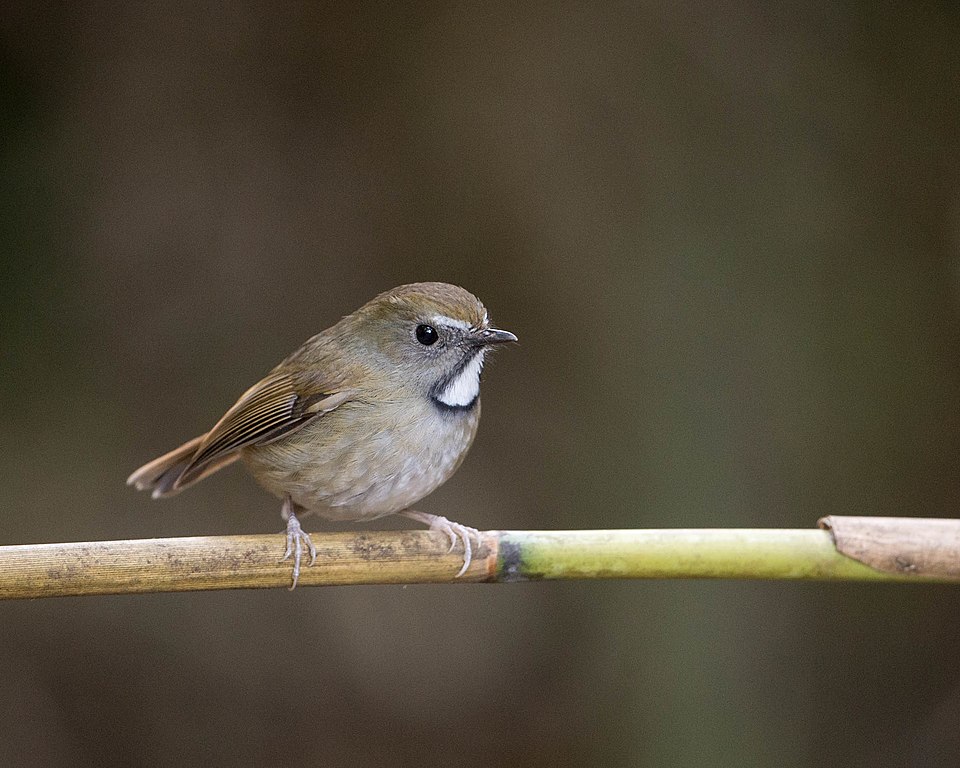
The rufous-tailed shama is readily identifiable by its striking rufous tail, which stands out against its otherwise dark plumage. Adult birds feature a glossy bluish-black head and upperparts, which contrast with their warm rufous underparts and tail. The contrast between the tail and body is a key field mark for identifying this species in the dense forest understory. Juveniles differ slightly, presenting a more mottled appearance with less gloss on their upperparts, aiding in their camouflage.
In terms of sexual dimorphism, males and females show little difference in plumage coloration, which is relatively uncommon among songbirds. However, males tend to be slightly larger than females, a trait that can be subtle and requires careful observation. The rufous-tailed shama can be confused with the white-rumped shama, but the latter has a distinct white rump that the rufous-tailed shama lacks.
In flight, the rufous-tailed shama exhibits a distinctive silhouette characterized by its long tail and strong wingbeats. When perched, it often holds its tail slightly cocked, a posture that highlights its vibrant tail feathers. This perching behavior, combined with its vocalizations, makes it easier for birders to locate and identify this elusive species in its dense forest habitat.
Having trouble telling birds apart? Upload a photo to our bird identification tool for an instant species match.
Trichixos pyrropygus Habitat and Range
Preferred Habitat
The rufous-tailed shama inhabits a variety of forested environments, displaying a preference for lowland and hill forests. These environments provide the dense foliage necessary for foraging and breeding. Typically, the species is found at elevations ranging from sea level to about 1,500 meters, although it is more commonly observed in the lower elevations where the forests are denser.
Seasonally, these birds may shift their habitat preference slightly, moving towards more sheltered areas during the breeding season to ensure nest security and protection from predators. While primarily a resident of rural forested areas, the rufous-tailed shama is occasionally reported in lightly disturbed habitats, including secondary forests and forest edges, where it adapts to the availability of resources.
The species shows little inclination towards urban environments, preferring the seclusion and resources provided by undisturbed forest habitats. This preference underscores the importance of forest conservation in maintaining viable populations of the rufous-tailed shama, as it relies heavily on intact forest ecosystems to sustain its lifestyle.
Geographic Range
The rufous-tailed shama, or Trichixos pyrropygus, has a distribution primarily across Southeast Asia, specifically within the countries of Malaysia, Indonesia, and Thailand. This species is predominantly non-migratory, residing year-round in suitable habitats within its range.
During the breeding season, the rufous-tailed shama is more commonly found in the Malay Peninsula, Borneo, and Sumatra, where it occupies dense lowland and hill forests. These areas provide the necessary cover and resources for breeding. Its non-migratory nature means that the bird does not undergo significant range shifts but may adjust its local movements depending on resource availability and environmental conditions.
Population density can vary, with higher concentrations typically found in regions where forest habitats remain relatively undisturbed. Conservation areas and national parks within its range often serve as population strongholds due to the protection of habitats and reduced human disturbance. Such areas are critical for sustaining the species, especially as deforestation and habitat fragmentation continue to threaten its preferred environments.
Want to know which birds visit your area? Browse our backyard birds by location guides for region-specific species lists.
What Does the Trichixos pyrropygus Eat?
Trichixos pyrropygus primarily feeds on insects, making it an insectivorous bird vital for controlling pest populations in its habitat. Its diet consists of ants, beetles, caterpillars, and spiders, which it actively hunts in the dense foliage of the forest understory. The bird uses its keen eyesight and agility to locate and capture prey, often seen hopping from branch to branch or sifting through leaf litter to uncover insects.
Seasonal changes can affect the availability of prey, but the rufous-tailed shama adapts by shifting its foraging strategies. During the wet season, when insects are more abundant, the bird may focus on hunting flying insects, using quick, agile flights to catch them mid-air. In drier months, it turns to ground-dwelling insects, employing a more methodical approach by foraging through leaf litter.
The rufous-tailed shama typically forages alone or in pairs, especially during the breeding season when it is more territorial. Its feeding schedule is primarily diurnal, with peak activity occurring in the morning and late afternoon when insect activity is highest. This dietary flexibility and skilled foraging behavior are crucial for its survival in the dynamic forest ecosystems of Southeast Asia.
Trichixos pyrropygus Behavior and Social Structure
The rufous-tailed shama is a solitary bird outside its breeding season, often observed alone or in pairs. Territorial during the breeding season, males vigorously defend their territories through song and physical displays, ensuring exclusive access to resources and nesting sites. Their song, a complex and melodious series of whistles and trills, serves both to attract mates and to ward off rivals.
Courtship displays involve males showcasing their vibrant rufous tails and performing aerial displays to capture the attention of potential mates. These displays are critical for pair bonding and successful reproduction. Once paired, the birds exhibit strong monogamous bonds, working together to raise their young.
When faced with predators, the rufous-tailed shama relies on its agility and dense habitat for protection. It often retreats into thick foliage, where it becomes difficult to detect. Socially, the bird does not form large flocks, but outside the breeding season, it may join small mixed-species foraging groups, enhancing its ability to locate food and detect predators.
Daily activity patterns are primarily diurnal, with periods of high activity in the early morning and late afternoon. During these times, the bird is most vocal, using its song to communicate and establish its presence within its territory.
Trichixos pyrropygus Nesting and Reproduction
The rufous-tailed shama constructs its nest in dense forest undergrowth, typically selecting low shrubs or small trees to ensure concealment and protection from predators. The nest is cup-shaped, crafted from twigs, leaves, and other plant materials, lined with softer substances like moss and feathers for comfort.
Preferred nesting sites are often located within one to two meters off the ground, strategically placed to minimize predation risks. Clutch size usually ranges from two to four eggs, which are pale with reddish-brown speckles, blending well with the nest environment.
The incubation period lasts approximately 12 to 14 days, with both male and female sharing duties. Once hatched, the chicks are altricial, requiring constant care and feeding by both parents. Fledging occurs after another 12 to 14 days, at which point the young leave the nest but continue to receive parental care and feeding until they are fully independent.
The rufous-tailed shama typically raises one or two broods per year, depending on environmental conditions and resource availability. This reproductive strategy ensures that, even if a nest fails, there is still an opportunity to successfully rear young within the breeding season.
Trichixos pyrropygus Sounds and Vocalizations
The rufous-tailed shama is renowned for its rich and melodious song, characterized by a series of complex whistles, trills, and clear notes. The song serves as a primary tool for territorial defense and mate attraction, often delivered from a concealed perch within the dense forest.
Call notes are varied, ranging from sharp alarm calls when threatened to softer contact calls used to maintain pair bonds or communicate with their young. The alarm calls tend to be short and rapid, serving as an effective alert to nearby birds of potential dangers.
During the dawn chorus, the rufous-tailed shama's song is particularly prominent, as males assert their territorial claims and announce their presence to both rivals and potential mates. The quality of their song, akin to that of a flute, makes it a favorite among bird enthusiasts and contributes to its cultural significance in local regions.
Interesting Facts About the Trichixos pyrropygus
- 1The rufous-tailed shama's song is so melodious that it has become a popular bird in the aviculture trade, particularly in Southeast Asia.
- 2Despite its small size, the rufous-tailed shama can defend a territory up to 1 hectare in size, showcasing its territorial nature.
- 3The bird's nest construction is a family affair, with both male and female participating in building and maintaining the nest.
- 4During courtship, males perform aerial displays, showcasing their agility and the striking color of their rufous tails.
- 5The rufous-tailed shama has adapted to various forest conditions, from primary rainforests to secondary growth, indicating its ecological flexibility.
- 6In some cultures, the song of the rufous-tailed shama is believed to bring good luck, underscoring its cultural significance.
- 7This bird's preference for densely forested areas makes it a reliable indicator of forest health and biodiversity.
Trichixos pyrropygus Conservation Status
The rufous-tailed shama is currently listed as Least Concern on the IUCN Red List, with a population trend that is stable. This status reflects its relatively widespread distribution and adaptability to various forest habitats. However, the species faces significant threats from habitat destruction due to logging, agriculture, and urban expansion, leading to fragmentation and loss of its preferred environments. Conservation efforts focus on preserving forest habitats through the establishment of protected areas and sustainable land-use practices. These efforts aim to mitigate the impacts of human activities and ensure the survival of the species. Historically, the population has remained stable, but ongoing monitoring is essential to detect any changes that could signal increased threats. Community involvement in conservation actions, such as habitat restoration and awareness programs, plays a critical role in protecting the rufous-tailed shama. By fostering local engagement, conservationists hope to maintain the ecological integrity of the regions where this bird thrives.
Other Muscicapidae Species


Birds Similar to the Trichixos pyrropygus
These species are often confused with the Trichixos pyrropygus due to similar appearance or overlapping range.

