
Uniform Swiftlet
Aerodramus vanikorensis
Order: Apodiformes / Family: Apodidae
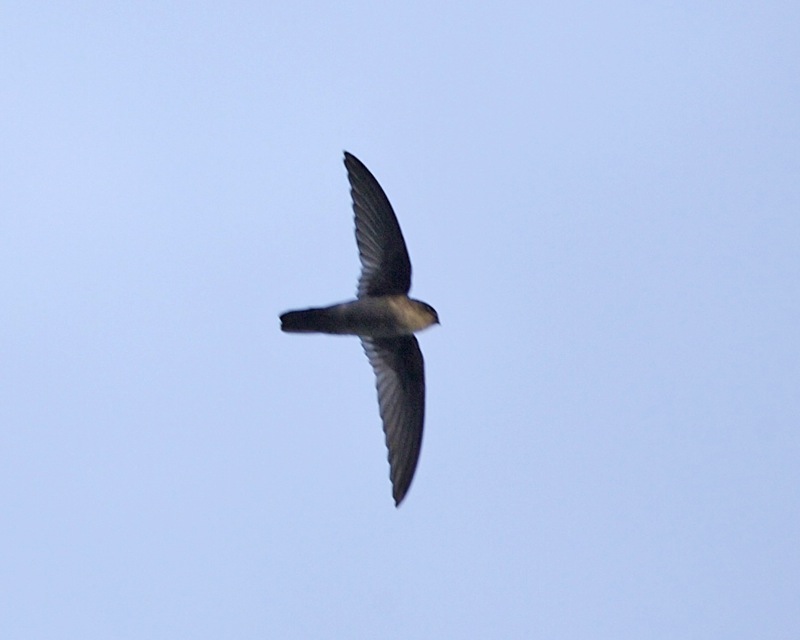
Wikimedia Commons
About the Uniform Swiftlet
The Uniform Swiftlet, Aerodramus vanikorensis, is a small bird belonging to the family Apodidae, known for its remarkable aerial agility and robust migratory patterns. These swiftlets are primarily found across the Pacific islands, including countries such as Fiji, the Solomon Islands, and Vanuatu. Their presence extends to lowland and coastal regions, where their adaptability allows them to thrive in both forested environments and urban settings. As a member of the swift family, the Uniform Swiftlet plays a crucial ecological role by controlling insect populations, a testament to their efficiency as aerial insectivores.
This bird is significant not only for its ecological contributions but also for its unique nesting behavior. Unlike other birds, the Uniform Swiftlet constructs nests using its saliva, a trait that has fascinated ornithologists and naturalists alike. These nests are often found in caves, providing a safe haven for breeding. The swiftlet's ability to navigate and forage in low-light conditions is facilitated by echolocation, a rare ability among birds, which underscores the evolutionary adaptations that enable its survival.
Seasonally, the Uniform Swiftlet exhibits some movement patterns, though it is largely considered a resident species within its range. This bird does not migrate long distances, instead dispersing locally to exploit food resources. During breeding seasons, their activity peaks as they engage in courtship and nesting, showcasing a remarkable display of aerial maneuvers and vocalizations. The swiftlet's contribution to the island ecosystems is invaluable, as they help maintain the balance of insect populations, supporting both natural and agricultural environments.
The Uniform Swiftlet belongs to the family Apodidae, within the order Apodiformes. These birds typically live typically 4-6 years, with a maximum recorded lifespan of 10 years..
How to Identify a Uniform Swiftlet
The Uniform Swiftlet can be identified by its uniformly grayish-brown plumage, which lacks the contrasting markings seen in other swift species. Adults display a subtle gloss on their feathers, which may catch the light during flight, providing a slight sheen. Juvenile swiftlets resemble adults but may appear slightly duller due to the fresher, less worn feathers. Males and females exhibit no significant differences in plumage, making visual sex differentiation challenging.
In flight, the swiftlet's silhouette is characterized by sickle-shaped wings and a forked tail, attributes that contribute to its agile and rapid flight style. These birds often fly in erratic patterns, chasing insects and displaying remarkable precision and speed. Unlike some swifts, the Uniform Swiftlet rarely perches, spending most of its time on the wing. When they do perch, they cling to vertical surfaces, often in caves or on rock faces, a behavior that can aid in identification when observed.
Confusion with similar species such as the White-rumped Swiftlet can occur, but the Uniform Swiftlet lacks the white rump patch, a key distinguishing feature. Observers should note the subtle variations in wing length and tail shape when identifying swiftlets in the field.
Having trouble telling birds apart? Upload a photo to our bird identification tool for an instant species match.
Uniform Swiftlet Habitat and Range
Preferred Habitat
The Uniform Swiftlet inhabits a variety of environments, favoring lowland and coastal regions. It thrives in tropical forest edges, mangroves, and near human settlements, illustrating its adaptability. In regions like the Solomon Islands, they are commonly found around open areas adjacent to forests, where insect abundance is high.
These birds are typically found from sea level up to elevations of 900 meters, with some populations venturing slightly higher in search of food. The swiftlet's presence in urban areas reflects its ability to exploit man-made structures for nesting, particularly in areas where natural cave sites are scarce.
While there is no significant seasonal shift in habitat, the Uniform Swiftlet may adjust its range locally to follow food availability, particularly during breeding seasons. This adaptability ensures a stable food supply and suitable nesting sites year-round.
Geographic Range
The Uniform Swiftlet's range spans a substantial portion of the southwestern Pacific, prominently including the islands of Fiji, the Solomon Islands, Vanuatu, and New Caledonia. These birds are primarily residents within their respective islands, showcasing a proclivity for remaining local rather than undertaking extensive migrations.
During the breeding season, these swiftlets can be found across these islands, favoring coastal areas and lowland forests where food is abundant. Their populations are dense on islands with rich insect life, such as in the Solomon Islands, where they proliferate in both natural and urban environments.
While largely non-migratory, the swiftlets may exhibit localized movements within islands to exploit fluctuating food resources. These shifts ensure that they remain in areas with optimal foraging conditions, allowing them to maintain high feeding efficiency throughout the year.
Want to know which birds visit your area? Browse our backyard birds by location guides for region-specific species lists.
What Does the Uniform Swiftlet Eat?
The diet of the Uniform Swiftlet primarily consists of small flying insects, which they expertly catch in mid-air. These insects, such as beetles, flies, and ants, form the bulk of their diet year-round. During certain seasons, they may also consume other small arthropods available in their environment.
The swiftlet employs an adept foraging technique, utilizing its agile flight to maneuver through the air at high speeds, often in erratic patterns that maximize their insect capture rate. Their feeding occurs predominantly during daylight hours, peaking in the early morning and late afternoon when insect activity is highest.
Seasonal changes in diet are minimal, though they may consume a higher proportion of certain insect types in response to availability. The swiftlet's preference for diverse insect species highlights its role as a key predator in controlling insect populations on the islands.
Uniform Swiftlet Behavior and Social Structure
Uniform Swiftlets are highly social birds, frequently observed in sizable flocks that can number in the hundreds. These flocks exhibit a loosely coordinated flight pattern, often seen swirling through the sky as they forage for insects. Their social structure facilitates efficient feeding and offers a degree of protection against aerial predators.
During the breeding season, swiftlets engage in courtship displays that include synchronous flight maneuvers and vocalizations. These displays strengthen pair bonds and are a prelude to nesting. They exhibit limited territorial behavior, focusing on defending nesting sites rather than feeding areas.
When faced with predators, swiftlets rely on their speed and agility to evade capture, often performing rapid directional changes and taking refuge in caves or dense foliage. Their daily activity pattern includes periods of intense feeding interspersed with rest and social interaction, maintaining a balance that supports their energetic lifestyle.
Uniform Swiftlet Nesting and Reproduction
The nesting behavior of the Uniform Swiftlet is particularly fascinating due to its use of saliva to construct nests. These nests, often found on cave walls or man-made structures, are small and cup-shaped, providing a secure space for breeding. Nest sites are typically chosen for their protection from predators and environmental elements.
The breeding season varies slightly depending on the island but generally occurs during the warmer months when food is plentiful. Clutch size averages two eggs, which are incubated by both parents for about 18 to 23 days. After hatching, the chicks remain in the nest for approximately 40 to 45 days before fledging.
Parental care is shared, with both adults taking turns in feeding the young and maintaining the nest. The swiftlet generally raises one brood per year, though in optimal conditions, some pairs may attempt a second breeding cycle.
Uniform Swiftlet Sounds and Vocalizations
Uniform Swiftlets produce a series of high-pitched chirps and trills that serve various communication purposes. Their primary song consists of rapid, rhythmic sequences of notes that are often repeated. These sounds are less melodious than those of passerine birds but are essential for maintaining flock cohesion.
Call notes are used for social interactions within flocks, while softer, more persistent calls facilitate communication between mates during nesting. Alarm calls, though less common, are emitted in response to predators, characterized by a sharper, more urgent tone.
Their vocalizations contribute to the acoustic landscape of their habitats, particularly during dawn and dusk when activity peaks.
Interesting Facts About the Uniform Swiftlet
- 1Uniform Swiftlets use echolocation for navigation in dark caves, a rare trait among birds.
- 2Their nests, made from saliva, are a key ingredient in the traditional delicacy known as bird's nest soup.
- 3These swiftlets can fly at speeds exceeding 100 kilometers per hour while foraging for insects.
- 4The Uniform Swiftlet's saliva nests are highly valued, fetching high prices in some Asian markets.
- 5They are one of the few bird species capable of sustained flight for hours without landing.
- 6The swiftlet's ability to echolocate was discovered only in the 1950s, leading to new insights into avian behavior.
- 7Uniform Swiftlets play a significant role in controlling insect populations, benefiting both natural and agricultural ecosystems.
Uniform Swiftlet Conservation Status
Currently, the Uniform Swiftlet is classified as Least Concern by the IUCN, with a stable population trend. While generally abundant, certain populations face threats from habitat loss and human disturbance, particularly in areas where cave nesting sites are disturbed by tourism or development. Conservation efforts focus on protecting key habitats and nesting sites, with some regions implementing measures to minimize human impact. Historically, populations have remained resilient, adapting to changes in their environment, though ongoing monitoring is necessary to ensure their continued stability.
Other Apodidae Species


Birds Similar to the Uniform Swiftlet
These species are often confused with the Uniform Swiftlet due to similar appearance or overlapping range.

