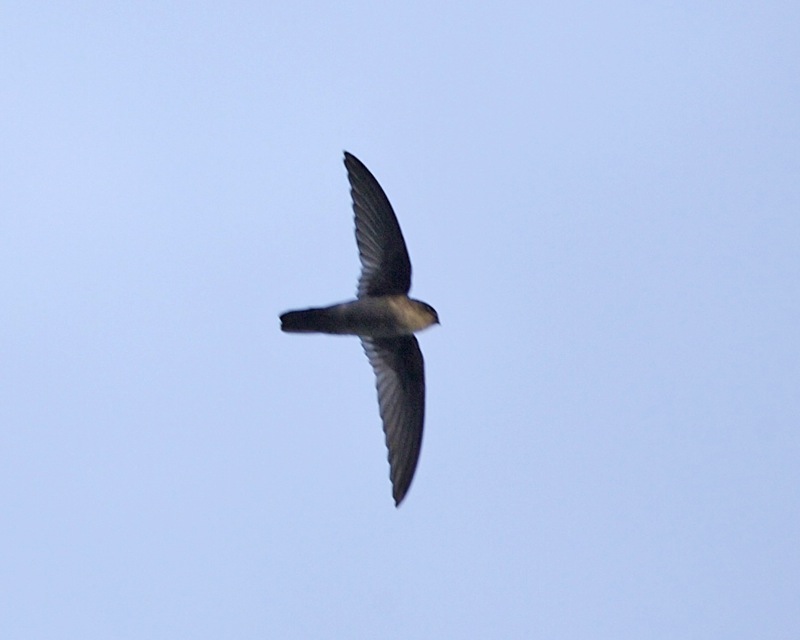
Volcano Swiftlet
Aerodramus vulcanorum
Order: Apodiformes / Family: Apodidae

Wikimedia Commons
About the Volcano Swiftlet
The Volcano Swiftlet, scientifically known as Aerodramus vulcanorum, inhabits the volcanic landscapes of Indonesia and the Philippines. This species thrives in regions characterized by rugged terrain and proximity to active volcanoes, where it exploits unique ecological niches. The swiftlet plays a crucial role in controlling insect populations, an important ecological function that supports a balanced ecosystem. As a member of the Apodidae family, the Volcano Swiftlet demonstrates fascinating adaptations that enable it to occupy such dynamic environments. These birds exhibit a strong preference for nesting in dark and secluded areas within lava tubes and volcanic caves, utilizing their exceptional echolocation abilities to navigate in complete darkness. Seasonal behaviors of the Volcano Swiftlet include minor altitudinal migrations, largely determined by food availability and changes in weather patterns. During the breeding season, typically between March and September, these birds become more conspicuous as they engage in courtship displays and nest-building activities. The swiftlets often form colonies, which provide safety in numbers against potential predators. Their presence in these volcanic regions contributes to the biodiversity and the overall health of the ecosystem, making them an integral component of their native habitats.
The Volcano Swiftlet belongs to the family Apodidae, within the order Apodiformes. These birds typically live typically 5-7 years, with a maximum recorded lifespan of 12 years..
How to Identify a Volcano Swiftlet
The Volcano Swiftlet can be identified by its small size, measuring about 10 to 12 cm in length. Its plumage is predominantly dark gray, with a slightly lighter underbelly. This bird's wings are long and scythe-shaped, allowing for agile flight. Unlike some similar species, the Volcano Swiftlet lacks a white rump or any contrasting plumage features, which aids in distinguishing it from other swiftlet species. Juveniles resemble adults but may have slightly paler markings, especially on the throat and chest. There is little sexual dimorphism, with males and females appearing virtually identical. In flight, the Volcano Swiftlet's silhouette is distinctive due to its rapid wingbeats and swift, direct flight patterns. When perching, which is rare, the bird adopts a horizontal posture, often clinging to vertical surfaces in caves or crevices. Observing these characteristics can help birders and researchers accurately identify this elusive species in its natural habitat.
Having trouble telling birds apart? Upload a photo to our bird identification tool for an instant species match.
Volcano Swiftlet Habitat and Range
Preferred Habitat
Volcano Swiftlets primarily inhabit volcanic regions, favoring areas with abundant cave systems formed by lava flows. These birds are typically found at elevations ranging from 500 to 2000 meters above sea level. The swiftlet's habitat includes both primary and secondary forests surrounding volcanic sites. While they prefer remote and undisturbed environments, they can occasionally be found near human settlements if suitable nesting sites are available. There is limited seasonal habitat shift, though some movement to lower elevations may occur during adverse weather conditions. The swiftlets are less likely to be found in urban settings, preferring the seclusion and safety of their natural volcanic habitats.
Geographic Range
The Volcano Swiftlet is primarily found in Southeast Asia, with a concentrated presence in Indonesia, particularly on the islands of Java, Sumatra, and Bali, as well as in parts of the Philippines. These birds do not undertake long-distance migrations, instead remaining within or near their breeding territories year-round. Their range is largely confined to areas with active or dormant volcanic activity, where they have adapted to the challenging conditions. Within their range, population density hotspots include the volcanic slopes and surrounding forests, where suitable nesting and feeding conditions are met. Despite their limited range, their populations are relatively stable in these regions, thanks to their specialized adaptations.
Want to know which birds visit your area? Browse our backyard birds by location guides for region-specific species lists.
What Does the Volcano Swiftlet Eat?
The diet of the Volcano Swiftlet consists mainly of flying insects, which they catch in mid-air using their agile flight capabilities. Their primary food sources include mosquitoes, flies, and small beetles. During the rainy season, their diet may shift slightly to include a higher proportion of moisture-loving insects such as midges. Foraging typically occurs throughout the day, with peak activity during the early morning and late afternoon when insect activity is highest. The swiftlets use a technique called aerial hawking, flying rapidly in pursuit of their prey and often covering large distances in search of food. Prey size varies but generally includes insects smaller than 5 mm in length. Their feeding schedule aligns with the availability of insects, making them an important control agent for insect populations in their habitats.
Volcano Swiftlet Behavior and Social Structure
Volcano Swiftlets exhibit social behavior, often forming small colonies that provide increased protection from predators. They do not display strong territorial behavior, instead coexisting peacefully within these groups. Courtship involves aerial displays, where males perform acrobatic maneuvers to attract females. Flocking patterns are evident during foraging, with groups of swiftlets seen darting through the air in pursuit of insects. When threatened by predators such as raptors or snakes, the swiftlets rely on their agility and speed to evade capture. Daily activity patterns include a consistent routine of foraging flights interspersed with periods of rest within their nesting caves. These birds are primarily diurnal, although some activity during overcast conditions may occur.
Volcano Swiftlet Nesting and Reproduction
Volcano Swiftlets construct their nests in dark, secluded locations, favoring volcanic caves and lava tubes. The nests are cup-shaped and made primarily from saliva mixed with feathers or plant material, allowing them to adhere securely to cave walls. Nesting sites are selected for their inaccessibility to predators and stability against environmental conditions. A typical clutch consists of two eggs, which both parents incubate for about 21 to 23 days. Once hatched, the chicks fledge in approximately 35 to 40 days. Parental roles are shared, with both males and females participating in feeding and caring for the young. The swiftlets usually raise one brood per year, although in optimal conditions, a second may occur.
Volcano Swiftlet Sounds and Vocalizations
The Volcano Swiftlet's primary vocalization is a series of high-pitched, rapid clicks used for echolocation within dark caves. These sounds have a metallic quality and are crucial for navigation and communication within their colonies. Call notes outside the nesting areas are less frequent and consist of short, sharp chirps that allow individuals to maintain contact during flight. Alarm calls are more urgent and higher in pitch, serving to alert the colony to potential threats. During the dawn chorus, the swiftlets' echolocation clicks can be heard resonating throughout their nesting sites, creating an auditory backdrop that is unique to these volcanic habitats.
Interesting Facts About the Volcano Swiftlet
- 1The Volcano Swiftlet uses echolocation, a rare trait among birds, to navigate dark caves.
- 2Unlike many birds, the Volcano Swiftlet can thrive in environments with active volcanic activity.
- 3Their nests, made primarily from saliva, are a delicacy known as bird's nest soup in some cultures.
- 4Volcano Swiftlets can fly up to 100 km per day in search of food, covering vast distances.
- 5Echolocation clicks are produced by the rapid movement of their specialized syrinx muscles.
- 6These swiftlets are capable of maintaining flight at altitudes of up to 2000 meters.
- 7Volcano Swiftlets are known for their incredible speed, clocking up to 50 km/h in flight.
Volcano Swiftlet Conservation Status
The Volcano Swiftlet is currently listed as Least Concern by the IUCN, with stable population trends observed in its range. However, primary threats include habitat destruction due to deforestation and volcanic activity. Conservation efforts focus on protecting key nesting sites and preserving the natural forest ecosystems surrounding volcanic regions. Historical population changes have been minimal, thanks to the swiftlet's specialized habitat preferences and adaptability. Continued monitoring and protection of their habitats are essential to ensure the species remains unaffected by human encroachment or environmental changes.
Other Apodidae Species


Birds Similar to the Volcano Swiftlet
These species are often confused with the Volcano Swiftlet due to similar appearance or overlapping range.