
White-browed Shama
Copsychus luzoniensis
Order: Passeriformes / Family: Muscicapidae

Wikimedia Commons
About the White-browed Shama
The White-browed Shama, Copsychus luzoniensis, is a captivating songbird native to the Philippine island of Luzon. Its vibrant presence in the tropical forests makes it a key component of the region's avian soundscape. Unlike many birds, this shama is non-migratory, steadfastly residing in its forested home year-round. Found primarily in primary and secondary growth forests, this bird thrives in areas where dense underbrush provides ample cover and feeding opportunities. Due to its reliance on forest habitats, the White-browed Shama plays a crucial ecological role as an insect controller. By consuming a variety of insects, it helps maintain the health of its ecosystem, balancing insect populations and thus contributing to the overall biodiversity of its environment. Its melodious song serves not only as a mating call but also as a territorial beacon, marking its presence in the dense woodlands of Luzon. As an indicator species, the White-browed Shama reflects the health of its habitat, with its decline often signaling broader ecological issues. During the breeding season, which typically peaks in the warmer months, males engage in elaborate singing displays to attract mates and defend territories. These vocal performances are a significant aspect of the bird's behavior, emphasizing the importance of acoustics in its life cycle. Conservation efforts in Luzon have aimed to protect the remaining forest habitats that this species depends on, underscoring the bird's significance in both ecological and cultural contexts. Overall, the White-browed Shama is not only a symbol of the rich biodiversity of the Philippines but also a reminder of the delicate balance within forest ecosystems.
The White-browed Shama belongs to the family Muscicapidae, within the order Passeriformes. These birds typically live typically 5-7 years, with some individuals living up to 10 years..
How to Identify a White-browed Shama
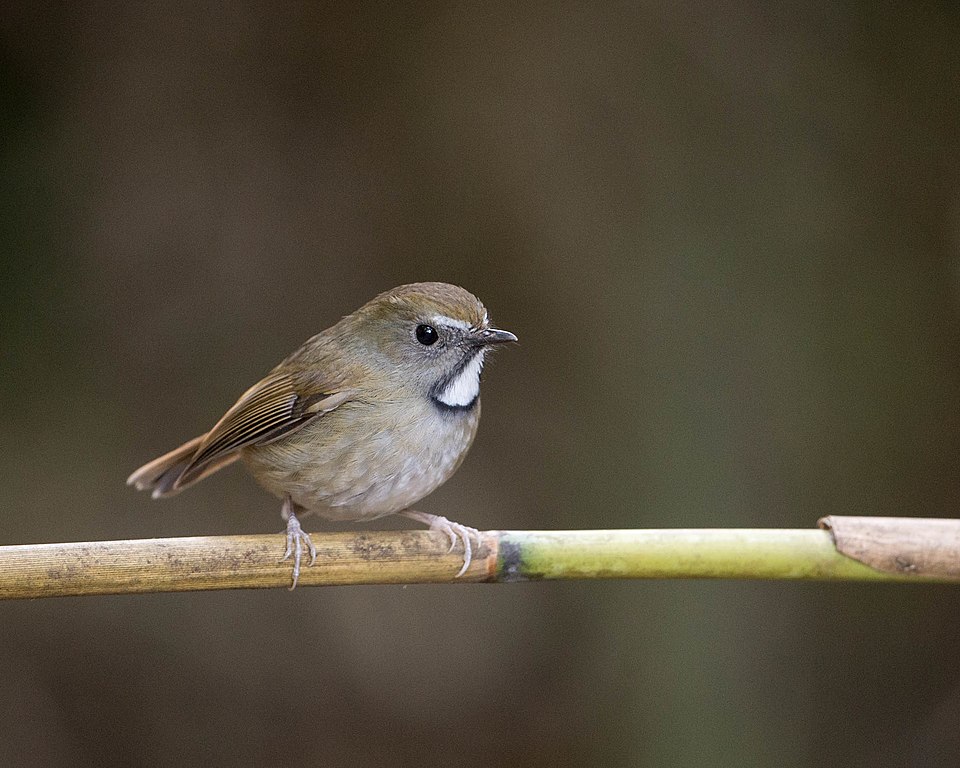
The adult White-browed Shama is unmistakable with its prominent white supercilium or 'eyebrow,' which contrasts with its otherwise dark plumage. The body is predominantly glossy black with a hint of blue sheen under certain lighting conditions. Its underparts are a subtle gray, providing an understated transition to its more striking upperparts. Juveniles, on the other hand, display a duller brownish plumage, lacking the defined white eyebrow, which develops as they mature. Males and females appear similar, though females may exhibit slightly less sheen and more subdued coloration. This species can sometimes be confused with the Philippine Magpie Robin, yet the latter lacks the distinctive white eyebrow and typically shows white on its wings. In flight, the White-browed Shama presents a compact silhouette with its relatively short wings and long tail, often held in a slightly drooped posture when perched. This characteristic stance, coupled with its bold markings, makes it a distinctive feature of the forests it inhabits.
Having trouble telling birds apart? Upload a photo to our bird identification tool for an instant species match.
White-browed Shama Habitat and Range
Preferred Habitat
The White-browed Shama predominantly inhabits primary and secondary tropical forests on the island of Luzon. It prefers areas with dense underbrush, which provide ample cover and feeding opportunities. Typically found at low to mid-elevations, this species is a resident of forests ranging from sea level up to about 1,500 meters. It shows a marked preference for humid, lush environments where the canopy is thick and the understory is rich in foliage. Unlike some species, the White-browed Shama avoids urban areas, thriving instead in undisturbed natural habitats where human encroachment is minimal. Seasonal habitat shifts are minimal due to its non-migratory nature, allowing it to maintain a stable presence within its chosen environment throughout the year.
Geographic Range
Endemic to the island of Luzon in the Philippines, the White-browed Shama is a resident species with a range confined to this specific region. It occupies the lowland and mid-elevation forests that cover various parts of the island. This bird does not engage in long-distance migrations, establishing its territories within the lush forests it calls home. Population densities tend to be higher in regions where the forest is intact and less disturbed by human activity. Conservation efforts focus on these key areas to ensure the continued survival of the species, as habitat loss remains a significant threat.
Want to know which birds visit your area? Browse our backyard birds by location guides for region-specific species lists.
What Does the White-browed Shama Eat?
The diet of the White-browed Shama primarily consists of insects and other small invertebrates, making it an important insectivore within its ecosystem. This bird actively forages in the underbrush, using its keen eyesight to spot movement among the leaves. During the wetter months, when insect activity peaks, the shama's diet becomes even more insect-focused, capitalizing on the abundance of prey. In drier periods, it may supplement its diet with small fruits and seeds, though this is less common. Its feeding technique involves quick, hopping movements through the dense foliage, often turning leaves over to uncover hidden insects. The shama's diet includes a range of prey sizes, from tiny ants to larger beetles, showcasing its adaptability in foraging strategies.
White-browed Shama Behavior and Social Structure
The White-browed Shama exhibits a solitary or paired lifestyle, with individuals often observed alone or in monogamous pairs. Territorial behavior is pronounced, particularly during the breeding season when males engage in vigorous singing to establish and defend their areas. These vocal displays are not only a call to potential mates but also a deterrent to rival males. Courtship involves the male presenting food to the female, a ritual that strengthens pair bonds. In the face of predators, the shama relies on its agility and dense habitat to evade capture, often retreating to the safety of thick vegetation. Its daily activities are largely diurnal, with peak foraging occurring in the early morning and late afternoon when insect activity is highest. Outside the breeding season, the White-browed Shama maintains its territories, though its vocalizations may decrease in frequency and intensity.
White-browed Shama Nesting and Reproduction
Nesting for the White-browed Shama begins with the selection of a site well-hidden within the dense forest underbrush. The nest itself is a cup-shaped structure, constructed from twigs, leaves, and other plant materials, often lined with softer substances such as feathers and moss. Typically, nests are located in low shrubs or small trees, providing both concealment and proximity to food sources. The clutch size ranges from two to four eggs, with both parents sharing incubation duties over a period of about 14 days. After hatching, the chicks remain in the nest for approximately two weeks before fledging. Parental care extends beyond this period, as both parents continue to feed and guide the young until they are fully independent. The White-browed Shama usually raises one to two broods per year, depending on environmental conditions and food availability.
White-browed Shama Sounds and Vocalizations
The White-browed Shama is celebrated for its rich, melodious song, which features a series of varied, flute-like notes delivered in rapid succession. Its primary song possesses a rhythmic cadence with a mix of high-pitched trills and lower, warbling tones. This complex vocalization serves as both a territorial marker and a mating call. In addition to its song, the shama produces a range of call notes, including sharp, metallic 'chink' sounds used as alarm calls when predators are near. At dawn, its song becomes particularly pronounced, often forming part of the broader dawn chorus of the forest. The shama's vocal repertoire is reminiscent of the more familiar song thrush in its musicality, though distinctly unique in tone and rhythm.
Interesting Facts About the White-browed Shama
- 1The White-browed Shama's song can vary greatly between individuals, making it a subject of interest for bioacoustic studies.
- 2Despite being a songbird, the White-browed Shama rarely uses its voice outside of the breeding season, highlighting its territorial nature.
- 3The shama's diet shifts seasonally, with an increase in fruit consumption during periods of insect scarcity.
- 4White-browed Shamas are known to mimic the calls of other bird species, showcasing their vocal versatility.
- 5The bird's white eyebrow is not just for show; it plays a role in visual communication among individuals.
- 6Unlike many birds, the White-browed Shama does not practice long-distance migration, remaining loyal to its forest home.
- 7Studies have shown that areas with healthy shama populations tend to have richer insect biodiversity, indicating their ecological importance.
White-browed Shama Conservation Status
The White-browed Shama is currently classified as Least Concern by the IUCN, reflecting a stable population trend. However, habitat destruction due to logging and agricultural expansion poses significant threats to its long-term survival. Conservation efforts focus on preserving the remaining forest habitats on Luzon and promoting sustainable land-use practices. Historically, the population has experienced fluctuations correlating with habitat loss and degradation. Continued conservation measures are crucial to ensure that this iconic songbird remains a vibrant part of the Philippine avian community.
Other Muscicapidae Species


Birds Similar to the White-browed Shama
These species are often confused with the White-browed Shama due to similar appearance or overlapping range.

