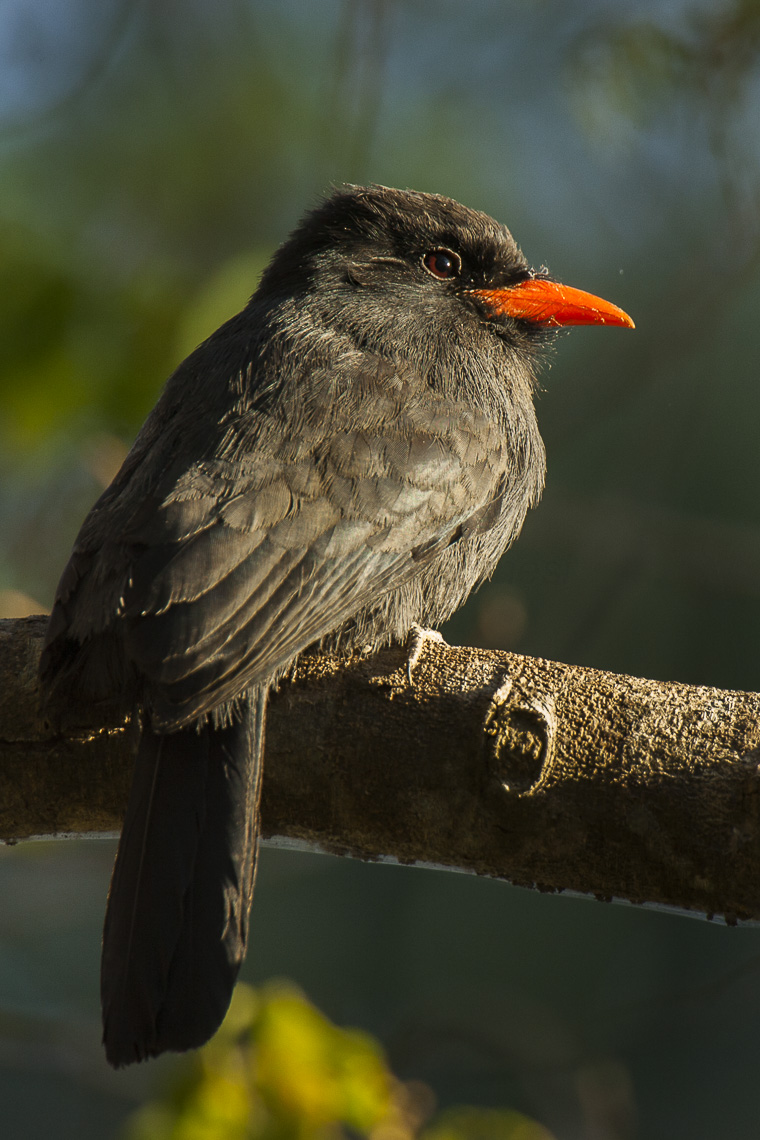
White-faced Nunbird
Hapaloptila castanea
Order: Piciformes / Family: Bucconidae

Wikimedia Commons
About the White-faced Nunbird
The White-faced Nunbird, scientifically known as Hapaloptila castanea, is a striking member of the Bucconidae family. This species is endemic to the cloud forests of South America, particularly thriving in the Andean regions of Colombia, Ecuador, and Peru. Known for its distinctive white face, which contrasts sharply with its rich chestnut body, the White-faced Nunbird plays a crucial role in the ecosystem as both a predator and prey. The bird's presence in mid to high elevation zones of cloud forests emphasizes its preference for humid, dense foliage environments. Its ecological role extends to seed dispersal and insect population control, maintaining a balanced ecosystem. Seasonal behaviors of the White-faced Nunbird are influenced by the tropical climate of its habitat. Due to the relatively stable temperatures of the Andean cloud forests, the species does not undergo significant migrations. Instead, it may exhibit altitudinal movements in response to food availability and breeding pressures. The bird is most active during the early mornings and late afternoons when it forages for insects. This regular activity pattern allows it to capitalize on cooler temperatures and abundant insect prey. The White-faced Nunbird is an integral part of the cloud forest avian community, contributing to the biodiversity and ecological health of its habitat.
The White-faced Nunbird belongs to the family Bucconidae, within the order Piciformes. These birds typically live typically around 8 years in the wild..
How to Identify a White-faced Nunbird
Adult White-faced Nunbirds are medium-sized birds with an unmistakable appearance. Their most notable feature is the stark white facial plumage that creates a striking contrast with their chestnut-colored bodies. The chest and back display a rich, warm brown, while the wings exhibit subtle barring. This coloration provides effective camouflage among the forest foliage. Juveniles resemble adults but may appear slightly duller in plumage. There is little sexual dimorphism in this species, with males and females looking similar to each other. In flight, the White-faced Nunbird presents a compact silhouette, with short, rounded wings and a steady, direct flight pattern. When perched, it often adopts an upright posture on branches, occasionally flicking its tail. The combination of its unique facial markings and habitat preferences reduces confusion with other species, though it may occasionally be mistaken for other puffbirds. However, the white face remains a definitive identifier.
Having trouble telling birds apart? Upload a photo to our bird identification tool for an instant species match.
White-faced Nunbird Habitat and Range
Preferred Habitat
The White-faced Nunbird inhabits the lush cloud forests of the Andes, favoring regions with dense vegetation and abundant epiphytes. These habitats are typically found at elevations ranging from 1,500 to 3,000 meters above sea level. The bird prefers areas with a mix of mature and secondary growth, which provide ample foraging opportunities and nesting sites. While it predominantly occupies forest interiors, it may occasionally venture into forest edges and clearings. Unlike some other forest species, the White-faced Nunbird does not adapt well to urban environments, relying heavily on pristine habitats to thrive. Seasonal habitat shifts are minimal, thanks to the relatively stable climate of the cloud forests.
Geographic Range
The White-faced Nunbird's range is relatively narrow, confined to the Andean regions of Colombia, Ecuador, and Peru. It occupies a specific altitudinal niche within these countries, primarily residing in cloud forests. The species does not undertake long-distance migrations; instead, it may move locally within mountainous regions to exploit seasonal food resources. Population density is highest in areas with intact forest canopies, where it finds suitable nesting and foraging conditions. The bird's limited range and specialized habitat requirements make it vulnerable to habitat loss.
Want to know which birds visit your area? Browse our backyard birds by location guides for region-specific species lists.
What Does the White-faced Nunbird Eat?
The White-faced Nunbird primarily feeds on insects, including beetles, caterpillars, and other arthropods. Its diet may also include small fruits and seeds, particularly during times of insect scarcity. The bird employs a sit-and-wait strategy, perching quietly before swooping down to capture prey with precision. This technique allows it to conserve energy while effectively targeting insects. The White-faced Nunbird often forages alone or in pairs, focusing its efforts on the forest understory and mid-canopy. It adjusts its diet seasonally, increasing fruit consumption when insects are less available. Prey size typically falls within the small to medium range, with feeding activities peaking during cooler morning and late afternoon hours.
White-faced Nunbird Behavior and Social Structure
The White-faced Nunbird exhibits solitary or pair-based behavior, with limited flocking tendencies. It is territorial during the breeding season, defending nesting sites aggressively against intruders. Courtship displays involve vocalizations and mutual preening between pairs, strengthening pair bonds. The species' response to predators includes quiet withdrawal into dense foliage to avoid detection. Daily activity patterns revolve around foraging during the cooler parts of the day, with rest periods in between. The bird's calm demeanor and reliance on stealth and camouflage make it less conspicuous, yet it remains vigilant in maintaining its territory.
White-faced Nunbird Nesting and Reproduction
White-faced Nunbirds nest in natural cavities or abandoned woodpecker holes, selecting sites that provide security from predators. The nest is lined with soft plant materials to cushion the eggs. A typical clutch consists of 2-3 eggs, with both parents sharing incubation duties over a period of approximately 16-18 days. Once hatched, the altricial chicks remain in the nest for about 21-24 days before fledging. During this period, both parents are actively involved in feeding and protecting the young. The species typically raises one brood per year, with nesting timed to coincide with peak food availability.
White-faced Nunbird Sounds and Vocalizations
The White-faced Nunbird's primary song consists of a series of short, melodious whistles, each note rising in pitch. These whistles serve as territorial calls and can often be heard during the early morning hours. In addition to its song, the bird emits soft call notes used for communication between mates. Alarm calls are sharper and more staccato, alerting others to potential dangers. The bird participates in the dawn chorus, contributing its distinctive whistling to the cacophony of forest sounds.
Interesting Facts About the White-faced Nunbird
- 1The White-faced Nunbird's unique facial markings are thought to aid in species recognition during courtship displays.
- 2Despite its striking appearance, the White-faced Nunbird often goes unnoticed due to its quiet behavior and preference for dense foliage.
- 3The White-faced Nunbird's primary habitat, cloud forests, are named for their persistent cloud cover at the canopy level.
- 4This bird is one of the few species in its family that does not migrate, remaining within its cloud forest home year-round.
- 5White-faced Nunbirds are known for their patient hunting technique, waiting motionless for long periods before capturing prey.
- 6Unlike many birds, the White-faced Nunbird's song is more frequently heard during the morning hours, contributing to the dawn chorus.
- 7The cloud forests where the White-faced Nunbird resides are biodiversity hotspots, home to a wide range of unique flora and fauna.
White-faced Nunbird Conservation Status
The White-faced Nunbird currently holds a status of Least Concern on the IUCN Red List. However, its population is suspected to be decreasing due to ongoing habitat loss from deforestation and agricultural expansion. Conservation efforts focus on preserving the cloud forest habitats essential to the species' survival. Protected areas and environmental regulations aim to mitigate habitat destruction. Historical population data suggest stability in undisturbed regions, but increased human activity poses a significant threat to its future.
Other Bucconidae Species


Birds Similar to the White-faced Nunbird
These species are often confused with the White-faced Nunbird due to similar appearance or overlapping range.