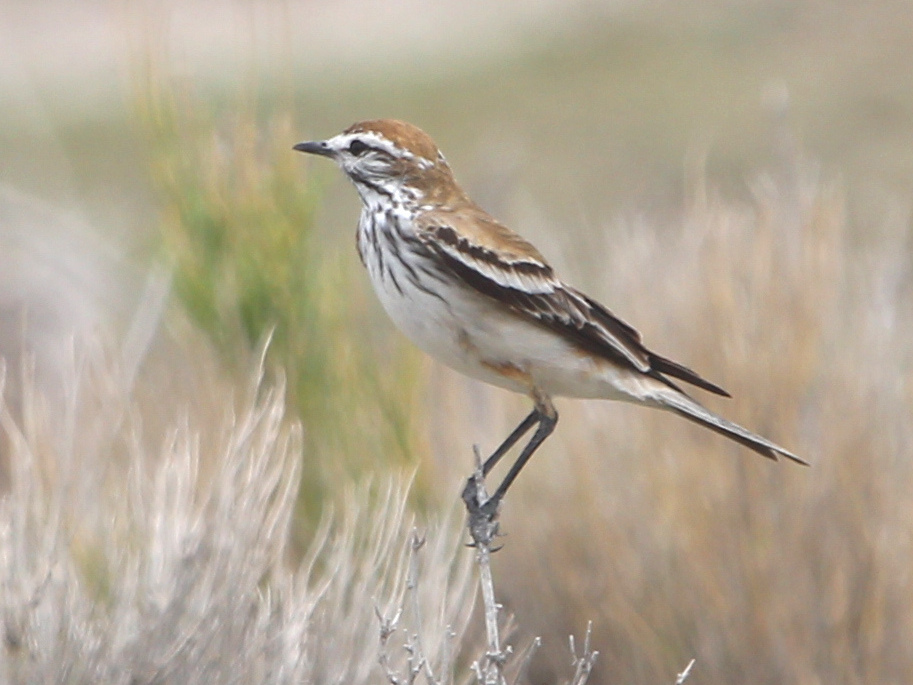
White-rumped Monjita
Xolmis velatus
Order: Passeriformes / Family: Tyrannidae

Wikimedia Commons
About the White-rumped Monjita
The White-rumped Monjita (Xolmis velatus) is a charismatic bird belonging to the Tyrannidae family, commonly found throughout open landscapes in South America. This species holds particular significance for birdwatchers due to its distinctive coloration and dynamic behavior. It thrives in grasslands, savannas, and scrublands, with a strong presence in countries like Brazil, Argentina, Uruguay, and Paraguay. The White-rumped Monjita is an important part of the ecosystem, serving as both predator and prey, and contributes to the balance of insect populations in its habitats. During the breeding season, this monjita displays striking aerial acrobatics, a behavior that not only aids in mate attraction but also in territorial defense. Seasonal changes influence its behavior, with breeding activities peaking during the spring and summer months from September to March in the Southern Hemisphere. The bird's adaptability to different open environments underscores its resilience, yet it remains sensitive to changes in land use practices such as agriculture and urban development. Its role as an insectivore makes it a crucial participant in controlling local insect populations, which can have cascading effects on plant health and agricultural yields. Observers often find the White-rumped Monjita perched prominently on fence posts or low shrubs, from where it launches quick flights to capture insects. This foraging strategy ensures efficiency and maximizes its energy expenditure.
The White-rumped Monjita belongs to the family Tyrannidae, within the order Passeriformes. These birds typically live average 6 years with a maximum recorded of 10 years..
How to Identify a White-rumped Monjita
The White-rumped Monjita is easily recognized by its contrasting plumage. Adults display a predominantly gray body, with stark white on the rump and underparts. The wings are black with a white patch, especially noticeable in flight. The tail is long and features a broad white band at the base, further accentuating the white rump. Juveniles resemble adults but may have a slightly browner hue and less distinct wing markings. Both males and females appear similar, though males may exhibit slightly bolder coloration during the breeding season. The White-rumped Monjita's flight silhouette is distinctive due to its long wings and tail, which give it a buoyant, agile flight pattern. When perched, it maintains an upright stance, often on exposed perches like fence posts. This posture, combined with its striking coloration, makes it relatively easy to spot in its open habitat. The bird could be confused with similar species like the Black-and-white Monjita, but the latter lacks the extensive white rump and has a more restricted range.
Having trouble telling birds apart? Upload a photo to our bird identification tool for an instant species match.
White-rumped Monjita Habitat and Range
Preferred Habitat
The White-rumped Monjita thrives in open habitats such as grasslands, savannas, and agricultural areas. It favors low elevations, typically below 1,200 meters, where it can find ample perching spots and open spaces for foraging. This species readily adapts to modified habitats, including pastures and farmland, provided there are scattered trees or shrubs for nesting and perching. During different seasons, its habitat preferences remain relatively stable, though it may move slightly in response to local food availability. In urban environments, the White-rumped Monjita can occasionally be found in parks and gardens, particularly those adjacent to open countryside, where it exploits the open spaces for hunting.
Geographic Range
The range of the White-rumped Monjita spans several South American countries, including Brazil, Argentina, Uruguay, and Paraguay. It is a resident species, meaning it does not undergo long-distance migrations, although it may exhibit some local movements in response to ecological conditions. The species is particularly abundant in the Pampas region of Argentina and the Cerrado of Brazil, where it finds optimal conditions in the extensive grasslands. In these areas, the population density is higher, making these regions hotspots for observing the species. Its distribution does not extend to high-altitude regions or dense forests, which are unsuitable for its lifestyle.
Want to know which birds visit your area? Browse our backyard birds by location guides for region-specific species lists.
What Does the White-rumped Monjita Eat?
The White-rumped Monjita primarily feeds on insects, which it captures using a sit-and-wait strategy from a perch. Its diet includes a variety of insects such as beetles, grasshoppers, and flies. During the breeding season, the bird’s consumption of protein-rich insects increases to support the nutritional demands of raising young. It occasionally supplements its diet with small fruits or seeds, especially during periods when insects are less abundant. The bird typically forages during daylight hours, with peak activity in the early morning and late afternoon, coinciding with the highest insect activity. Prey size generally ranges from small to medium-sized insects, with the bird often engaging in aerial sallies to capture its prey mid-flight.
White-rumped Monjita Behavior and Social Structure
The White-rumped Monjita exhibits a solitary or paired lifestyle, with pronounced territorial behavior during the breeding season. Males engage in aerial displays to assert dominance and attract mates, often involving intricate flights and vocalizations. The species is largely monogamous, with pairs establishing territories that they defend vigorously from intruders. Outside the breeding season, the White-rumped Monjita may form loose flocks, especially when food resources are concentrated. Its response to predators includes alarm calls and evasive flight, often seeking cover in dense shrubbery. Daily activity patterns revolve around foraging and territory maintenance, with periods of rest during the hottest part of the day. The bird’s adaptability to changing environments allows it to exploit a variety of habitats, though it remains vigilant against potential threats.
White-rumped Monjita Nesting and Reproduction
The White-rumped Monjita constructs cup-shaped nests using twigs, grasses, and rootlets, often lined with softer materials such as feathers or wool. These nests are typically situated in low shrubs or trees, sometimes as high as 5 meters above the ground. The species prefers locations with a clear line of sight to monitor for predators. Clutch size ranges from 2 to 4 eggs, which are incubated by the female for about 14 to 16 days. Both parents participate in feeding the chicks, which fledge approximately 18 to 21 days after hatching. The White-rumped Monjita can raise two broods per year, depending on environmental conditions and food availability.
White-rumped Monjita Sounds and Vocalizations
The primary song of the White-rumped Monjita is a series of short, melodious notes delivered in rapid succession. Its pitch is relatively high, with a clear and crisp quality. Call notes consist of simple, sharp 'chip' sounds, used frequently during interactions with conspecifics or when alarmed. Alarm calls are louder and more urgent, serving to alert others of potential threats. During the dawn chorus, this monjita contributes its voice to the symphony of sounds, though its song remains distinct due to its repetitive pattern. Compared to other local species, its vocalizations carry well across its open habitats.
Interesting Facts About the White-rumped Monjita
- 1The White-rumped Monjita can often be seen performing acrobatic flights to catch insects mid-air, showcasing its agility.
- 2This bird's name, 'Monjita,' is derived from Spanish, meaning 'little nun' due to its striking black and white plumage.
- 3The White-rumped Monjita exhibits remarkable adaptability, thriving in both natural and modified landscapes such as pastures.
- 4Typical territories for breeding pairs can cover several hectares, providing ample foraging and nesting space.
- 5Its preferred nesting sites are in low shrubs or trees, often with a wide view to detect approaching predators.
- 6The White-rumped Monjita plays a crucial role in controlling insect populations, benefiting agricultural areas.
- 7Although primarily insectivorous, this bird occasionally consumes small fruits, especially when insects are scarce.
White-rumped Monjita Conservation Status
The White-rumped Monjita is currently listed as Least Concern by the IUCN, with a population trend that appears stable. Despite this, habitat loss due to agricultural expansion and urbanization poses ongoing threats. Conservation efforts focus on habitat preservation and sustainable land management. Historically, the species has maintained a stable population, though localized declines have occurred in areas of intense human activity. Continued monitoring and habitat conservation are essential to ensure the longevity of this species.
Other Tyrannidae Species


Birds Similar to the White-rumped Monjita
These species are often confused with the White-rumped Monjita due to similar appearance or overlapping range.