
White-tailed Robin
Myiomela leucura
Order: Passeriformes / Family: Muscicapidae

Wikimedia Commons
About the White-tailed Robin
The White-tailed Robin, known scientifically as Myiomela leucura, is a captivating bird species belonging to the Muscicapidae family. This bird is predominantly found in the lush montane forests of Southeast Asia, stretching from the eastern Himalayas across to Taiwan and Southeast China. Its presence in these regions underscores its adaptability to dense, humid environments, where it plays an integral role in the ecosystem by controlling insect populations. The White-tailed Robin is recognized for its vital ecological role, acting as both predator and prey within its habitat. By feeding on a variety of insects, it helps maintain the balance of the forest ecosystem, while also serving as a food source for larger predators.
During the breeding season, the White-tailed Robin inhabits higher elevations, often choosing areas between 1,000 to 3,000 meters above sea level. This preference for cooler, elevated regions during breeding is common among birds in the Muscicapidae family. As seasons change, the White-tailed Robin may descend to lower elevations in search of food, showcasing its adaptability to varying climates and altitudes. This seasonal migration is crucial for its survival, allowing it to exploit different resources and avoid harsher weather conditions.
The White-tailed Robin's singing is most prominent during dawn and dusk, a behavior that not only marks its territory but also plays a role in courtship. Its song is a melodious series of whistles and trills, which can be heard echoing through the forest. These vocalizations are vital for communication among individuals, especially during the breeding season. By contributing to the auditory landscape of the forest, the White-tailed Robin enhances the diversity and richness of its habitat. This bird, with its striking appearance and significant ecological contributions, remains a subject of interest for both ornithologists and bird enthusiasts alike.
The White-tailed Robin belongs to the family Muscicapidae, within the order Passeriformes. These birds typically live average 6-8 years with a maximum recorded of 11 years.
How to Identify a White-tailed Robin
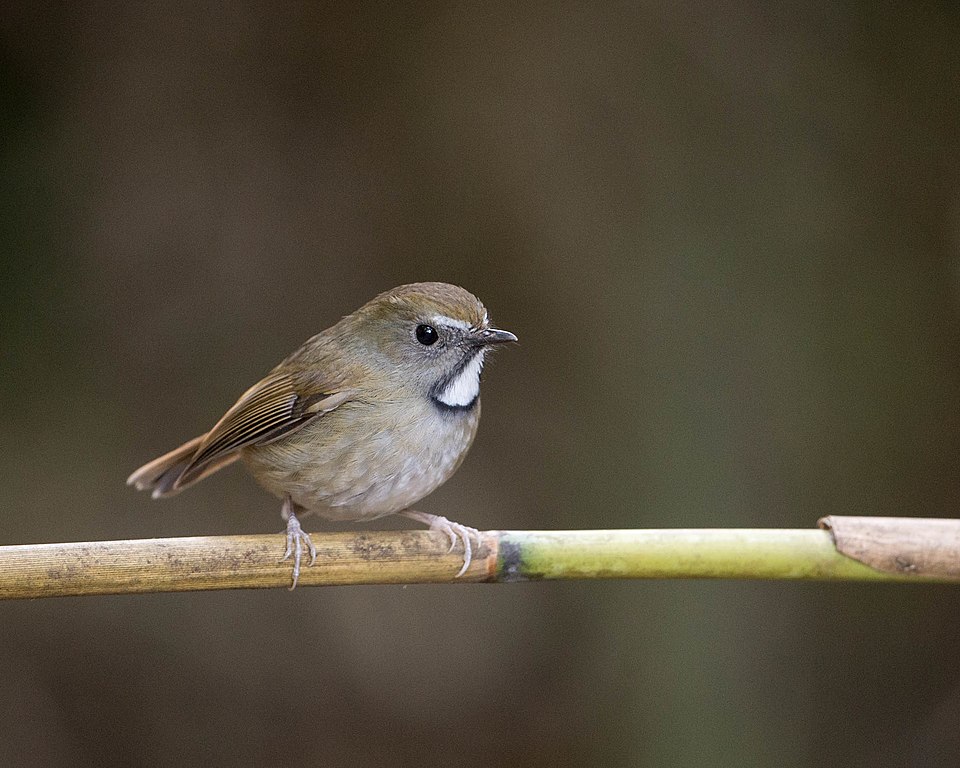
The White-tailed Robin is medium-sized, measuring about 18-20 cm in length. The adult male exhibits a striking contrast with its dark blue-black body and vivid white tail feathers, a feature that is most visible in flight or when the bird fans its tail during displays. The male's head and shoulders are a deep, glossy blue, which can appear almost black in dim light.
Females and juveniles differ markedly from males. Females have a more subdued coloration, with brownish upperparts and pale buff underparts. The white tail remains a consistent identifying feature across sexes and ages, providing a reliable field mark. Juveniles resemble females but exhibit faint streaks on their underparts, a characteristic that fades as they mature.
In flight, the White-tailed Robin shows a compact silhouette with a relatively short tail compared to other robins. Its posture when perched is upright, often found sitting quietly in dense underbrush or low branches. This bird can be confused with other robin species, but the distinctive white tail and the male's iridescent blue plumage are key differentiators.
Having trouble telling birds apart? Upload a photo to our bird identification tool for an instant species match.
White-tailed Robin Habitat and Range
Preferred Habitat
The White-tailed Robin thrives in dense montane forests, preferring areas with substantial undergrowth. It is predominantly found in regions such as the Eastern Himalayas, Southern China, and parts of Southeast Asia. These forests provide the bird with ample cover and food resources, crucial for its survival.
The bird's elevation range typically spans 1,000 to 3,000 meters, though it may venture to lower elevations outside the breeding season. This adaptability allows the White-tailed Robin to exploit different habitats depending on resource availability and climatic conditions.
In terms of urban presence, the White-tailed Robin is generally absent from heavily populated areas, preferring the tranquility and protection offered by forested environments. However, it may occasionally be found in rural gardens or parks that mimic its natural habitat.
Geographic Range
The breeding range of the White-tailed Robin covers a broad expanse from the eastern Himalayas through Yunnan in China and into Southeast Asia, including countries like Thailand, Vietnam, and Laos. Its presence in Taiwan also marks a significant range extension.
During the non-breeding season, the White-tailed Robin may move to lower altitudes, expanding its range slightly as it seeks out more temperate conditions. This altitudinal migration allows it to avoid the cold of higher elevations and capitalize on food availability in warmer regions.
Population density is generally highest in areas where pristine montane forests remain intact. The bird's distribution is patchy, heavily influenced by the availability of suitable habitats, with some hotspots in protected forest reserves and national parks.
Want to know which birds visit your area? Browse our backyard birds by location guides for region-specific species lists.
What Does the White-tailed Robin Eat?
The White-tailed Robin primarily feeds on insects, playing an important role as an insectivore within its ecosystem. Its diet comprises beetles, caterpillars, and various arthropods, which it captures by foraging through the underbrush and leaf litter.
In addition to insects, the White-tailed Robin may also consume small fruits and berries, especially during the non-breeding season when insect abundance may decrease. This dietary flexibility is crucial for its survival across different seasons and habitats.
The bird typically forages alone or in pairs, showing a preference for low to mid-level foliage where it can deftly pick off its prey. Its foraging activity peaks during the early morning and late afternoon, aligning with the times when its insect prey is most active.
White-tailed Robin Behavior and Social Structure
The White-tailed Robin exhibits solitary or loosely paired behavior, particularly during the breeding season when it becomes territorial. Males sing vigorously to establish and defend territories, using their melodious calls to ward off rivals and attract mates.
Courtship displays include fanning their striking white tail feathers and engaging in aerial chases, behaviors that highlight both strength and agility to potential mates. Outside the breeding season, the White-tailed Robin may form small flocks with other insectivorous birds, a behavior that enhances foraging efficiency.
In response to predators, the White-tailed Robin relies on its agility and dense habitat for protection. It tends to be more active during crepuscular hours, reducing the likelihood of encountering diurnal predators. This bird exhibits a predictable daily routine, with peaks in activity during the cooler parts of the day.
White-tailed Robin Nesting and Reproduction
The White-tailed Robin typically constructs its nest in dense underbrush or low tree branches, utilizing natural cavities or rock crevices for additional protection. The nest is cup-shaped, made from moss, leaves, and twigs, which camouflages it effectively within the forest.
Clutch size generally ranges from two to three eggs, with both parents involved in incubation and feeding of the young. The incubation period lasts approximately 12-14 days, after which the chicks hatch and require constant feeding and care.
Fledging occurs about two weeks after hatching, with the young being dependent on their parents for several weeks post-fledging. The White-tailed Robin typically raises one or two broods per year, depending on environmental conditions and food availability.
White-tailed Robin Sounds and Vocalizations
The primary song of the White-tailed Robin is a series of melodious whistles and trills, delivered with a clear, resonant quality. These songs serve multiple purposes, from territory establishment to mate attraction.
Call notes are shorter, consisting of sharp 'tik-tik' sounds, often used to communicate with mates or alert others to potential threats. Alarm calls are harsher, more frantic, and can trigger a communal response among nearby birds.
During the dawn chorus, the White-tailed Robin's song can be heard prominently, adding to the rich tapestry of forest sounds. Its vocalizations are an integral part of its behavioral repertoire, providing insights into its social interactions and environmental awareness.
Interesting Facts About the White-tailed Robin
- 1The White-tailed Robin's song can be heard up to 200 meters away, making it one of the more prominent singers in its habitat.
- 2Despite its name, the White-tailed Robin's tail is not entirely white; only the outer tail feathers are white.
- 3This bird species is known to participate in mixed-species flocks, enhancing its foraging success in diverse environments.
- 4The White-tailed Robin's striking plumage makes it a favorite among birdwatchers in its native range.
- 5Its preference for dense undergrowth makes it less likely to be spotted, despite its relatively common status.
- 6The White-tailed Robin's diet shifts seasonally, demonstrating its adaptability to changing food resources.
- 7Courtship displays involve elaborate tail fanning, highlighting the bird's unique plumage to potential mates.
White-tailed Robin Conservation Status
Currently, the IUCN lists the White-tailed Robin as a species of Least Concern, indicating a stable population. However, habitat destruction due to logging and agricultural expansion poses a significant threat to its natural habitats. Conservation efforts focus on preserving forest habitats through protected areas and sustainable land-use practices. Historical population trends show resilience, but continued vigilance is necessary to mitigate future risks. Efforts to raise awareness and promote ecotourism in regions inhabited by the White-tailed Robin can help bolster local economies while ensuring the conservation of its habitats.
Other Muscicapidae Species


Birds Similar to the White-tailed Robin
These species are often confused with the White-tailed Robin due to similar appearance or overlapping range.
