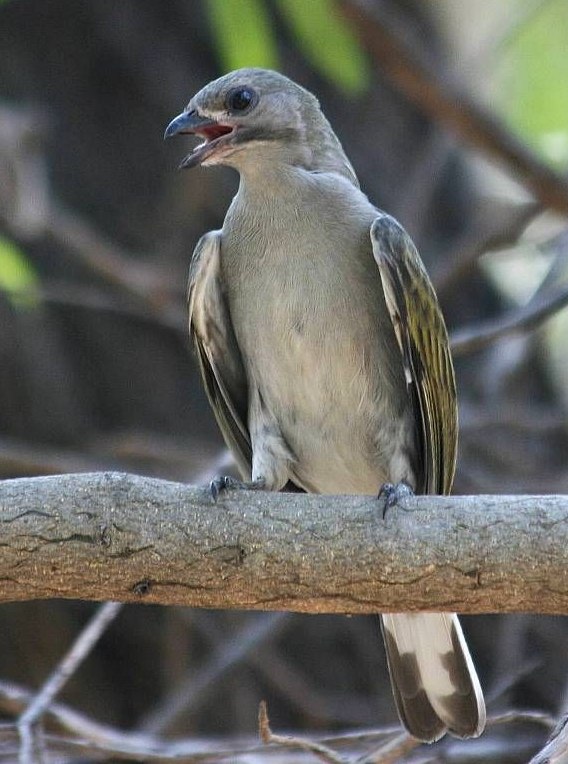
White-throated Bee-eater
Merops albicollis
Order: Coraciiformes / Family: Meropidae

Wikimedia Commons
About the White-throated Bee-eater
The White-throated Bee-eater (Merops albicollis) is a captivating member of the Meropidae family, recognized for its vibrant plumage and agile flight. This species frequents a variety of African landscapes, including savannas, woodlands, and scrublands. Its presence extends from the Sahel region of West Africa across to Ethiopia and southwards to Uganda and Kenya, making it a widespread and prominent avian member in these regions.
As a migratory bird, the White-throated Bee-eater exhibits intriguing seasonal behaviors. During the breeding season, which spans from March to May, these bee-eaters can be observed in large numbers in their breeding habitats, where they establish colonies that can number in the hundreds. Outside the breeding season, they embark on significant migrations, moving southward to avoid the harsher conditions of the Sahelian dry season, typically traveling to equatorial regions with more favorable climates.
Ecologically, the White-throated Bee-eater plays a significant role as an insectivore. By controlling insect populations, particularly bees and other flying insects, it helps maintain ecological balance in its habitat. Its presence is indicative of healthy ecosystems, and its vibrant appearance and dynamic social behaviors make it a popular subject of study and interest among birders and ornithologists alike. The species' adaptability to various environments and its migratory lifestyle demonstrate its resilience and ecological importance across its range.
The White-throated Bee-eater belongs to the family Meropidae, within the order Coraciiformes. These birds typically live average 6-8 years, with a maximum recorded of 10 years..
How to Identify a White-throated Bee-eater
The White-throated Bee-eater is distinguished by its striking white throat, which contrasts vividly with its green and blue plumage. Adult birds exhibit a combination of bright green upperparts and a blue rump, with a distinctive black eye stripe that extends through the eyes and down the neck. The underparts are primarily white, with subtle hints of buff on the belly and flanks.
In terms of sexual dimorphism, there are no significant differences between males and females, making field identification by gender challenging. Juvenile birds, however, can be identified by their less vivid plumage. They display a paler version of the adult's colors and lack the fully developed tail streamers seen in mature individuals.
The bird's silhouette in flight is unmistakable, characterized by its slender body, pointed wings, and elongated tail feathers that form streamers. This flight profile, combined with its agile aerial maneuvers, makes the White-throated Bee-eater a captivating sight in open habitats. When perched, it often adopts a horizontal posture, showcasing its long tail and vibrant coloration.
Having trouble telling birds apart? Upload a photo to our bird identification tool for an instant species match.
White-throated Bee-eater Habitat and Range
Preferred Habitat
The White-throated Bee-eater inhabits a variety of habitats, primarily favoring open woodlands, savannas, and scrublands. These environments provide abundant insect prey and suitable nesting sites. In West Africa, it is commonly found in the Sahel region, where it utilizes the scattered trees and shrubs typical of this semi-arid zone.
During the breeding season, the species prefers areas with sandy soils, which facilitate the excavation of its burrows. In non-breeding months, it migrates to more humid regions, such as the savannas and woodlands of equatorial Africa, where it can find consistent food sources.
While the White-throated Bee-eater is primarily associated with rural and natural environments, it occasionally ventures into suburban areas with suitable vegetation, illustrating its adaptability to different habitats throughout its range.
Geographic Range
The White-throated Bee-eater's breeding range extends across a broad swath of sub-Saharan Africa, from Senegal and Gambia in the west to Ethiopia in the east. During the breeding season, these birds concentrate in the Sahel, a region characterized by its transitional landscapes between the Sahara Desert to the north and the more verdant savannas to the south.
As the dry season approaches, the White-throated Bee-eater undertakes a substantial southward migration. Its wintering range includes the wetter regions of central and eastern Africa, with significant populations found in countries like Kenya, Uganda, and the Democratic Republic of the Congo. Here, the species takes advantage of the abundant food resources and favorable climatic conditions.
Migration corridors are somewhat variable, but the bird typically follows pathways that provide suitable stopover habitats to rest and refuel. With its extensive range, the White-throated Bee-eater is a familiar sight across much of Africa, demonstrating its adaptability and resilience.
Want to know which birds visit your area? Browse our backyard birds by location guides for region-specific species lists.
What Does the White-throated Bee-eater Eat?
The diet of the White-throated Bee-eater primarily consists of flying insects, with a strong preference for bees and wasps. This dietary choice is reflected in its common name. Using its agile flight capabilities and acute eyesight, the bee-eater captures insects in mid-air, often performing acrobatic maneuvers to snatch its prey.
During different seasons, the bird may adjust its diet slightly based on prey availability. While bees and wasps remain staples, it also consumes other insects such as dragonflies, butterflies, and beetles. The White-throated Bee-eater typically forages in open areas, often returning to a favored perch to consume its catch.
Feeding often occurs in the early morning and late afternoon when insect activity is highest. The bird uses its sharp bill to deftly remove stingers from bees and wasps before consuming them, showcasing a specialized adaptation that allows it to handle potentially dangerous prey.
White-throated Bee-eater Behavior and Social Structure
White-throated Bee-eaters are highly social birds, often seen in flocks that can number from a few dozen to several hundred individuals. During the breeding season, they form large colonies where social interactions are frequent and complex.
Territorial behavior is prominent during breeding, with pairs aggressively defending nesting sites against intruders. Courtship displays include aerial chases and synchronized flights, often accompanied by vocalizations to strengthen pair bonds.
Outside the breeding season, these bee-eaters are less territorial and more focused on foraging and migration. They exhibit flocking behavior during migration, which provides safety in numbers against predators such as raptors. The birds are diurnal, with activity peaks during early morning and late afternoon, coinciding with insect activity.
In response to predators, White-throated Bee-eaters rely on their agile flight for evasion. When threatened, they emit alarm calls to alert other members of the flock, showcasing their cooperative social structure.
White-throated Bee-eater Nesting and Reproduction
White-throated Bee-eaters are burrow nesters, typically choosing sandy banks or flat, sandy ground to excavate their burrows. These burrows can be up to 1-2 meters in length, terminating in a nesting chamber where the eggs are laid.
The breeding season occurs from March to May, coinciding with the onset of the rainy season in many parts of their range, which provides ample food resources. A typical clutch consists of 4 to 7 eggs, which are incubated by both parents over approximately 20-23 days.
After hatching, the nestlings are fed and cared for by both parents, sometimes with assistance from other colony members, a behavior known as cooperative breeding. Fledging occurs about 30 days after hatching, with young birds remaining dependent on their parents for several more weeks.
Typically, White-throated Bee-eaters raise one brood per year, although favorable conditions can sometimes lead to a second brood. Their burrowing nesting strategy provides some protection from predators, although the nests are still vulnerable to flooding and collapse.
White-throated Bee-eater Sounds and Vocalizations
The primary song of the White-throated Bee-eater is a series of quick, melodic whistles, often described as 'prip-prip-prip' or 'peep-peep-peep.' These calls are usually heard during flight or when the birds are perched in groups, serving both as communication within the flock and as territorial advertisements.
In addition to their melodious song, these bee-eaters produce a variety of call notes, including sharp, high-pitched 'tzit' sounds used as alarm calls when predators are near. These alarm calls are crucial for maintaining group cohesion and alerting others to potential dangers.
During the dawn chorus, White-throated Bee-eaters are particularly vocal, filling the air with their rhythmic calls, which can be heard over considerable distances. These vocalizations are an integral part of their social interactions, helping to reinforce social bonds and maintain group structure.
Interesting Facts About the White-throated Bee-eater
- 1White-throated Bee-eaters can catch insects mid-air with remarkable precision, an adaptation that supports their insectivorous diet.
- 2During migration, White-throated Bee-eaters can travel hundreds of kilometers, showcasing impressive endurance and navigation skills.
- 3These bee-eaters exhibit cooperative breeding, where non-breeding individuals help care for young, a rare behavior among birds.
- 4The species' vibrant plumage provides excellent camouflage in dappled sunlight, blending seamlessly with the foliage.
- 5White-throated Bee-eaters are known to participate in mixed-species flocks, enhancing foraging efficiency and predator vigilance.
- 6Their burrow nests, while protective, require constant maintenance to prevent collapse, especially during heavy rains.
- 7The White-throated Bee-eater's call is often likened to a musical whistle, adding a lively soundtrack to African landscapes.
White-throated Bee-eater Conservation Status
The White-throated Bee-eater is currently listed as 'Least Concern' by the IUCN, with a stable population trend. Despite this status, the species faces several threats, including habitat loss and degradation due to agricultural expansion and urbanization. Conservation efforts focus on preserving critical habitats, particularly in regions where environmental changes threaten their breeding and foraging grounds. Protected areas and reserves play a significant role in safeguarding these environments. Historically, populations have fluctuated in response to environmental conditions, but the species' adaptability and wide range have helped it maintain relative stability. Ongoing monitoring and habitat protection remain crucial to ensure the continued health and vitality of White-throated Bee-eater populations across Africa.