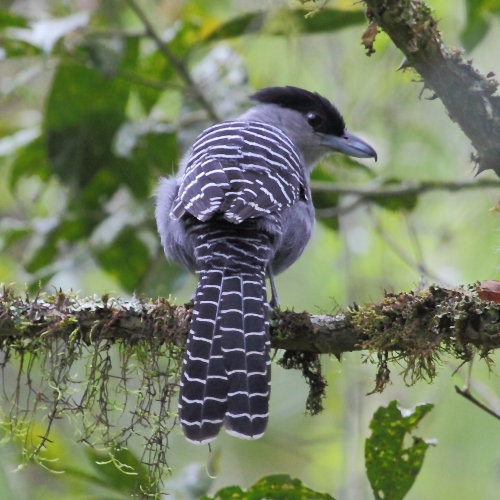
Yellow-browed Antbird
Hypocnemis hypoxantha
Order: Passeriformes / Family: Thamnophilidae

Wikimedia Commons
About the Yellow-browed Antbird
The Yellow-browed Antbird, scientifically referred to as Hypocnemis hypoxantha, is a striking avian resident of the humid lowland forests of South America. Predominantly found in the lush rainforests of the Amazon Basin, this species is particularly abundant in regions such as the eastern parts of Peru, the western areas of Brazil, and parts of Bolivia. These birds play a vital role in the ecosystem as insectivorous members of the forest understory, helping to control insect populations and contributing to the complex web of life within their habitat. The significance of the Yellow-browed Antbird extends beyond its ecological role, as it serves as an indicator of forest health and biodiversity. As a member of the Thamnophilidae family, this antbird is one of the many species that thrive in the dense, tangled undergrowth of tropical forests. This habitat preference means the Yellow-browed Antbird is seldom seen in open areas, instead preferring the shelter and resources that dense forests provide. Seasonal behaviors of the Yellow-browed Antbird include shifts in territoriality, which become more pronounced during the breeding season when males sing vigorously to establish and defend their territories. Their song is a crucial part of their breeding behavior, as it not only marks territory but also attracts potential mates. The Yellow-browed Antbird's ecological role is further highlighted by its interactions with other species. It often participates in mixed-species foraging flocks, a cooperative behavior that increases foraging efficiency and reduces the risk of predation. By moving with these flocks, the Yellow-browed Antbird can access a broader range of food resources and habitats. This behavior also underscores the bird's adaptability and its importance in maintaining the intricate balance of tropical forest ecosystems.
The Yellow-browed Antbird belongs to the family Thamnophilidae, within the order Passeriformes. These birds typically live 5 years with a maximum recorded of 8 years.
How to Identify a Yellow-browed Antbird
The Yellow-browed Antbird is a small passerine, with a total length of approximately 12 to 13 cm and a weight around 15 grams. Adult males boast a distinctive yellow supercilium, or eyebrow, which gives the species its common name. Their plumage is predominantly olive-brown, with brighter yellow tones on the breast and underparts. Females are similar but often display slightly duller coloration, lacking the vividness of the male's yellow markings. Juveniles resemble females but with more muted tones and less defined patterns. Differentiating between males and females requires careful observation of their plumage brightness and the extent of the yellow brow. In terms of field marks, the Yellow-browed Antbird can be confused with similar species such as the Yellow-throated Antbird (Hypocnemis cantator), but the latter lacks the prominent yellow brow and displays more extensive yellow on the throat. In flight, the Yellow-browed Antbird presents a compact silhouette with rapid wingbeats, typical of many understory-dwelling birds. When perching, it adopts a slightly hunched posture, often remaining still and blending into the surrounding foliage. Its behavior, combined with its distinct vocalizations, aids birders in identifying this elusive species within its dense habitat.
Having trouble telling birds apart? Upload a photo to our bird identification tool for an instant species match.
Yellow-browed Antbird Habitat and Range
Preferred Habitat
The Yellow-browed Antbird thrives in the understory of humid lowland rainforests, particularly within the Amazon Basin. Preferring forests with dense undergrowth and abundant leaf litter, it is often found in areas with high canopy coverage. These birds inhabit elevations typically below 500 meters, with a strong preference for primary forests. Secondary forests can also host these antbirds, provided there is adequate understory and minimal human disturbance. Seasonal shifts in habitat use are minimal, as the species remains largely sedentary throughout the year. Urban presence is virtually nonexistent due to its reliance on dense, undisturbed forest habitats. However, small populations may adapt to forest edges, especially where secondary growth is present, allowing some degree of flexibility in their habitat preferences.
Geographic Range
The Yellow-browed Antbird's range is confined to the Amazon Basin, covering territories in eastern Peru, western Brazil, and parts of northern Bolivia. This species is a year-round resident, with no significant migratory movements observed. It occupies a relatively narrow geographical range within the tropical forests of South America. In Peru, it is commonly found in the department of Loreto, while in Brazil, it inhabits the states of Acre and Amazonas. Population densities are highest in regions with well-preserved forest habitats, where they can be locally common. Unlike many migratory species, the Yellow-browed Antbird does not travel long distances, instead relying on the rich resources of the Amazonian forests to sustain its populations throughout the year.
Want to know which birds visit your area? Browse our backyard birds by location guides for region-specific species lists.
What Does the Yellow-browed Antbird Eat?
As an insectivorous species, the Yellow-browed Antbird primarily feeds on a variety of arthropods, including ants, beetles, spiders, and caterpillars. Its diet may shift slightly with seasonal changes, adapting to the availability of prey items within its habitat. During the wet season, when insect populations peak, the antbird can exploit a more diverse array of food sources. Foraging techniques include gleaning insects from leaves and branches, as well as frequent ground foraging amidst leaf litter. The Yellow-browed Antbird often joins mixed-species flocks, enhancing its foraging success through cooperative behavior. Prey size typically ranges from small to medium-sized insects, with the bird employing a quick, darting motion to capture its prey. Feeding occurs predominantly during daylight hours, with peaks in activity during the early morning and late afternoon.
Yellow-browed Antbird Behavior and Social Structure
The social structure of the Yellow-browed Antbird revolves around monogamous pairs, which maintain territories year-round. Territorial behavior becomes especially prominent during the breeding season, as males actively sing to delineate their territory and attract mates. Courtship displays involve vocalizations and visual signals, with the male showcasing his plumage through subtle movements. Flocking patterns include participation in mixed-species foraging flocks, a behavior that enhances foraging efficiency and predator avoidance. The Yellow-browed Antbird displays a keen awareness of its surroundings, often responding to potential threats with alarm calls and evasive maneuvers. Daily activity patterns reveal peaks in foraging and vocalization during the early morning and late afternoon, with periods of rest during the hottest parts of the day. This behavior ensures energy conservation while maximizing feeding opportunities.
Yellow-browed Antbird Nesting and Reproduction
The nesting habits of the Yellow-browed Antbird are characterized by the construction of cup-shaped nests, typically situated in low vegetation or shrubbery. These nests are woven from plant fibers, leaves, and other organic materials, providing a secure environment for the eggs and chicks. Preferred nesting locations are often hidden within dense foliage, offering protection from predators. Clutch size generally consists of two eggs, with an incubation period of approximately 14 days. Both parents participate in incubation duties and subsequent feeding of the chicks. The fledging period lasts around 10 to 12 days, after which the chicks continue to receive parental care while they develop independence. The Yellow-browed Antbird typically raises one or two broods per breeding season, depending on environmental conditions and resource availability.
Yellow-browed Antbird Sounds and Vocalizations
The primary song of the Yellow-browed Antbird is a series of clear, melodious whistles, delivered in a rhythmic pattern. This song serves both territorial and courtship purposes. The pitch is medium, with a slightly descending quality that distinguishes it from other antbird species. Call notes are more abrupt, often used as contact calls between mates or within flocks. Alarm calls are sharp and urgent, alerting others to potential dangers. During the dawn chorus, the Yellow-browed Antbird's song is a prominent feature of the forest soundscape, contributing to the rich auditory tapestry of the Amazonian ecosystem.
Interesting Facts About the Yellow-browed Antbird
- 1The Yellow-browed Antbird often joins mixed-species flocks, enhancing its foraging success and reducing predation risk.
- 2Despite its vibrant plumage, the Yellow-browed Antbird is adept at blending into the forest understory, making it challenging to spot.
- 3The species is known for its cooperative breeding behavior, with both parents actively involved in raising the young.
- 4The Yellow-browed Antbird plays a crucial role in controlling insect populations within its habitat, contributing to ecological balance.
- 5Research shows that the Yellow-browed Antbird's song can carry up to 100 meters through dense forest, aiding in territory defense and mate attraction.
Yellow-browed Antbird Conservation Status
Currently, the Yellow-browed Antbird is listed as Least Concern on the IUCN Red List, with a stable population trend. However, habitat loss due to deforestation poses a significant threat to its long-term survival. Conservation efforts focus on preserving large tracts of intact forest within the Amazon Basin, as well as implementing sustainable land-use practices. Historical population changes indicate that the species has remained relatively stable, but ongoing monitoring is essential to ensure its continued well-being. Protecting the forests these birds inhabit is crucial for maintaining biodiversity and ecological integrity in the region.