
Yellow-footed Flycatcher
Muscicapa sethsmithi
Order: Passeriformes / Family: Muscicapidae

Wikimedia Commons
About the Yellow-footed Flycatcher
The Yellow-footed Flycatcher, or Muscicapa sethsmithi, is a small passerine bird belonging to the family Muscicapidae. This species inhabits the dense tropical forests of Central Africa, with notable populations in countries like Cameroon, Gabon, and the Democratic Republic of the Congo. As a member of the Old World flycatchers, this bird plays a crucial role in maintaining the ecological balance of its habitat by controlling insect populations.
This flycatcher is a largely unobtrusive bird, often going unnoticed due to its secretive behavior and preference for the forest canopy. Its presence is most often revealed by its distinctive calls and songs, which echo through the verdant foliage. Despite its shyness, the Yellow-footed Flycatcher is an essential part of the forest ecosystem, serving as both predator and prey. The bird's significance extends beyond its ecological role; it is also a valuable species for ornithologists and birdwatchers due to its limited range and the challenges involved in observing it in its natural habitat.
Ecologically, the Yellow-footed Flycatcher contributes to the health of forest ecosystems by preying on insects, thus controlling potential pest populations. This role of pest control is particularly important during the rainy season when insect populations peak. Throughout the year, the bird's movements may be somewhat altitudinal, moving to higher elevations during certain times to exploit seasonal insect blooms. While not migratory in the traditional sense, these movements are vital for the flycatcher's survival and reproductive success.
Overall, the Yellow-footed Flycatcher is a keystone species within its forest habitats, contributing to the biodiversity and ecological stability of the regions it inhabits. Its presence indicates a healthy, vibrant ecosystem, where diverse flora and fauna coexist, maintaining the intricate web of life in Central Africa's tropical forests.
The Yellow-footed Flycatcher belongs to the family Muscicapidae, within the order Passeriformes. These birds typically live average 4-6 years, with limited data on maximum lifespan..
How to Identify a Yellow-footed Flycatcher
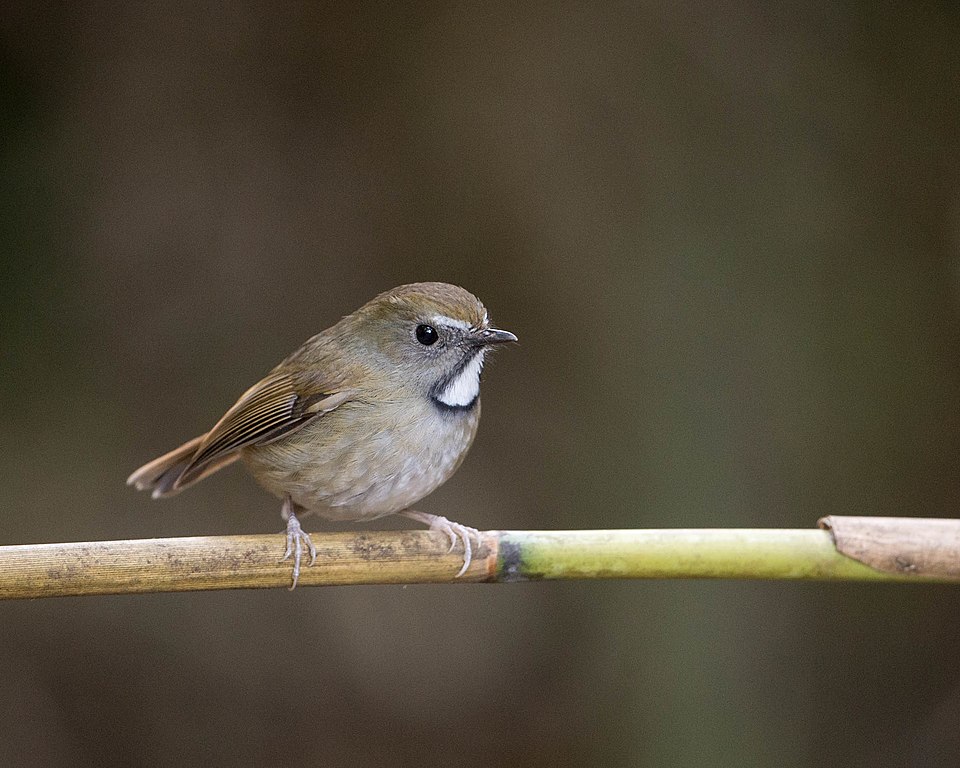
The Yellow-footed Flycatcher is easily identifiable by its striking yellow legs, a rare trait among its relatives in the Muscicapidae family. Adult birds exhibit a subtle combination of olive-brown upperparts and pale underparts, which provides excellent camouflage against the forest backdrop. The head is adorned with a slight crest, giving it a distinctive silhouette when perched.
Sexual dimorphism is not pronounced in this species, with males and females appearing quite similar. Juveniles, however, can be distinguished by their more subdued plumage, exhibiting a less defined contrast between the upper and lower parts. Their legs, though yellow, may appear slightly duller compared to adults.
In flight, the Yellow-footed Flycatcher displays agile, acrobatic maneuvers, often making quick darts to catch insects mid-air. Its perching posture is upright, often seen sallying forth from a perch before returning to the same spot or a nearby branch. This bird is sometimes confused with other small flycatchers in its region, but its yellow legs and distinctive foraging style aid in its identification.
Having trouble telling birds apart? Upload a photo to our bird identification tool for an instant species match.
Yellow-footed Flycatcher Habitat and Range
Preferred Habitat
The Yellow-footed Flycatcher thrives in the lush, tropical forests of Central Africa. It is primarily found in lowland evergreen forests, where dense canopies provide the ideal environment for its insectivorous diet. These environments are rich in biodiversity, offering ample opportunities for feeding and nesting.
The bird is also known to inhabit forest edges and secondary growth areas, demonstrating some adaptability to human-altered landscapes. However, it is rarely found in open areas or urban settings, preferring the cover and resources provided by dense vegetation. Elevation-wise, this flycatcher occupies regions from sea level up to 1,500 meters, occasionally moving to higher altitudes in response to seasonal changes in food availability.
While the Yellow-footed Flycatcher shows some resilience in the face of habitat modification, its preference for dense forests makes it susceptible to the impacts of deforestation and habitat fragmentation. Conservation efforts often focus on preserving these critical habitats to ensure the survival of this and many other forest-dependent species.
Geographic Range
The Yellow-footed Flycatcher's range is primarily confined to the tropical regions of Central Africa. It is most commonly found in countries such as Cameroon, Gabon, and the Democratic Republic of the Congo. These regions provide the dense forest environments that are essential for the bird's survival.
While the bird's exact range is not fully mapped due to its elusive nature and the challenges of surveying dense forests, it is considered a resident species with no long-distance migratory behavior. Instead, it may exhibit local movements within its range, adapting to seasonal changes in food availability by shifting altitudinally.
Population density tends to be higher in undisturbed forest areas, where the abundance of insects provides ample sustenance. However, the flycatcher's range is increasingly threatened by deforestation and human encroachment, which can lead to habitat fragmentation and reduced population densities in affected areas. Ongoing research aims to better understand the specific needs and range limitations of the Yellow-footed Flycatcher, contributing to more effective conservation strategies.
Want to know which birds visit your area? Browse our backyard birds by location guides for region-specific species lists.
What Does the Yellow-footed Flycatcher Eat?
The diet of the Yellow-footed Flycatcher primarily consists of insects, making it an important insect control agent within its habitat. This bird employs a sit-and-wait strategy, perching quietly on a branch before making rapid sallies to snatch prey mid-air. Its diet includes a variety of insects such as flies, beetles, and moths, which it captures with remarkable agility.
During the rainy season, when insect numbers swell, the Yellow-footed Flycatcher takes full advantage of the abundance, sometimes expanding its diet to include spiders and other small arthropods. The bird's foraging activity peaks during the early morning and late afternoon, aligning with periods of increased insect activity.
While primarily insectivorous, the bird has been observed occasionally consuming small fruits and berries. This dietary flexibility may help the flycatcher cope with periods of food scarcity, although insects remain its primary food source year-round. The bird's adept hunting techniques make it a formidable predator within its ecological niche, maintaining a balance in the ecosystem by keeping insect populations in check.
Yellow-footed Flycatcher Behavior and Social Structure
The Yellow-footed Flycatcher is a solitary bird, often seen alone or in pairs rather than large flocks. Territorial by nature, males are known to defend their chosen areas with vigor, particularly during the breeding season. Their territories are marked by persistent singing and frequent patrolling of boundaries, ensuring rivals are kept at bay.
Courtship displays for this species are subtle yet intricate, involving a series of gentle calls and wing flicks to attract a mate. Once paired, the bond between mates is strong, with both partners participating in nest building and chick rearing. The flycatcher is generally a diurnal bird, with activity patterns closely linked to the availability of food. Most foraging occurs during the cooler parts of the day, with midday often being a time of rest.
In the presence of predators, the Yellow-footed Flycatcher exhibits a variety of alarm behaviors. These include sharp, high-pitched calls and erratic flight patterns designed to confuse and deter threats. While not a highly social species, these birds may temporarily join mixed-species flocks, particularly during non-breeding seasons, to benefit from the increased vigilance and foraging efficiency of larger groups.
Yellow-footed Flycatcher Nesting and Reproduction
The Yellow-footed Flycatcher constructs a delicate cup-shaped nest, often located on a horizontal branch high in the forest canopy. Nest materials typically include a mix of fine twigs, moss, and spider silk, providing both strength and camouflage. The choice of nesting site is critical, with preference given to locations that offer protection from predators and environmental elements.
A typical clutch consists of two to three eggs, which are incubated primarily by the female. The incubation period lasts approximately 12 to 14 days, during which the male provides food for the female. Once hatched, the chicks are altricial, requiring extensive care and feeding.
Both parents participate in feeding and protecting the young, with fledging occurring around 14 to 16 days after hatching. The Yellow-footed Flycatcher may raise one or two broods per year, depending on environmental conditions and food availability. Parental roles are clearly defined, with both partners working diligently to ensure the survival and success of their offspring.
Yellow-footed Flycatcher Sounds and Vocalizations
The Yellow-footed Flycatcher's primary song is a series of melodious whistles, often described as clear and flute-like. These whistles serve both territorial and mating purposes, echoing through the dense forest to mark its presence. The rhythm is steady, with a repetitive pattern that can last for several minutes.
In addition to its song, the bird emits sharp call notes that vary in pitch and urgency, functioning as communication between mates or as alarm signals in response to predators. The calls can be likened to a series of short, high-pitched 'tseet' sounds, often repeated in quick succession.
During the dawn chorus, the Yellow-footed Flycatcher is particularly vocal, contributing to the symphony of sounds that characterize the awakening forest. These vocalizations are critical for maintaining social bonds and territory demarcation, playing a central role in the bird's daily life.
Interesting Facts About the Yellow-footed Flycatcher
- 1The Yellow-footed Flycatcher was first described scientifically in 1923, named in honor of the ornithologist Seth Smith.
- 2This species' preference for dense forest canopies makes it a challenging target for birdwatchers, adding to its allure.
- 3The Yellow-footed Flycatcher uses spider silk in its nest construction, which provides strength and elasticity.
- 4Despite its small size, the Yellow-footed Flycatcher can defend territories as large as 1 hectare from intruders.
- 5The bird's song can carry up to 300 meters through dense forest, acting as an effective territorial marker.
- 6Yellow-footed Flycatchers may join mixed-species flocks, benefiting from increased foraging success and predator vigilance.
- 7The bird's yellow legs are a distinguishing feature, rare among flycatchers, aiding in its identification.
Yellow-footed Flycatcher Conservation Status
The Yellow-footed Flycatcher is currently listed as Least Concern by the IUCN, although its populations are increasingly pressured by habitat loss. Deforestation for agriculture and logging poses significant threats to the bird's forest habitats, leading to fragmentation and reduced biodiversity. Despite these challenges, some populations remain stable in well-protected areas such as national parks and reserves. Conservation efforts focus on habitat preservation and sustainable land-use practices to mitigate the impact of human activities. Organizations are working to raise awareness and implement strategies that protect crucial habitats, ensuring the long-term survival of this species. Historical data suggests that, while the Yellow-footed Flycatcher has maintained relatively stable numbers over the past few decades, ongoing monitoring is necessary. Continued habitat degradation could lead to more pronounced population declines, emphasizing the need for proactive conservation measures.
Other Muscicapidae Species


Birds Similar to the Yellow-footed Flycatcher
These species are often confused with the Yellow-footed Flycatcher due to similar appearance or overlapping range.