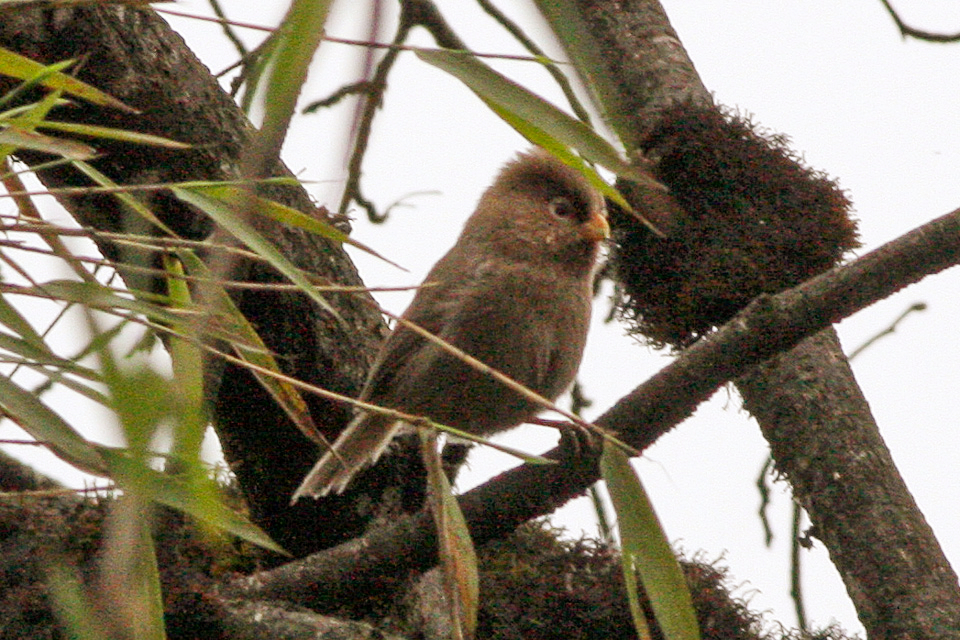
Abyssinian Catbird
Parophasma galinieri
Order: Passeriformes / Family: Sylviidae

Wikimedia Commons
About the Abyssinian Catbird
The Abyssinian Catbird (Parophasma galinieri) is an intriguing member of the Sylviidae family, primarily found in the highland forests of Ethiopia and Eritrea. This songbird is renowned for its rich, varied vocalizations, which play a crucial role in its identification and ecological interactions. The species thrives in the montane forests and dense undergrowth, where it contributes significantly to the ecological balance by participating in seed dispersal and insect population control.
This bird's significance extends beyond its ecological role, as it is an essential part of the cultural and natural heritage of the region. Local communities often recognize the Abyssinian Catbird by its distinct song, which enhances their appreciation of the natural world. The bird's presence in protected areas, such as the Simien Mountains National Park, underscores its importance in biodiversity conservation efforts.
Ecologically, the Abyssinian Catbird occupies a niche where it aids in controlling insect populations and facilitating plant reproduction through seed dispersal. Its seasonal behaviors reflect its adaptability to environmental changes. During the breeding season, typically from April to June, the bird engages in elaborate courtship rituals, showcasing its vocal prowess. In the non-breeding season, it forms small flocks, which enhance its foraging efficiency and provide protection against predators. This seasonal shift in behavior highlights the bird's adaptability and resilience in the face of changing climatic conditions.
The Abyssinian Catbird's role in the ecosystem is multifaceted, as it not only helps maintain plant and insect balance but also serves as an indicator species for environmental health. Its presence in a habitat usually signifies a well-functioning ecosystem, as the bird requires specific conditions to thrive. Conservation efforts aimed at preserving the habitats of the Abyssinian Catbird are thus crucial for maintaining the biodiversity of the highland forests it inhabits.
The Abyssinian Catbird belongs to the family Sylviidae, within the order Passeriformes. These birds typically live around 8-10 years in the wild..
How to Identify a Abyssinian Catbird
The Abyssinian Catbird is a medium-sized songbird with a robust body and a length of approximately 20 centimeters. It is characterized by its predominantly gray plumage, which is accentuated by subtle olive tones on the wings and tail. The underparts are lighter, giving it a somewhat muted appearance. Its dark eye stands out against its pale face, providing a key field mark for birders.
Males and females exhibit similar plumage, making them difficult to distinguish in the field. However, juvenile Abyssinian Catbirds display slightly duller plumage with less pronounced olive tones. This lack of sexual dimorphism suggests that visual cues play a lesser role in mating, with vocalizations being more critical.
In flight, the Abyssinian Catbird presents a compact silhouette, characterized by short, rounded wings and a medium-length tail. Its flight is typically low and direct, often skimming the undergrowth of its forested habitat. When perched, it adopts an upright posture, often accompanied by flicking movements of the tail. While confusion with other species is rare due to its unique song and habitat preferences, birders should note its similarity in size to some warblers, though the Abyssinian Catbird's coloration and song are distinctive.
Having trouble telling birds apart? Upload a photo to our bird identification tool for an instant species match.
Abyssinian Catbird Habitat and Range
Preferred Habitat
The Abyssinian Catbird is predominantly found in the highland forests of Ethiopia, thriving at elevations ranging from 1,800 to 3,400 meters. It prefers dense, montane forests with a rich undergrowth, which provide ample cover and food resources. These habitats include the lush forests of the Bale Mountains and the Simien Mountains, where the bird's song is a common soundscape element.
Seasonal habitat shifts are minimal, as the bird remains largely non-migratory, although it may move to slightly lower elevations during harsher weather conditions in search of food. The Abyssinian Catbird is typically absent from urban areas, favoring the secluded and undisturbed nature of forested regions. Its reliance on dense vegetation for foraging and nesting underscores its preference for pristine environments.
While primarily found in rural settings, the bird's presence in protected areas highlights the importance of conservation efforts in maintaining suitable habitats. The preservation of these montane forests is crucial for the survival of the Abyssinian Catbird and the overall biodiversity of the region.
Geographic Range
The Abyssinian Catbird's range is chiefly confined to the highland regions of Ethiopia and Eritrea, where it occupies a relatively small geographic area within the Horn of Africa. This range includes notable areas such as the Bale Mountains and the Simien Mountains, which provide the montane forest habitat essential for its survival.
Unlike many other sylviids, the Abyssinian Catbird does not engage in long-distance migration, remaining a year-round resident of these highland forests. However, it may exhibit local movements, descending to lower elevations during particularly harsh weather conditions to find more favorable foraging areas.
Population density hotspots include the protected regions within its range, where habitat conservation efforts have succeeded in maintaining suitable environments. Despite its limited range, the Abyssinian Catbird's population appears stable, although ongoing habitat loss and fragmentation pose potential threats to its long-term viability.
Want to know which birds visit your area? Browse our backyard birds by location guides for region-specific species lists.
What Does the Abyssinian Catbird Eat?
The diet of the Abyssinian Catbird primarily consists of insects and other small invertebrates, supplemented by a variety of fruits and berries. This omnivorous diet reflects its adaptability and the varied resources available within its montane forest habitat.
During the breeding season, the bird's diet shifts slightly to include a higher proportion of protein-rich insects, which are crucial for chick development. It employs a foraging technique known as 'gleaning,' where it hops through dense undergrowth, picking prey directly from leaves and branches. The size of its prey typically ranges from small beetles to caterpillars and spiders.
In the non-breeding season, the Abyssinian Catbird increases its intake of fruits, taking advantage of the seasonal abundance of berries in its habitat. This dietary flexibility allows it to maintain energy levels year-round and underscores its role in seed dispersal. Feeding usually occurs during the early morning and late afternoon, aligning with periods of increased insect activity.
Abyssinian Catbird Behavior and Social Structure
The Abyssinian Catbird exhibits a solitary or paired social structure, particularly during the breeding season when pairs defend territories through vocal displays. These territories are essential for securing resources and nesting sites. Outside of the breeding season, the bird may form small, loose flocks, which provide safety in numbers and enhance foraging efficiency.
Territorial behavior is marked by frequent vocalizations, with both males and females participating in song duets. These duets play a crucial role in pair bonding and territory defense, showcasing the bird's complex vocal repertoire.
Courtship displays involve an elaborate exchange of calls and subtle physical gestures, including flicking of the tail and wing movements. Such displays are integral to mate selection and pair formation. The Abyssinian Catbird's response to predators involves a combination of alarm calls and evasive flight, often retreating to dense cover when threatened.
Daily activity patterns include feeding primarily during dawn and dusk, with periods of rest or preening during midday. This schedule aligns with the availability of food resources and helps avoid the heat of the day. The bird's behavior reflects its adaptation to the montane forest environment, balancing social interaction with the demands of survival.
Abyssinian Catbird Nesting and Reproduction
The Abyssinian Catbird constructs a cup-shaped nest, typically located in dense shrubs or low tree branches within its montane forest habitat. The nest is composed of twigs, grasses, and leaves, providing a stable and concealed environment for its eggs.
A typical clutch consists of two to three eggs, which the female incubates over a period of approximately 14 days. Both parents participate in feeding the chicks, showcasing a cooperative breeding strategy that enhances offspring survival.
Fledging occurs around 14 to 16 days after hatching, with the young leaving the nest but remaining under parental care for an additional two to three weeks. During this time, the parents continue to feed and protect the fledglings as they learn essential survival skills.
The Abyssinian Catbird generally raises one brood per year, although favorable conditions may allow for a second. The nesting process highlights the bird's investment in ensuring the success of its offspring, reflecting its adaptation to the relatively stable, resource-rich environment of the highland forests.
Abyssinian Catbird Sounds and Vocalizations
The primary song of the Abyssinian Catbird is a melodious and varied sequence of whistles and trills, often described as rich and flute-like. This song serves as both a territorial marker and a mate attraction tool, showcasing the bird's vocal complexity.
Call notes are typically short and sharp, used for communication between mates and signaling alarm. These notes serve as a rapid alert system in response to potential threats, prompting evasive action.
Alarm calls are more urgent and repetitive, designed to warn others of imminent danger. The dawn chorus features prominently in the bird's vocal repertoire, with individuals engaging in prolonged song sessions during early morning hours.
The Abyssinian Catbird's vocalizations are integral to its behavioral ecology, allowing it to maintain social bonds and defend its territory effectively. The richness and variety of its sounds are reminiscent of the musicality found in other renowned songbirds.
Interesting Facts About the Abyssinian Catbird
- 1The Abyssinian Catbird's song can be heard over distances of up to 500 meters, a testament to its powerful vocal abilities.
- 2Unlike many songbirds, the Abyssinian Catbird often sings in duets, with pairs coordinating their songs to create harmonious melodies.
- 3This species is one of the few endemic birds in Ethiopia, making it a unique representative of the country's avian diversity.
- 4The Abyssinian Catbird's preference for dense undergrowth makes it a challenging target for birdwatchers, adding to its allure.
- 5The bird's territorial displays often involve complex vocalizations, serving as a key mechanism for defending its forest territory.
- 6Despite its name, the Abyssinian Catbird is not closely related to true catbirds, illustrating the diversity within the Sylviidae family.
- 7The Abyssinian Catbird relies on its song not only for attracting mates but also for deterring rivals from encroaching on its territory.
Abyssinian Catbird Conservation Status
The Abyssinian Catbird is currently listed as Least Concern on the IUCN Red List, with a stable population trend. However, habitat loss due to deforestation and land conversion for agriculture remains a significant threat. Conservation efforts focus on preserving the montane forest habitats essential for its survival. Protected areas within its range, such as national parks, play a crucial role in safeguarding these environments from further degradation. Historical population changes have been minimal, although localized declines have been noted in areas where forest cover has been reduced. Ongoing monitoring and habitat restoration initiatives aim to mitigate these impacts and ensure the long-term viability of the species. The Abyssinian Catbird's conservation status reflects a balance between resilience and vulnerability, highlighting the importance of continued efforts to preserve its natural habitat.