
Wrentit
Chamaea fasciata
Order: Passeriformes / Family: Sylviidae

Wikimedia Commons
About the Wrentit
The Wrentit, scientifically known as Chamaea fasciata, is a unique and charismatic member of the Sylviidae family, a group of birds more commonly associated with the Old World. Despite its family ties, the Wrentit is a true North American native, largely confined to the Pacific coast of the United States. This small songbird is often regarded as the embodiment of the coastal chaparral and scrub habitats it inhabits, ranging from southern Oregon through California and into the northwestern parts of Baja California. The Wrentit thrives in these environments, characterized by dense, shrubby vegetation, which offers both ample food resources and protection from predators. Ecologically, the Wrentit plays a vital role in these ecosystems, functioning as both a predator of insects and a disperser of seeds, thus contributing to the ecological balance and plant diversity. The bird’s preference for chaparral and coastal sage scrub makes it particularly susceptible to habitat loss due to urban development and wildfires, highlighting its ecological significance. Seasonally, the Wrentit is largely sedentary, with no significant migratory movements. This sedentary nature is due to its year-round territoriality and the availability of resources in its preferred habitats throughout the year. During the breeding season, which occurs from early spring to late summer, Wrentits become more vocal, using their distinctive song to establish and defend territories. Outside the breeding season, their behavior becomes more secretive, though they remain within the same general territories. These habits reflect the bird’s adaptation to its environment and highlight its role as a consistent component of its ecosystem. The Wrentit’s presence in coastal regions also has cultural significance, as it is often considered a symbol of the unique biodiversity of the California chaparral, one of the state’s iconic landscapes. Its elusive nature, combined with its distinctive vocalizations, makes the Wrentit a favorite among birders and naturalists who appreciate the subtle complexities of these seemingly simple habitats.
The Wrentit belongs to the family Sylviidae, within the order Passeriformes. These birds typically live average lifespan is 5-7 years with a maximum recorded over 12 years..
How to Identify a Wrentit
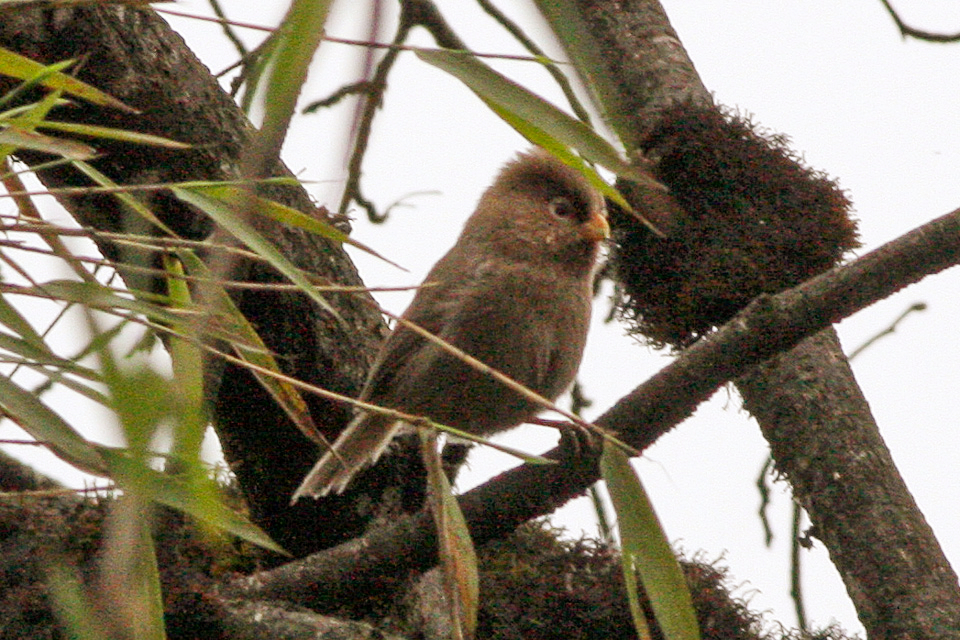
The Wrentit is a small bird, approximately 14 cm in length, with a long tail that it often holds in an upright position, aiding in its identification. Adults display a consistent plumage pattern with a brownish-gray body, a slightly darker tail, and a paler throat and chest. The bird’s eyes are striking, with pale irises that stand out against its darker head. Juveniles resemble adults but may show a slightly more subdued color palette and less distinct eye color. There is minimal sexual dimorphism in Wrentits, with males and females appearing largely similar. However, males may be slightly larger with subtly more vibrant plumage, though these differences are often indistinguishable in the field. The Wrentit’s silhouette is characterized by its rounded body and long tail, which it flicks frequently. When perched, its posture is upright, and it often moves in short, hopping motions through dense vegetation. Confusion with similar species is rare due to the Wrentit’s unique combination of features and habitat preferences. Its song, described as a bouncing ball-like series of notes, further distinguishes it from other scrubland species.
Having trouble telling birds apart? Upload a photo to our bird identification tool for an instant species match.
Wrentit Habitat and Range
Preferred Habitat
The Wrentit is closely associated with dense coastal scrub and chaparral habitats, which provide essential cover and food resources. This bird is typically found at elevations ranging from sea level to about 1500 meters, predominantly in areas with a Mediterranean climate characterized by wet winters and dry summers. In California, classic examples of Wrentit habitats include the chaparral-covered hillsides of the Santa Monica Mountains and the coastal sage scrub of the Point Reyes National Seashore. Wrentits are generally absent from urban areas, preferring the continuity of dense natural vegetation, though they may occasionally be found in suburban areas with extensive native plant landscaping. Seasonal habitat shifts are minimal due to the Wrentit’s non-migratory nature, but it may move slightly within its territory in response to food availability or disturbances. The bird’s dependence on specific habitat types makes it vulnerable to habitat fragmentation and degradation, emphasizing the importance of habitat conservation for its continued survival.
Geographic Range
The Wrentit's range is predominantly confined to the Pacific coastal regions of North America. Its breeding range extends from southern Oregon through most of California and into the northwestern region of Baja California, Mexico. Unlike many other songbirds, the Wrentit does not undertake significant migrations, remaining within its established territories year-round. This sedentary behavior is reinforced by the species' reliance on stable, local resources provided by coastal chaparral and scrub habitats. Population densities are highest in regions where these habitat types are most extensive and intact, such as the coastal ranges of central and southern California. Despite its relatively narrow range, the Wrentit is considered a common resident within suitable habitats. Some isolated populations may occur in suitable pockets of habitat that are surrounded by less suitable landscapes, demonstrating the bird's ability to persist in fragmented landscapes, provided that the essential habitat characteristics are maintained.
Want to know which birds visit your area? Browse our backyard birds by location guides for region-specific species lists.
What Does the Wrentit Eat?
The Wrentit’s diet primarily consists of insects and other small invertebrates, which it gleans from foliage and ground litter. Common prey items include caterpillars, beetles, and spiders. In addition to animal prey, the Wrentit supplements its diet with berries and small fruits, particularly in the fall and winter when insect abundance may decline. During these colder months, berries from plants such as poison oak and coffeeberry become essential food sources. The Wrentit employs a methodical foraging technique, moving through dense vegetation with deliberate, short hops and frequent pauses to examine leaves and twigs. Its feeding schedule is generally diurnal, with increased activity during the cooler hours of the morning and late afternoon. The bird’s ability to exploit a variety of food sources throughout the year is a testament to its adaptability and resilience in the face of environmental fluctuations.
Wrentit Behavior and Social Structure
Wrentits are primarily solitary or found in pairs, reflecting their strong territorial instincts. Each pair defends a territory year-round, with boundaries marked by vocalizations and physical displays. During the breeding season, males become particularly vocal, using their distinctive song to establish territory and attract mates. Courtship behaviors include mutual preening and synchronized movements through their territory. Unlike many songbirds, Wrentits do not form large flocks but may occasionally associate with mixed-species foraging groups. The bird’s response to predators involves a combination of stealth and vocal alarm calls, designed to alert mates while avoiding detection. Daily activity patterns include periods of intense foraging interspersed with rest and preening, particularly during the heat of midday. The Wrentit’s behavior reflects its adaptation to a life in dense, protective vegetation, balancing the need for resource acquisition with predator avoidance.
Wrentit Nesting and Reproduction
Wrentits construct cup-shaped nests, typically situated in dense shrubs or low trees at heights of 1 to 3 meters above ground. Nests are woven from grass, leaves, and spider silk, providing a secure structure well-hidden from potential predators. The female lays 2 to 4 eggs per clutch, with an incubation period of about 14 days. Both parents share incubation duties, though the female may spend more time on the nest. After hatching, the chicks remain in the nest for approximately 15 days before fledging. Parental roles are shared, with both adults involved in feeding and caring for the young. The Wrentit typically raises one brood per year, though in favorable conditions, a second brood is possible. The choice of nesting sites and the shared parental responsibilities highlight the cooperative nature of Wrentit pairs and their investment in reproductive success.
Wrentit Sounds and Vocalizations
The Wrentit’s primary song is a series of accelerating notes, often compared to the sound of a bouncing ball. The rhythm and pitch gradually increase before ending abruptly, providing a distinctive auditory marker of the species. Call notes include sharp, chip-like sounds used for communication between mates and as alarm signals. During the dawn chorus, male Wrentits are particularly vocal, using their song to reinforce territorial boundaries. The quality of the Wrentit’s song, with its characteristic acceleration and abrupt halt, sets it apart from other avian vocalizations in its habitat, making it a reliable tool for identification during field observations.
Interesting Facts About the Wrentit
- 1The Wrentit is one of the few North American songbirds classified within the Old World family Sylviidae, showcasing its unique evolutionary history.
- 2Despite its limited range, the Wrentit is remarkably adaptable, thriving in both coastal sage scrub and drier inland chaparral habitats.
- 3The Wrentit's song, often compared to a bouncing ball, can travel up to 100 meters, serving as an effective territorial marker.
- 4Unlike many other birds, Wrentits maintain territories year-round, reflecting their stable habitat and non-migratory lifestyle.
- 5The Wrentit has a relatively long lifespan for a small bird, with some individuals known to live over 12 years in the wild.
Wrentit Conservation Status
According to the IUCN, the Wrentit is currently classified as Least Concern, with stable population trends. However, habitat loss and fragmentation due to urbanization and land conversion pose ongoing threats. Conservation efforts focus on preserving and restoring native chaparral and coastal sage scrub habitats, which are vital for the species’ survival. Historical changes in land use have led to fluctuations in population densities, but proactive habitat management has helped mitigate some of these impacts. Community involvement in habitat conservation and the promotion of native plant landscaping can further support Wrentit populations.
Other Sylviidae Species



Birds Similar to the Wrentit
These species are often confused with the Wrentit due to similar appearance or overlapping range.


