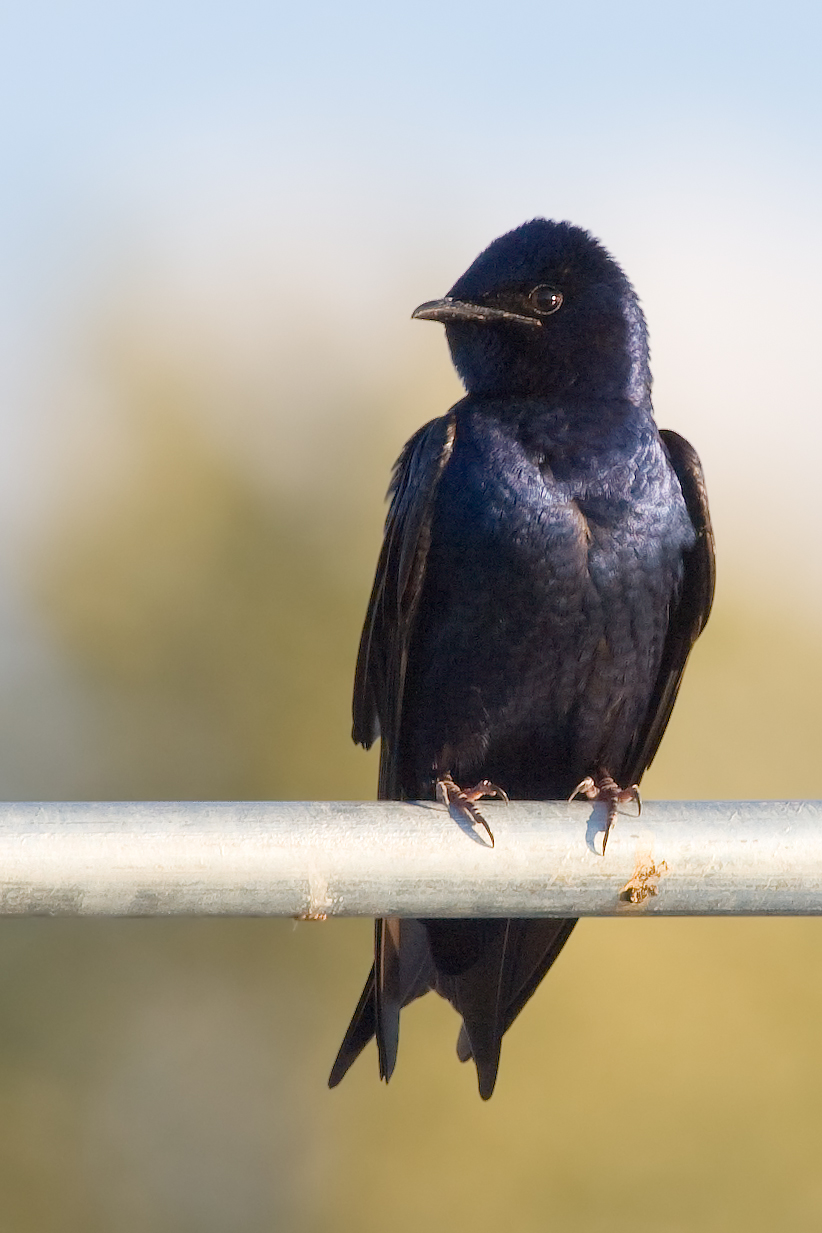
African River Martin
Pseudochelidon eurystomina
Order: Passeriformes / Family: Hirundinidae

Wikimedia Commons
About the African River Martin
The African River Martin (Pseudochelidon eurystomina) is a unique member of the swallow family, Hirundinidae. Known primarily for its glossy black plumage and distinctive pinkish-red bill, this bird is a denizen of Central Africa, particularly thriving along the Congo River and its tributaries. The African River Martin stands out due to its preference for riverine habitats, a trait not commonly associated with most swallows. This preference underscores its ecological role as both a predator of flying insects and a feeder on available riverine prey.
A relatively understudied species, the African River Martin presents a fascinating case study for ornithologists and bird enthusiasts alike. Its reliance on the dynamic ecosystem of the Congo River highlights the importance of healthy river systems in sustaining avian diversity. The bird's presence along these waterways serves as an indicator of ecological health, offering insights into broader environmental conditions.
During the wet season, when insect populations surge, the African River Martin plays a critical role in controlling these numbers, thus maintaining a balanced ecosystem. Its role extends beyond mere predation; by feeding on insects, it contributes to the regulation of insect-borne diseases, indirectly supporting human populations. Additionally, by nesting in sandy riverbanks, it contributes to the aeration of soil, aiding in the natural process of riverbank stabilization.
The African River Martin belongs to the family Hirundinidae, within the order Passeriformes. These birds typically live estimated to be 3-5 years, though specific data is lacking..
How to Identify a African River Martin
The African River Martin is easily distinguished by its sleek, all-black plumage, which has a metallic sheen in sunlight. Its most striking feature is the contrasting pinkish-red bill, a characteristic that sets it apart from other swallows. Adult African River Martins have relatively short tails compared to other Hirundinidae members, which aids in quick maneuvers while flying over water.
Juvenile African River Martins resemble adults but with slightly duller plumage and a less pronounced bill color. There are no significant differences between male and female plumage, making sexing in the field challenging without behavioral observations such as courtship.
In flight, the African River Martin presents a distinct silhouette with broad wings and a swift, agile flight pattern. While perching, it often holds a slightly hunched posture, which is a helpful field mark when observing it along riverbanks. Confusion with other species is unlikely due to its unique coloration and bill.
Having trouble telling birds apart? Upload a photo to our bird identification tool for an instant species match.
African River Martin Habitat and Range
Preferred Habitat
The African River Martin predominantly inhabits the riverine environments of Central Africa. It favors lowland areas, particularly the sandy banks and adjacent forests of the Congo River basin. This bird is seldom found far from water, as its lifestyle revolves around the availability of aquatic and semi-aquatic insects.
During the different seasons, it may shift slightly to avoid flooded areas or to access higher insect concentrations. While primarily a rural species, the African River Martin can occasionally be observed near urban areas if suitable riverine habitats exist. It typically avoids higher elevations, remaining in the lowland forest and river ecosystems.
Geographic Range
The African River Martin's range is primarily confined to the central parts of Africa, with its stronghold being the Congo River basin. It is a non-migratory species, spending its entire life within this region. The bird's breeding and feeding territories overlap significantly, which restricts its range but ensures a consistent food supply.
Notably, the African River Martin is found in countries such as the Democratic Republic of the Congo, Gabon, and potentially in parts of Angola and the Republic of the Congo. The species' range is limited geographically but dense in suitable habitats, where population densities can be notably high along major river systems.
Want to know which birds visit your area? Browse our backyard birds by location guides for region-specific species lists.
What Does the African River Martin Eat?
The African River Martin primarily feeds on flying insects, which it captures in mid-air with precision. Its diet includes a variety of insects such as flies, beetles, and moths. During the rainy season, when insect abundance peaks, the bird's feeding activity intensifies, ensuring ample food for breeding and raising young.
The African River Martin employs a hawking technique for foraging, characterized by swift, agile flights close to the water's surface. This method not only allows it to catch insects but also to drink on the wing. Its prey size is generally small, corresponding to the typical size range of aerial insects found along riverine habitats.
Feeding occurs throughout the day, with peaks during the cooler morning and late afternoon hours when insect activity is highest.
African River Martin Behavior and Social Structure
The African River Martin exhibits fascinating social behavior, often found in small flocks. These flocks are not strictly territorial, and the birds display a degree of social tolerance uncommon among other swallow species. Courtship displays involve aerial acrobatics, where males showcase their flying prowess to attract mates.
Though generally non-aggressive, the African River Martin can exhibit territorial behavior during the breeding season, defending nest sites from potential competitors. Its response to predators includes swift evasive maneuvers, leveraging its agile flight.
Daily activity patterns for the African River Martin include periods of intense feeding interspersed with rest and grooming sessions. The bird is primarily diurnal, capitalizing on daylight to maximize feeding efficiency.
African River Martin Nesting and Reproduction
The African River Martin nests in sandy riverbanks, excavating burrows that serve as nests. These burrows are typically found in colonies, suggesting a degree of social nesting behavior. The choice of sandbanks ensures good drainage and protection from many ground predators.
Clutch sizes range from two to four eggs, with both parents sharing incubation duties. The incubation period lasts approximately two weeks. Once hatched, the young remain in the nest for about three weeks before fledging.
Both parents actively feed and care for the young, ensuring a high survival rate for fledglings. The species generally raises one brood per year, although favorable conditions may lead to a second.
African River Martin Sounds and Vocalizations
The African River Martin's song is a series of rapid, melodic calls with a lilting quality. These songs can often be heard during the early morning, contributing to the dawn chorus along riverbanks. The primary song consists of high-pitched whistles with a distinctly repetitive pattern.
Call notes are sharp and serve as contact calls within flocks. When alarmed, the bird emits a series of quick, harsh notes that alert nearby individuals to potential threats.
Compared to other swallows, the African River Martin's vocalizations are less varied but are used effectively to maintain social bonds and coordinate flock movements.
Interesting Facts About the African River Martin
- 1The African River Martin is one of only two species in its genus, making it particularly unique.
- 2Unlike most swallows, the African River Martin prefers nesting in sandy riverbanks rather than in structures.
- 3The African River Martin's glossy black plumage helps it blend into the shadowy environments of riverine habitats.
- 4This species displays a rare form of social tolerance within its flocks, allowing for cooperative interactions.
- 5The African River Martin's flight is adapted to its riverine habitat, showcasing remarkable agility over water.
African River Martin Conservation Status
Currently, the African River Martin is classified as Least Concern by the IUCN, owing to its stable population within its limited range. However, the species faces threats from habitat destruction, primarily due to deforestation and riverbank erosion. Conservation efforts focus on preserving the integrity of the Congo River ecosystem. There is also an emphasis on monitoring population trends to detect any early signs of decline. Historically, the population has fluctuated in response to environmental conditions, underscoring the need for ongoing habitat protection.
Other Hirundinidae Species


Birds Similar to the African River Martin
These species are often confused with the African River Martin due to similar appearance or overlapping range.